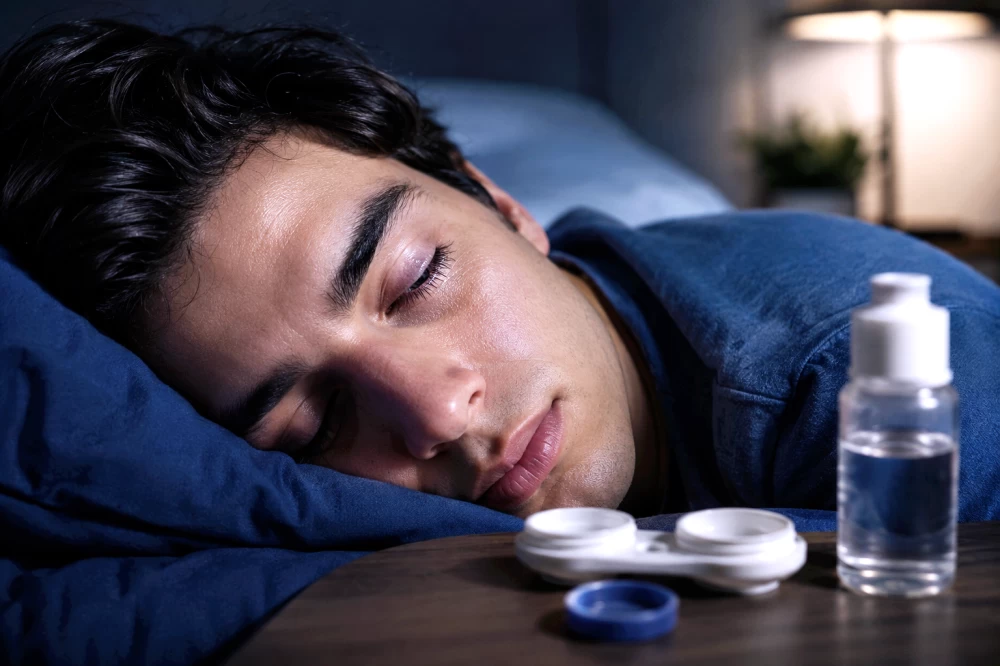
يدفع الإرهاق في نهاية اليوم بعض مستخدمي العدسات اللاصقة إلى النوم دون إزالتها، وهي عادة قد تزيد احتمالات تهيج العين ومشكلاتها، خصوصاً مع تكرارها لفترات طويلة.
وتحتاج القرنية إلى وصول كمية كافية من الأكسجين، فيما تقلل العدسات اللاصقة من وصوله إليها بدرجات متفاوتة. وخلال ساعات النوم، يتراجع تعرض العين للهواء بسبب إغلاق الجفون، ما يجعل الالتزام بتعليمات استخدام العدسات وإزالتها قبل النوم خطوة مهمة للعناية بالعين.
ويرتبط النوم بالعدسات أيضاً بزيادة خطر الإصابة بعدوى القرنية، وقد تظهر علاماتها في صورة احمرار أو ألم أو حساسية تجاه الضوء، إضافة إلى تشوش أو تغير في مستوى الرؤية.
وتبدأ العناية الصحيحة بغسل اليدين جيداً قبل لمس العدسات، وتنظيفها وحفظها بالطريقة الموصى بها، مع الالتزام بمدة استخدامها وتجنب تجاوز الفترة المحددة لاستبدالها.
ويستدعي ظهور ألم شديد في العين أو إفرازات غير معتادة أو تراجع مفاجئ في الرؤية، الحصول على تقييم طبي سريع، مع التوقف عن ارتداء العدسات حتى معرفة سبب المشكلة، بدلاً من تجاهل الأعراض أو الاستمرار في استخدامها.
Fatigue at the end of the day drives some contact lens users to sleep without removing them, a habit that may increase the likelihood of eye irritation and problems, especially with its repetition over long periods.
The cornea needs a sufficient amount of oxygen, while contact lenses reduce the amount that reaches it to varying degrees. During sleep hours, exposure of the eye to air decreases due to the eyelids being closed, making adherence to lens usage instructions and removing them before sleep an important step in eye care.
Sleeping with lenses is also associated with an increased risk of corneal infection, which may manifest as redness, pain, or sensitivity to light, in addition to blurriness or changes in vision level.
Proper care begins with thoroughly washing hands before touching the lenses, cleaning and storing them as recommended, while adhering to their usage duration and avoiding exceeding the specified replacement period.
The appearance of severe eye pain, unusual discharge, or a sudden decrease in vision requires prompt medical evaluation, along with stopping lens wear until the cause of the problem is known, rather than ignoring the symptoms or continuing to use them.