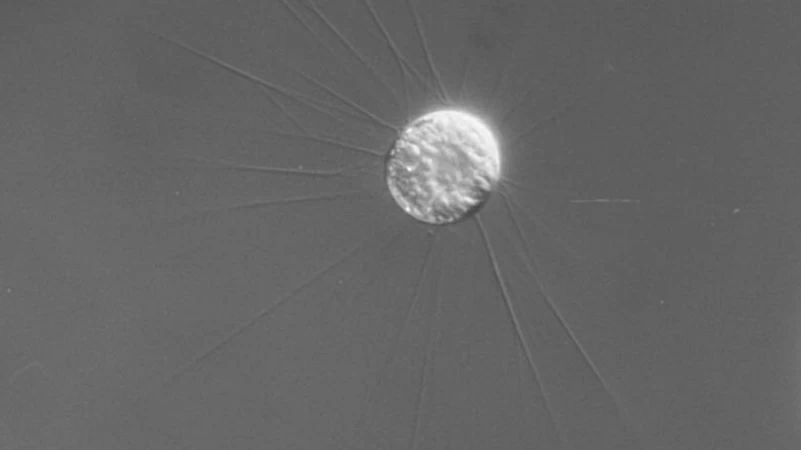
في اكتشاف غريب يبدو أقرب لسيناريوهات الخيال العلمي، فجّر فريق بحثي من جامعة «هيريوت وات» البريطانية مفاجأة مدوية بعد توثيق كائن مجهري بحري جديد جرى رصده في اسكتلندا، يتمتع بإستراتيجية تكاثر بيولوجية عجيبة جعلت العلماء يشبهونه بـ«الجدة الحامل» التي تحمل ابنتها وحفيدتها في اللحظة ذاتها.
الكائن الذي يُدعى علمياً (Caledochytrium aldermanii)، لا يتبع طرق الانقسام التقليدية المعتادة، بل تتكون داخل خليته الأم فجوة تنمو فيها خلايا جديدة. والغريب الذي أذهل الباحثين تحت المجهر الإلكتروني، أن إحدى الخلايا الوليدة داخل جسم الأم قد تحتوي في جوفها بالفعل على خلية من جيل ثالث قبل أن تخرج للحياة!
الباحثة جين بولغلاس وأعضاء الفريق العلمي أكدوا أن مشاهدة هذه العملية الحية كانت مفاجأة صاعقة، مشيرين إلى أن الكائن رُصد في بيئات اسكتلندية غريبة كأوكار الأخطبوطات وأسماك السلمون، حيث يلعب دوراً حيوياً في تنظيف البيئة البحرية وإعادة تدوير العناصر الغذائية.
ولا تتوقف ثورة هذا الاكتشاف عند حد الغرابة، إذ أظهرت الاختبارات أن هذا المخلوق المجهري يمثل كنزاً اقتصادياً، كونه مليئاً بالبروتينات وينتج طبيعياً أحماض «أوميغا3» (DHA)، ما يفتح الباب لاستغلاله في صناعات تطوير الأعلاف والأغذية المستقبلية.
In a strange discovery that seems closer to science fiction scenarios, a research team from the British University of "Heriot-Watt" made a stunning surprise after documenting a new marine microscopic organism observed in Scotland, which possesses a bizarre biological reproduction strategy that made scientists liken it to a "pregnant grandmother" carrying both her daughter and granddaughter at the same time.
The organism, scientifically named (Caledochytrium aldermanii), does not follow the usual conventional division methods; instead, a cavity forms inside its mother cell where new cells grow. The astonishing part that amazed researchers under the electron microscope is that one of the newborn cells inside the mother's body may actually contain a cell from a third generation before it comes to life!
Researcher Jean Paulglass and members of the scientific team confirmed that witnessing this live process was a shocking surprise, noting that the organism was observed in strange Scottish environments such as octopus dens and salmon, where it plays a vital role in cleaning the marine environment and recycling nutrients.
This discovery's revolution does not stop at its strangeness, as tests have shown that this microscopic creature represents an economic treasure, being rich in proteins and naturally producing "Omega-3" (DHA) acids, which opens the door for its exploitation in the development of future feed and food industries.