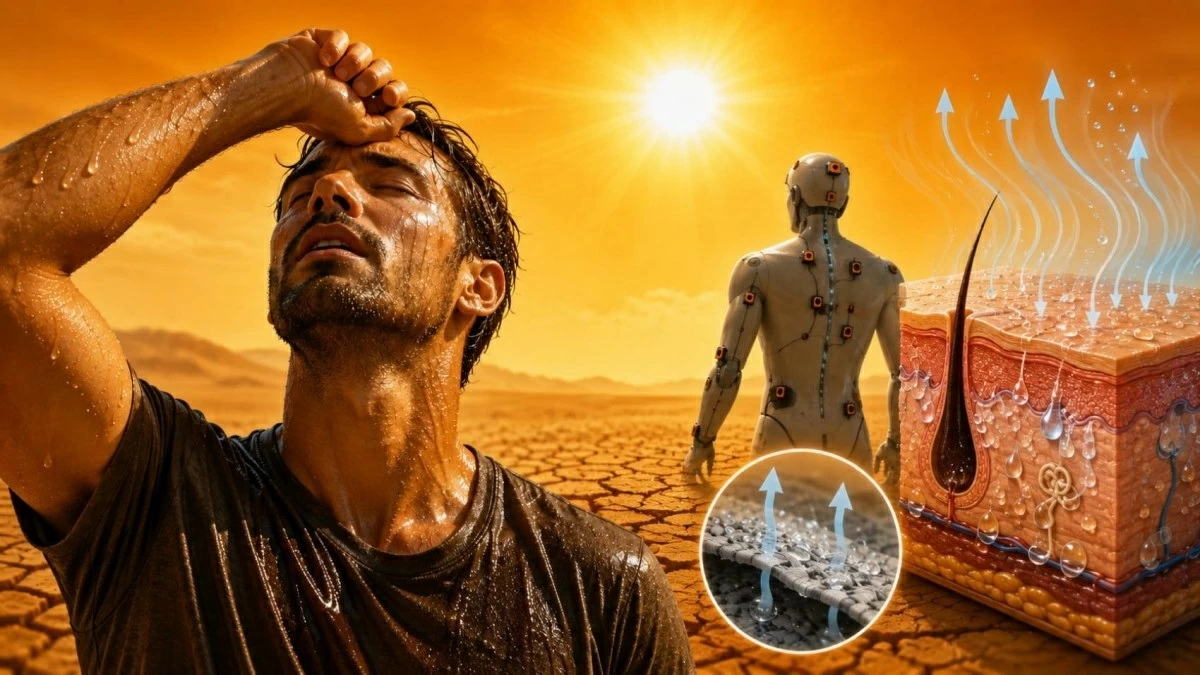
في كشف فيزيائي غير متوقع قد يعيد رسم قواعد السلامة البشرية في الأجواء الحارة، فجر باحثون من جامعة ولاية أريزونا مفاجأة مذهلة قد تفسر السقوط المفاجئ للأجساد أمام موجات الحر الشديدة، إذ كشفوا عن «خدعة فيزيائية» تحدث فوق جلد الإنسان مباشرة وتؤدي إلى شل منظومة التبريد الطبيعية بنسبة تتجاوز 50%.
الدراسة التي نُشرت في الدورية المرموقة Science Advances سلّطت الضوء على لغز أعاد للواجهة تجربة تاريخية شهيرة تعود لعام 1775، عندما دخل الطبيب الإنجليزي تشارلز بلاجدن مع متطوعين إلى غرفة بلغت حرارتها 110 درجات مئوية. وبينما كانت قطعة لحم نيئة تُطهى بجوارهم، نجا الرجال بفضل قدرة أجسادهم على إفراز العرق وتبخيره.
لماذا يفشل العرق إذن؟
الكشف العلمي الجديد أثبت أن إفراز العرق وحده لا يكفي مطلقاً لإنقاذ حياتك، فالتبريد لا يحدث إلا عند «تبخر» السائل ليأخذ الحرارة ويغادر الجسد.
ولكن في الأجواء الحارة والجافة الخالية من الرياح، يحدث شيء مرعب:
- يتوقف الهواء مباشرة فوق الجلد ليصبح ساكناً تماماً.
- يتشكل غشاء من الرطوبة المحتبسة يمنع السائل من التبخر.
- يسيل العرق أو يتجمع دون فائدة، ليبدأ الجسم في امتصاص الحرارة من البيئة الخارجية بدلاً من طردها.
لتفادي خطورة الاختبار على البشر، استخدم الباحثون روبوتاً يدعى «ANDI» بمسام تحاكي الجلد البشري. وأظهرت المحاكاة أن جميع النماذج الحرارية القديمة كانت تبالغ في تقدير قدرة العرق على التبخر، مما جعل العلماء يغفلون لقرون عن سرعة وصول الجسد لدرجات حرارة قاتلة في الأماكن المغلقة كالخيام ومواقع البناء.
هذا السر الفيزيائي يسعى العلماء اليوم لاستغلاله لتطوير نسيج مستقبلي ذكي يمنع احتباس الهواء فوق الجلد، ويحافظ على كفاءة التبريد حتى في أعتى درجات الحرارة
In an unexpected physical revelation that could redraw the rules of human safety in hot environments, researchers from Arizona State University have unveiled a stunning surprise that may explain the sudden collapse of bodies in the face of extreme heat waves. They revealed a "physical trick" that occurs directly above human skin, leading to a disruption of the natural cooling system by more than 50%.
The study, published in the prestigious journal Science Advances, shed light on a mystery that brought back to the forefront a famous historical experiment from 1775, when English doctor Charles Blagden entered a room with volunteers that reached a temperature of 110 degrees Celsius. While a piece of raw meat was cooking beside them, the men survived thanks to their bodies' ability to sweat and evaporate.
So why does sweating fail?
The new scientific revelation proved that sweating alone is never enough to save your life; cooling only occurs when the liquid "evaporates," taking heat away and leaving the body.
However, in hot and dry environments devoid of wind, something terrifying happens:
- The air stops directly above the skin, becoming completely still.
- A layer of trapped moisture forms, preventing the liquid from evaporating.
- The sweat either drips or accumulates uselessly, causing the body to start absorbing heat from the external environment instead of expelling it.
To avoid the dangers of testing on humans, the researchers used a robot named "ANDI" with pores that mimic human skin. The simulation showed that all previous thermal models had overestimated the ability of sweat to evaporate, leading scientists to overlook for centuries how quickly the body can reach lethal temperatures in enclosed spaces like tents and construction sites.
This physical secret is what scientists today are seeking to exploit to develop a future smart fabric that prevents air from being trapped above the skin and maintains cooling efficiency even in the most extreme temperatures.