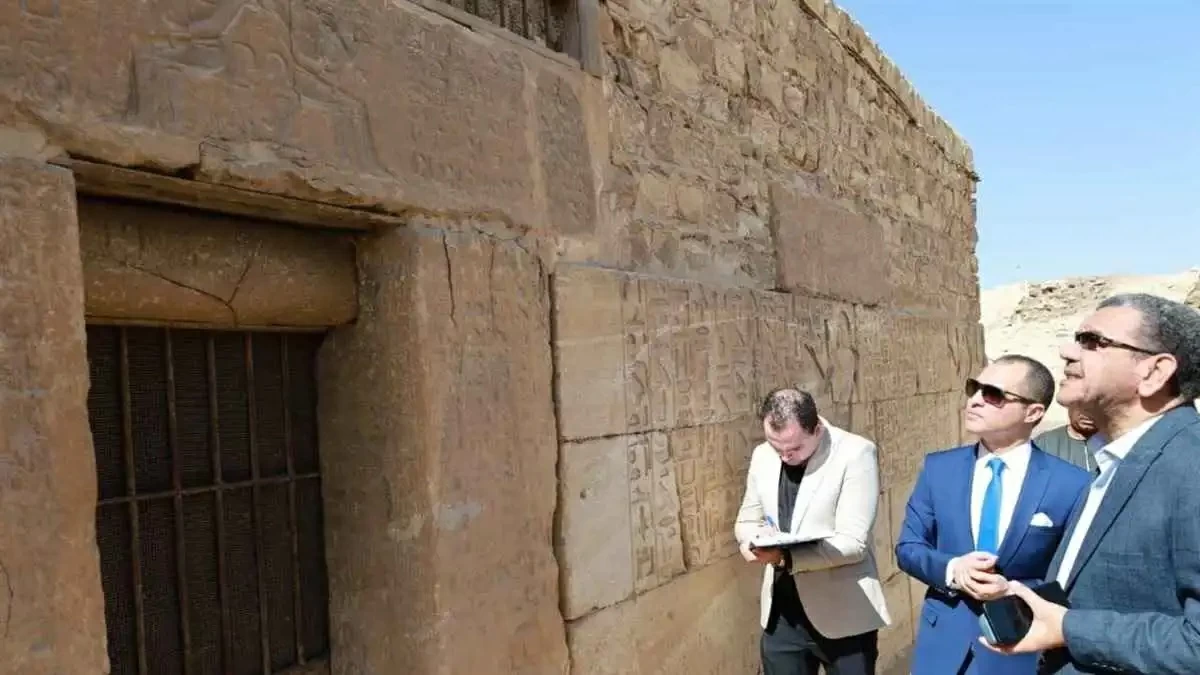
في قلب جبانة البوباسطيون بمنطقة آثار سقارة قادت أعمال بعثة مصرية إلى اكتشاف مقبرة تعود إلى عصر الدولة القديمة، لصاحبها «سخنتيو-بتاح»، إلى جانب منظومة من آبار الدفن ضمت دفنات ولقى أثرية متنوعة، تكشف جانبًا من الحياة الجنائزية والإدارية في مصر القديمة.
وقالت وزارة السياحة والآثار المصرية، اليوم (السبت)، إن النقوش المحفوظة على الباب الوهمي والعناصر الجنائزية داخل المقبرة كشفت المكانة التي شغلها صاحبها في الجهاز الإداري للدولة القديمة، إذ حمل عددًا من الألقاب، من بينها «الحاجب الملكي»، و«المشرف على جميع أعمال الملك»، و«المشرف على الوثائق الملكية»، و«القائم على أسرار الأوامر الملكية»، إلى جانب «كاهن المعبودة ماعت» و«المشرف على الكتبة».
وأظهرت أعمال الحفائر بقايا المقصورة الجنائزية للمقبرة، حيث عُثر على الباب الوهمي في موضعه الأصلي. وأمام الباب، اكتشفت البعثة مجموعة متكاملة من أدوات الطقوس الجنائزية المصنوعة من الألباستر، شملت مائدة وقرصًا للقرابين، وحوضًا للتطهير، وإبريقًا وطستًا، وجميعها تحمل نقوشًا هيروغليفية باسم صاحب المقبرة وألقابه.
ولم تقتصر الاكتشافات على المقبرة، إذ كشفت البعثة منظومة مترابطة من آبار الدفن، احتوت على عدد من الدفنات الآدمية، وكميات كبيرة من الكرتوناج الجنائزي الملون، وأكثر من 100 تمثال أوشابتي مصنوع من الفيانس، فضلًا عن ثلاثة توابيت حجرية عُثر عليها مغلقة وفي حالتها الأصلية، وتمثال خشبي على هيئة صقر، إلى جانب مجموعة متنوعة من الأواني الفخارية واللقى الأثرية.
وقال مدير عام منطقة آثار سقارة رئيس البعثة عمرو الطيبي إن الدراسات الأولية أظهرت تعرض عدد من آبار الدفن للنهب منذ العصور القديمة، مشيرًا إلى أن فتحات أحدثها لصوص المقابر بين الحجرات الجنائزية تؤكد تعرض الموقع لعمليات سطو قديمة.
ورغم ذلك، أوضح الطيبي أن المكتشفات التي بقيت في الموقع لا تزال تحمل قيمة أثرية وعلمية كبيرة، ومن المتوقع أن تسهم في توضيح التخطيط الداخلي للمنطقة، وتتبع تطور عمارتها والمراحل التاريخية المختلفة التي مرت بها.
In the heart of the Bubastis cemetery in the Saqqara archaeological area, the work of an Egyptian mission led to the discovery of a tomb dating back to the Old Kingdom, belonging to "Sekhentiu-Ptah," alongside a system of burial shafts that included various burials and archaeological finds, revealing aspects of funerary and administrative life in ancient Egypt.
The Egyptian Ministry of Tourism and Antiquities stated today (Saturday) that the inscriptions preserved on the false door and the funerary elements inside the tomb revealed the status held by its owner in the administrative apparatus of the Old Kingdom, as he bore several titles, including "Royal Chamberlain," "Supervisor of All the King's Works," "Supervisor of Royal Documents," "Keeper of the Secrets of Royal Orders," in addition to "Priest of the Goddess Ma'at" and "Supervisor of the Scribes."
The excavation work revealed the remains of the funerary chapel of the tomb, where the false door was found in its original position. In front of the door, the mission discovered a complete set of funerary ritual tools made of alabaster, including a table and a disk for offerings, a purification basin, a pitcher, and a basin, all bearing hieroglyphic inscriptions with the name of the tomb owner and his titles.
The discoveries were not limited to the tomb, as the mission uncovered an interconnected system of burial shafts, which contained several human burials, large quantities of colored funerary cartonnage, and more than 100 ushabti statues made of faience, in addition to three stone sarcophagi found sealed and in their original condition, along with a wooden statue in the form of a falcon, as well as a variety of pottery vessels and archaeological finds.
Amr Al-Taybi, the General Director of the Saqqara archaeological area and head of the mission, stated that preliminary studies showed that several burial shafts had been subjected to looting since ancient times, noting that openings made by tomb robbers between the funerary chambers confirm that the site had been exposed to ancient theft operations.
Despite this, Al-Taybi clarified that the discoveries that remained at the site still hold significant archaeological and scientific value, and it is expected that they will contribute to clarifying the internal planning of the area and tracing the development of its architecture and the various historical phases it has undergone.