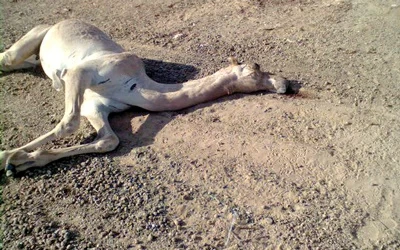
الارتفاع الجنوني لدرجات الحرارة بسبب التغير المناخي جسّد نقطة الانكسار لأعتى كائنات الأرض! ولطالما اشتهرت الإبل بلقب «سفن الصحراء»، باعتبارها أعظم الناجين في الطبيعة وخط الدفاع الأخير للرعاة في مواجهة قيظ الصحارى القاحلة. لكن التأثيرات المتصاعدة للتغير المناخي وموجات الجفاف القياسية بدأت تتجاوز الحدود البيولوجية القصوى لهذا الحيوان الصلب، لتسجل مناطق عدة في أفريقيا مشاهد صادمة لاستسلام الحيوان الذي صمد لآلاف السنين.
كيف تسبب تجاوز 50 درجة مئوية في انهيار الإبل؟
تعتمد الجمال على منظومة فسيولوجية معقدة تتضمن كريات دم بيضاوية مرنة، وكلى متخصصة جداً لإعادة امتصاص المياه، وقدرة على تذبذب حرارة أجسادها للتكيف مع البيئة حتى 40 درجة مئوية. لكن عندما تتجاوز درجات الحرارة حاجز الـ50 مئوية مع انعدام الظل والماء، تبدأ هذه الدفاعات بالانهيار:
- تلف خلوي مباشر: أكد علماء البيئة أن اقتران الجفاف بالحرارة الشديدة يسبب إجهاداً تأكسدياً للخلايا وزيادة في موت المكونات الجسدية والتناسلية للجمال.
- فقدان السيطرة الحرارية: يتباطأ أيض الجمل للحد من إنتاج الحرارة، فيدخل في حالة خمول وتفقد كليتاه كفاءتهما، ما يجعله عرضة للعدوى والنفوق.
بات المشهد في إثيوبيا والصومال والجزائر محزناً، حيث يلاحظ الرعاة ظهور بثور وتشققات غائرة في أخفاف الإبل جراء الرمال الملتهبة، وتساقط وبرها، مع تراجع إنتاج الحليب إلى أدنى مستوياته.
وتجلت نسبة النفوق المرعبة، عندما أظهرت دراسات حديثة في الصومال أن نفوق الإبل المرتبط بالجفاف طال نحو 46% من الأسر الرعوية، ووصلت النسبة في بعض المناطق إلى 73%، ما دفع أطقم الأطباء البيطريين لتدشين إنذار مبكر يؤكد أن المناخ بدأ يدمر حتى أكثر الكائنات قدرة على التكيف.
The insane rise in temperatures due to climate change has manifested the breaking point for the toughest creatures on Earth! Camels have long been known as the "ships of the desert," regarded as the greatest survivors in nature and the last line of defense for herders against the scorching heat of arid deserts. However, the escalating effects of climate change and record droughts have begun to exceed the biological limits of this resilient animal, with several regions in Africa witnessing shocking scenes of surrender from an animal that has endured for thousands of years.
How did exceeding 50 degrees Celsius lead to the collapse of camels?
Camels rely on a complex physiological system that includes flexible oval red blood cells, highly specialized kidneys for water reabsorption, and the ability to fluctuate their body temperature to adapt to the environment up to 40 degrees Celsius. However, when temperatures exceed the 50-degree Celsius mark with no shade or water, these defenses begin to collapse:
- Direct cellular damage: Ecologists have confirmed that the combination of drought and extreme heat causes oxidative stress to the cells and increases the mortality of the physical and reproductive components of camels.
- Loss of thermal control: The camel's metabolism slows down to reduce heat production, leading it into a state of lethargy, and its kidneys lose their efficiency, making it susceptible to infections and death.
The scene in Ethiopia, Somalia, and Algeria has become heartbreaking, as herders observe the appearance of blisters and deep cracks in the camels' feet due to the scorching sands, and the shedding of their fur, with milk production dropping to its lowest levels.
The terrifying mortality rate became evident when recent studies in Somalia showed that camel deaths related to drought affected about 46% of pastoral households, with the percentage in some areas reaching 73%, prompting veterinary teams to launch an early warning that the climate is beginning to destroy even the most adaptable creatures.