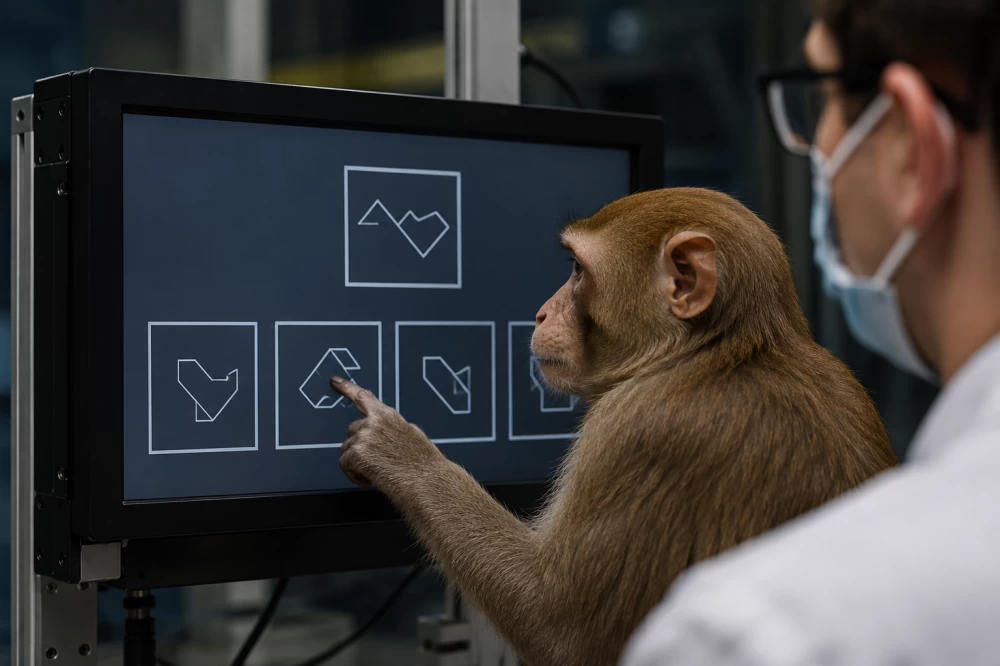
كشفت دراسة علمية حديثة أن القدرة على إدراك الخصائص المجردة للأشكال الهندسية قد لا تكون مقتصرة على البشر، بعدما أظهرت نتائجها أن بعض أنواع القرود تستطيع التعرف إلى الأشكال والتعامل معها بطريقة تقترب من آلية تفكير الإنسان.
وأشارت الدراسة، المنشورة في دورية وقائع الأكاديمية الوطنية للعلوم الأمريكية (PNAS)، إلى أن هذه القدرة قد تعود إلى سلف مشترك سبق ظهور الإنسان الحديث بوقت طويل.
وشملت الدراسة ثمانية قرود من «المكاك الريسوسي» و«البابون الزيتوني»، إلى جانب 21 طفلاً في مرحلة ما قبل المدرسة و100 شخص بالغ، خضعوا جميعاً للمهمة الإدراكية نفسها لمقارنة طريقة معالجة المعلومات الهندسية.
وصمم الباحثون اختباراً يعتمد على مطابقة الأشكال؛ إذ يشاهد المشاركون شكلاً معيناً، ثم يختارون الشكل المطابق له من بين مجموعة من الأشكال، حتى في حال تغير حجمه أو اتجاهه، بهدف قياس القدرة على التعرف إلى البنية الهندسية بعيداً عن التغيرات البصرية السطحية.
وأوضح فريق البحث أن المهمة لا تعتمد على الرؤية فقط، بل تتطلب عمليات إدراكية معقدة تبدأ بتحليل حدود الشكل واستخراج خصائصه البصرية، ثم مقارنتها بأشكال جديدة مع مراعاة اختلاف الحجم أو زاوية العرض، قبل اتخاذ القرار بشأن تطابق الشكلين.
واستخدم الباحثون أساليب مكافأة مختلفة لتحفيز المشاركين؛ إذ حصلت القرود على وجبات خفيفة عند الإجابة الصحيحة، بينما تلقى الأطفال ملصقات تشجيعية، وحصل البالغون على إشادات لفظية.
وأظهرت النتائج أن القرود تمكنت من التعرف إلى الأشكال نفسها بعد تدويرها أو تغيير حجمها، ما يشير إلى امتلاكها فهماً للمبادئ الهندسية الأساسية، وليس مجرد حفظ للأشكال أو اعتماد على مظهرها الخارجي.
وقالت قائدة فريق البحث، عالمة الأعصاب الإدراكية في جامعة كارنيغي ميلون جيسيكا كانتلون إن النتائج تدعم فكرة أن الإنسان قد لا يكون متفرداً في امتلاك الحدس الهندسي الأساسي كما كان يُعتقد، وإن هذه القدرة قد تكون جزءاً من الإرث الإدراكي المشترك بين الرئيسيات.
من جانبه، رأى أستاذ علوم الأعصاب في معهد ماساتشوستس للتكنولوجيا (MIT) إيرل ميلر، الذي لم يشارك في البحث، أن مثل هذه الدراسات تكشف أن عدداً من القدرات المعرفية التي تُعد فريدة لدى الإنسان قد تكون أقدم وأكثر انتشاراً في المملكة الحيوانية.
وبدأ الباحثون مرحلة جديدة من الدراسة لتحديد الأشكال الهندسية التي تمثل التحدي الأكبر للبشر والقرود، في محاولة لفهم تطور الإدراك الهندسي والآليات العصبية التي تقف خلف هذه القدرة المشتركة.
A recent scientific study revealed that the ability to perceive abstract properties of geometric shapes may not be exclusive to humans, as its results showed that some types of monkeys can recognize shapes and interact with them in a way that approaches human thinking.
The study, published in the Proceedings of the National Academy of Sciences (PNAS), indicated that this ability may stem from a common ancestor that existed long before the emergence of modern humans.
The study included eight monkeys from the "rhesus macaque" and "olive baboon," along with 21 preschool children and 100 adults, all of whom underwent the same perceptual task to compare the way they process geometric information.
The researchers designed a test based on shape matching; participants observe a specific shape and then select the matching shape from a set of shapes, even if its size or orientation changes, in order to measure the ability to recognize the geometric structure apart from superficial visual changes.
The research team explained that the task does not rely solely on vision but requires complex perceptual processes that begin with analyzing the shape's boundaries and extracting its visual properties, then comparing them with new shapes while considering size differences or viewing angles before making a decision about the shapes' match.
The researchers used different reward methods to motivate participants; the monkeys received snacks for correct answers, while children received encouraging stickers, and adults received verbal praise.
The results showed that the monkeys were able to recognize the same shapes after rotating or resizing them, indicating that they possess an understanding of basic geometric principles, rather than merely memorizing shapes or relying on their external appearance.
Lead researcher, cognitive neuroscientist Jessica Cantlon from Carnegie Mellon University, stated that the results support the idea that humans may not be unique in possessing basic geometric intuition as previously thought, and that this ability may be part of a shared cognitive heritage among primates.
For his part, Earl Miller, a professor of neuroscience at the Massachusetts Institute of Technology (MIT) who did not participate in the research, noted that such studies reveal that a number of cognitive abilities considered unique to humans may be older and more widespread in the animal kingdom.
The researchers have begun a new phase of the study to identify the geometric shapes that pose the greatest challenge for humans and monkeys, in an attempt to understand the evolution of geometric perception and the neural mechanisms behind this shared ability.