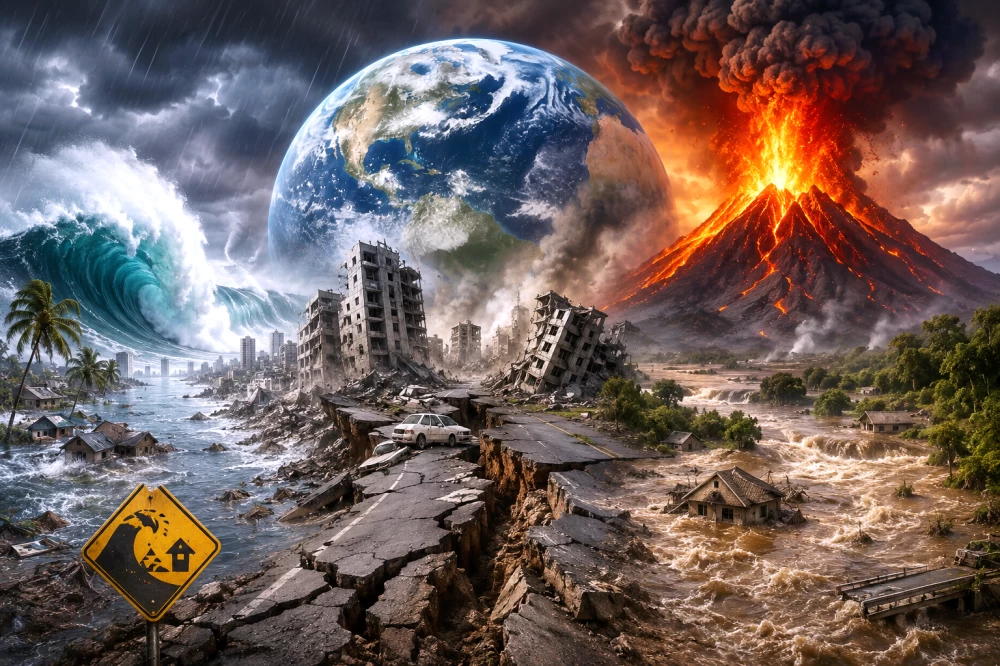
هناك لحظات تقف فيها البشرية أمام الطبيعة بكل ما تملك من علم وتقنية، لتدرك أن كوكب الأرض ما زال يحتفظ بقوى هائلة قادرة على تغيير المشهد في دقائق معدودة. فمنذ ملايين السنين، والأرض تعيد تشكيل نفسها باستمرار، لكن عندما تتحرر هذه القوى في أماكن مأهولة بالسكان، تتحول إلى كوارث تكتب فصولًا جديدة في تاريخ الإنسان.
فالزلزال ليس مجرد اهتزاز عابر، بل هو نتيجة حركة الصفائح التكتونية التي تحمل القارات والمحيطات فوقها. وعندما تتراكم الضغوط في أعماق القشرة الأرضية ثم تتحرر فجأة، تهتز اليابسة بعنف، فتتصدع الطرق، وتنهار المباني، وقد تمتد آثار الحدث إلى أعماق البحار، مولدة موجات تسونامي تعبر المحيطات بسرعة هائلة، لتضرب السواحل بقوة لا تقل خطورة عن الزلزال نفسه.
أما البركان، فهو نافذة تكشف ما يدور في باطن الأرض، فعند ثورانه، تندفع الحمم البركانية والغازات والرماد إلى السطح في مشهد يجمع بين الرهبة والجمال. وقد يؤدي الثوران إلى تدمير المناطق المحيطة، وإيقاف حركة الطيران، والتأثير في جودة الهواء، لكنه في الوقت نفسه يساهم عبر الزمن في تكوين أراضٍ جديدة وتربة تُعد من أكثر أنواع التربة خصوبة.
وتأتي الفيضانات بوصفها الكارثة الطبيعية الأكثر انتشارًا في العالم، فهي لا تحتاج سوى كميات هائلة من الأمطار، أو ذوبان سريع للثلوج، أو إعصار قوي، أو حتى انهيار سد، لتتحول المياه من مصدر للحياة إلى قوة جارفة تجرف المنازل والطرق والمزارع، وتفرض على آلاف الأسر مغادرة منازلها بحثًا عن الأمان.
ولا تقف الكوارث الأرضية عند هذا الحد، فهناك الانهيارات الأرضية التي تبتلع الطرق والمنازل في المناطق الجبلية، والأعاصير التي تحمل رياحًا تتجاوز مئات الكيلومترات في الساعة، والجفاف الذي قد يمتد لسنوات، مهددًا المياه والغذاء والأنظمة البيئية.
ورغم أن الإنسان لا يستطيع منع هذه الظواهر، فإنه استطاع أن يحد من آثارها بفضل التقدم العلمي. فالأقمار الصناعية، ومحطات الرصد، والذكاء الاصطناعي، وأنظمة الإنذار المبكر أصبحت أدوات أساسية تمنح المجتمعات وقتًا ثمينًا للاستعداد والإخلاء وتقليل الخسائر.
ويبقى الدرس الأهم، أن الطبيعة ليست عدوًا للإنسان، بل منظومة متوازنة لها قوانينها الخاصة. وكلما ازداد فهمنا لها، وارتفع مستوى جاهزيتنا، أصبحت قدرتنا على التعايش مع قواها أكبر. فبين هدير البركان، واهتزاز الزلزال، وجريان الفيضان، تذكرنا الأرض دائمًا بأنها كوكب حي، يتغير باستمرار، ويستحق منا العلم والاحترام والاستعداد.
There are moments when humanity stands before nature with all its knowledge and technology, realizing that planet Earth still holds immense forces capable of changing the landscape in just a few minutes. For millions of years, the Earth has been continuously reshaping itself, but when these forces are unleashed in populated areas, they turn into disasters that write new chapters in human history.
The earthquake is not just a fleeting tremor; it is the result of the movement of tectonic plates that carry the continents and oceans above them. When pressure builds up in the depths of the Earth's crust and then suddenly releases, the land shakes violently, cracking roads, collapsing buildings, and the effects of the event can extend to the depths of the seas, generating tsunami waves that cross oceans at tremendous speeds, striking coastlines with a force no less dangerous than the earthquake itself.
As for the volcano, it is a window revealing what is happening beneath the Earth's surface. When it erupts, lava, gases, and ash surge to the surface in a scene that combines awe and beauty. The eruption can lead to the destruction of surrounding areas, halt air travel, and affect air quality, but at the same time, it contributes over time to the formation of new lands and soil that is among the most fertile types of soil.
Floods come as the most widespread natural disaster in the world; they require only vast amounts of rain, rapid snowmelt, a strong hurricane, or even the collapse of a dam to transform water from a source of life into a sweeping force that washes away homes, roads, and farms, forcing thousands of families to leave their homes in search of safety.
Natural disasters do not stop there; there are landslides that swallow roads and homes in mountainous areas, hurricanes that carry winds exceeding hundreds of kilometers per hour, and droughts that may last for years, threatening water, food, and ecosystems.
Although humans cannot prevent these phenomena, they have managed to mitigate their effects thanks to scientific advancements. Satellites, monitoring stations, artificial intelligence, and early warning systems have become essential tools that give communities precious time to prepare, evacuate, and reduce losses.
The most important lesson remains that nature is not an enemy of humanity, but a balanced system with its own laws. The more we understand it and the higher our level of preparedness, the greater our ability to coexist with its forces. Amidst the roar of the volcano, the tremor of the earthquake, and the flow of the flood, the Earth always reminds us that it is a living planet, constantly changing, deserving of our knowledge, respect, and preparedness.