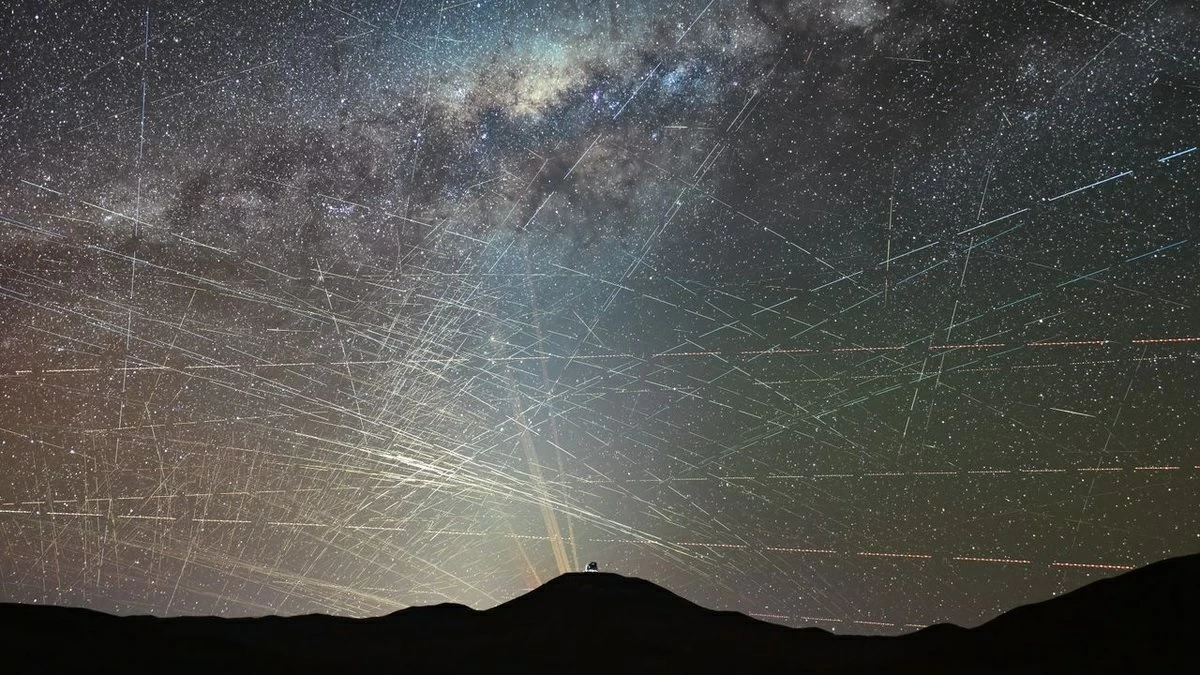
تواجه البشرية أزمة علمية غير مسبوقة قد تحرمنا من كشف أسرار الكون للأبد، حيث فجرت دراسة حديثة أجرتها المنظمة الأوروبية للفلك (ESO) مفاجأة صادمة، محذرة من أن تصاعد أعداد الأقمار الصناعية في مدار الأرض يهدد بجعل التلسكوبات الأرضية «عديمة الجدوى» تماماً، إذا تجاوزت عتبة الـ100 ألف قمر صناعي.
هذا الغزو التكنولوجي للفضاء لم يعد مجرد رفاهية، بل تحول إلى جدار عازل يحجب رؤيتنا للكون السحيق.
وقاد عالم الفلك أوليفييه هينو، مدير العمليات في المنظمة والمؤلف الرئيسي للدراسة، محاكاة حاسوبية متطورة لفهم حجم الكارثة.
ودرس هينو تأثير أعداد متفاوتة من الأقمار الصناعية ذات درجات سطوع مختلفة على عمليات الرصد، وخلص إلى نتيجة مرعبة: إذا بلغت الأقمار الصناعية درجة سطوع تعادل «القدر السابع» أو أقل، فإن البحث الفلكي واكتشاف الكواكب والنجوم الجديدة سيغدو أمراً شبه مستحيل، فضلاً عن كونه عالي التكلفة والتعقيد.
كيف تُدمر الأقمار الصناعية السماء الليلية؟
تشن الأقمار الصناعية هجوماً مزدوجاً يفسد الصور الفلكية عبر وجهين:
- انعكاس ضوء الشمس: تسبب الأقمار زيادة السطوع العام للسماء، مما يحجب الأجرام السماوية الخافتة.
- الخطوط المضيئة: تترك خلفها خطوطاً ساطعة تشوه صور التلسكوبات وتُفسد البيانات تماماً.
وكان الاتحاد الفلكي الدولي قد حذر بصرامة من أن أي زيادة في التلوث الضوئي تتخطى 10% مقارنة بظروف السماء الطبيعية، ستكون بمثابة «رصاصة الرحمة» التي تدمّر علم الفلك الأرضي.
وجّه العالم هينو تحذيراً شديد اللهجة يفرق فيه بين تلوث المدن وتلوث الفضاء. ففي السابق، كان بإمكان العلماء الهروب من أضواء المدن باللجوء إلى أكثر المناطق عزلة في العالم، مثل صحراء أتاكاما في تشيلي لبناء تلسكوباتهم.
أما الآن، ومع خطط الشركات التكنولوجية العملاقة لإطلاق ملايين الأقمار الصناعية مستقبلاً، فلن يكون هناك أي مفر على وجه الكوكب، إذ ستضيء هذه الشبكات المدارية السماء فوق كل بقعة من بقاع الأرض، مما يضع مستقبل استكشاف الفضاء من الأرض على المحك!
Humanity is facing an unprecedented scientific crisis that could forever deprive us of uncovering the secrets of the universe, as a recent study conducted by the European Southern Observatory (ESO) revealed a shocking surprise, warning that the increasing number of satellites in Earth's orbit threatens to render ground-based telescopes "completely useless" if the number exceeds 100,000 satellites.
This technological invasion of space is no longer just a luxury; it has turned into a barrier that obscures our view of the distant universe.
Astronomer Olivier Hainaut, the operations manager at the organization and the lead author of the study, conducted an advanced computer simulation to understand the magnitude of the disaster.
Hainaut studied the impact of varying numbers of satellites with different brightness levels on observational processes, and reached a terrifying conclusion: if satellites reach a brightness level equivalent to "magnitude seven" or lower, astronomical research and the discovery of new planets and stars will become nearly impossible, not to mention being highly costly and complex.
How do satellites destroy the night sky?
Satellites launch a dual attack that spoils astronomical images through two aspects:
- Reflection of sunlight: Satellites increase the overall brightness of the sky, obscuring faint celestial bodies.
- Bright trails: They leave behind bright streaks that distort telescope images and completely ruin data.
The International Astronomical Union has sternly warned that any increase in light pollution exceeding 10% compared to natural sky conditions will be a "death knell" that destroys ground-based astronomy.
Hainaut issued a strong warning distinguishing between urban light pollution and space pollution. In the past, scientists could escape city lights by retreating to the most isolated areas in the world, such as the Atacama Desert in Chile, to build their telescopes.
However, now, with the plans of giant tech companies to launch millions of satellites in the future, there will be no escape anywhere on the planet, as these orbital networks will illuminate the sky above every spot on Earth, putting the future of space exploration from Earth at risk!