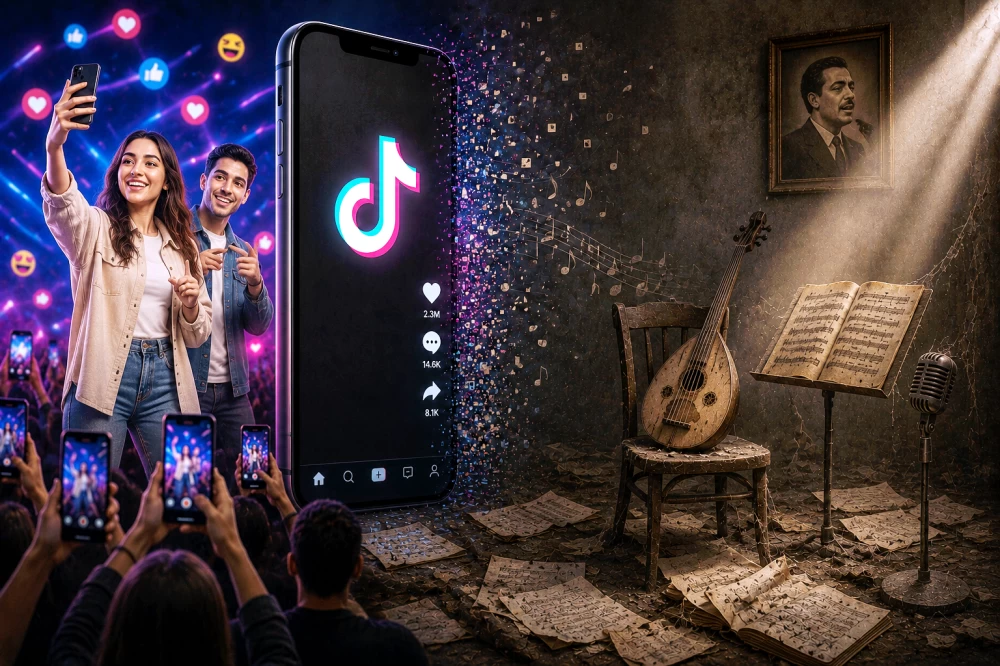
منصة وُلدت لتمنح الجميع فرصة الظهور، لكنها تحولت تدريجياً إلى ساحة تفرض شروطها الخاصة على النجاح. هكذا يمكن توصيف المشهد الحالي على تطبيق «تيك توك»، الذي بات أحد أكثر المنصات تأثيراً في تشكيل الذائقة العامة وصناعة النجوم، لكنه في الوقت ذاته يثير تساؤلات عميقة حول طبيعة المحتوى الذي تكافئه خوارزمياته.
في عالم «تيك توك»، لا يبدو أن الموهبة وحدها تكفي. فبينما تحقق مقاطع تعتمد على الإثارة والجدل والاستعراض السريع ملايين المشاهدات خلال ساعات، تقف عشرات الأصوات الغنائية والطربية الحقيقية في طوابير الانتظار، عاجزة عن اختراق الجدار الرقمي الذي تفرضه معايير الانتشار الجديدة.
لقد أعادت المنصة تعريف مفهوم الشهرة. لم يعد الصوت الجميل أو الأداء المتقن هو المعيار الأول، بل أصبحت سرعة جذب الانتباه خلال ثوانٍ معدودة هي العملة الأكثر قيمة. وهنا تكمن المفارقة؛ فالمحتوى الذي يحتاج إلى تركيز وتذوق واستماع هادئ غالباً ما يخسر أمام المحتوى الصاخب، الذي يعتمد على الصدمة أو الطرافة العابرة أو التقليعات المؤقتة.
ولعل أكثر ما يلفت الانتباه أن كثيراً من أصحاب الأصوات الطربية الراقية يقدمون أعمالاً تستحق الوصول إلى جمهور واسع، إلا أن طبيعة المنصة القائمة على الاستهلاك السريع تجعلهم خارج دائرة الضوء. فالأغنية الطربية بطبيعتها تحتاج إلى وقت ومساحة لإظهار جمالياتها، بينما تفضل الخوارزميات المقاطع القصيرة التي تضمن بقاء المستخدم في حالة تنقل مستمرة بين الفيديوهات.
ولا يعني ذلك، أن «تيك توك» منصة سلبية بالكامل، إذ نجحت بالفعل في تقديم مواهب حقيقية للجمهور ومنحت فرصاً لفنانين لم تكن لديهم وسائل للوصول سابقاً. لكن المشكلة تكمن في أن النجاح على المنصة أصبح في أحيان كثيرة مرتبطاً بقدرة صانع المحتوى على مجاراة إيقاع الخوارزمية أكثر من ارتباطه بجودة ما يقدمه.
الأخطر من ذلك، أن هذا الواقع بدأ ينعكس على الذائقة الفنية نفسها. فجيل كامل ينشأ اليوم على مقاطع موسيقية مجتزأة لا تتجاوز ثواني معدودة، بينما تتراجع مساحة الاستماع المتأني للأغاني الكاملة والأعمال الفنية التي تعتمد على البناء الموسيقي والتدرج اللحني.
إن السؤال الحقيقي لا يتعلق بـ«تيك توك» وحده، بل بالمستقبل الذي تصنعه المنصات الرقمية للفن والثقافة. هل أصبحت الخوارزمية هي الناقد الجديد الذي يحدد من يستحق الانتشار؟ وهل يمكن للأصوات الطربية الأصيلة أن تنافس في ساحة تكافئ السرعة أكثر مما تكافئ الجودة؟
ربما لا تزال الإجابة مفتوحة. لكن المؤكد أن هناك مواهب كثيرة ما زالت مدفونة تحت ركام المحتوى السريع، تنتظر فرصة عادلة لتثبت أن الفن الحقيقي لا يُقاس بعدد المشاهدات فقط، بل بقدرته على البقاء في الذاكرة بعد أن ينتهي ضجيج «الترند».
A platform born to give everyone a chance to shine, it has gradually transformed into a space that imposes its own conditions for success. This is how the current scene on the "TikTok" app can be described, which has become one of the most influential platforms in shaping public taste and creating stars, but at the same time raises deep questions about the nature of the content that its algorithms reward.
In the world of "TikTok," it seems that talent alone is not enough. While clips that rely on excitement, controversy, and rapid display achieve millions of views within hours, dozens of genuine singing and artistic voices stand in line, unable to break through the digital wall imposed by the new standards of virality.
The platform has redefined the concept of fame. A beautiful voice or a polished performance is no longer the primary criterion; rather, the speed of capturing attention within a few seconds has become the most valuable currency. Here lies the paradox; content that requires focus, appreciation, and calm listening often loses out to loud content that relies on shock, fleeting humor, or temporary trends.
What is most striking is that many holders of high-quality artistic voices present works deserving of a wide audience, yet the nature of the platform, which is based on rapid consumption, keeps them out of the spotlight. The artistic song, by its nature, requires time and space to showcase its aesthetics, while algorithms prefer short clips that ensure users remain in a continuous state of transition between videos.
This does not mean that "TikTok" is entirely a negative platform; it has indeed succeeded in presenting genuine talents to the audience and provided opportunities for artists who previously had no means to reach out. However, the problem lies in the fact that success on the platform has often become linked to the content creator's ability to keep pace with the algorithm's rhythm more than to the quality of what they present.
More dangerously, this reality has begun to reflect on artistic taste itself. A whole generation is growing up today on fragmented musical clips that do not exceed a few seconds, while the space for attentive listening to complete songs and artistic works that rely on musical construction and melodic progression is diminishing.
The real question is not just about "TikTok," but about the future that digital platforms are creating for art and culture. Has the algorithm become the new critic that determines who deserves to go viral? Can authentic artistic voices compete in a space that rewards speed more than quality?
The answer may still be open. But what is certain is that there are many talents still buried under the rubble of rapid content, waiting for a fair opportunity to prove that true art is not measured by the number of views alone, but by its ability to remain in memory after the noise of the "trend" fades away.