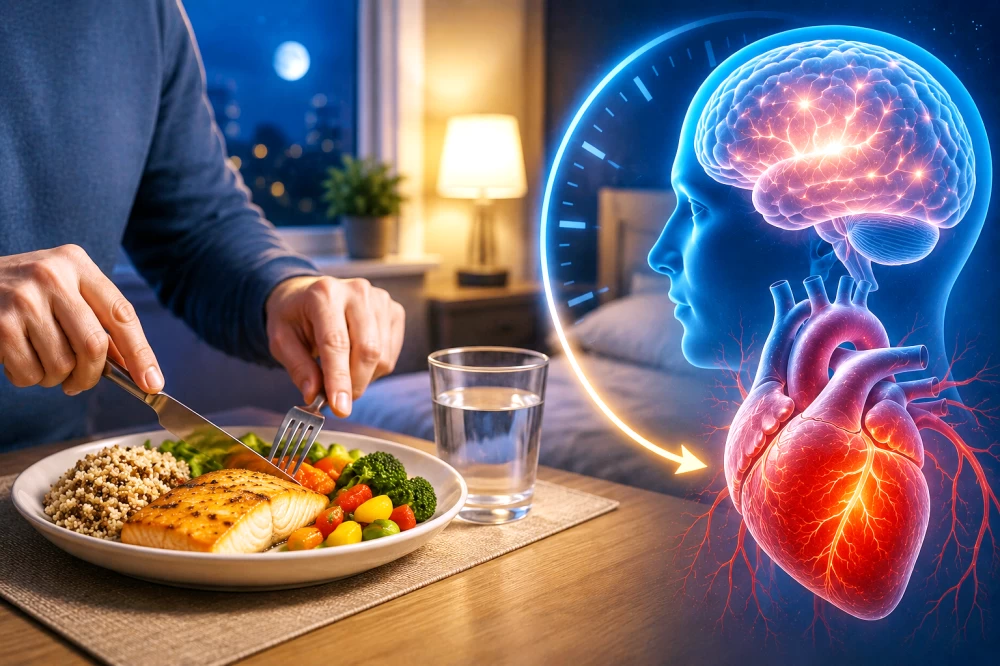
أظهرت دراسة حديثة، أن توقيت تناول العشاء لا يقل أهمية عن نوعية الطعام، إذ يمكن أن يلعب دوراً مؤثراً في تعزيز صحة القلب والدماغ وتحسين جودة النوم.
وبيّنت الدراسة، أن التوقف عن تناول الطعام قبل النوم بثلاث ساعات على الأقل يساعد الجسم على العمل وفق إيقاعه البيولوجي الطبيعي، ما ينعكس إيجاباً على وظائف القلب ومستويات السكر في الدم. كما سجل المشاركون الذين التزموا بالعشاء المبكر انخفاضاً في معدل ضربات القلب وضغط الدم أثناء النوم، إلى جانب تحسن ملحوظ في استجابة الجسم للأنسولين وانخفاض مستويات هرمون التوتر الليلي.
وأكد الباحثون، أن تناول الطعام في ساعات متأخرة من الليل قد يسبب اضطرابات في النوم ويؤثر سلباً على التوازن الهرموني والتمثيل الغذائي، بينما يساهم العشاء المبكر في تحسين عمليات التعافي الليلي للدماغ، ودعم التخلص من الفضلات الأيضية المرتبطة بأمراض التنكس العصبي مثل ألزهايمر وباركنسون.
وتدعم النتائج أهمية اعتماد عادات غذائية تتوافق مع الساعة البيولوجية للجسم، باعتبارها خطوة بسيطة تسهم في الوقاية من أمراض القلب وتحسين الصحة الإدراكية على المدى الطويل.
A recent study has shown that the timing of dinner is just as important as the quality of food, as it can play a significant role in enhancing heart and brain health and improving sleep quality.
The study indicated that stopping food intake at least three hours before sleep helps the body function according to its natural biological rhythm, which positively affects heart functions and blood sugar levels. Participants who adhered to early dinners recorded a decrease in heart rate and blood pressure during sleep, along with a noticeable improvement in the body's insulin response and a reduction in nighttime stress hormone levels.
Researchers confirmed that eating late at night can cause sleep disturbances and negatively impact hormonal balance and metabolism, while early dinners contribute to improving the brain's nighttime recovery processes and support the elimination of metabolic waste associated with neurodegenerative diseases such as Alzheimer's and Parkinson's.
The results underscore the importance of adopting eating habits that align with the body's biological clock, as a simple step that contributes to the prevention of heart diseases and improves cognitive health in the long term.