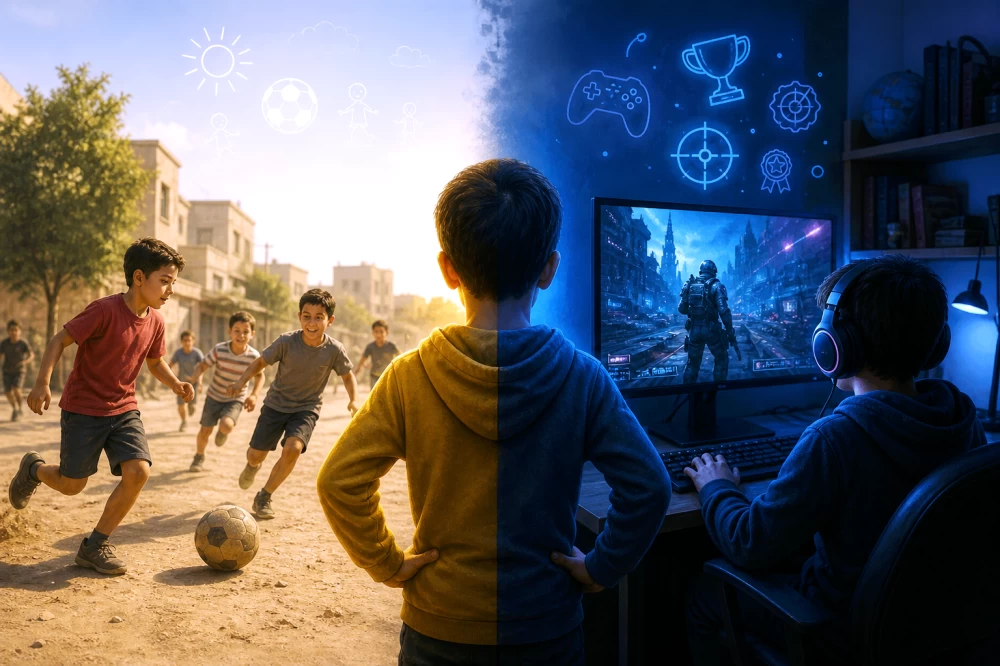
من كرة القدم في ملاعب الحواري والبلوت والضومنة على طاولات المقاهي والتجمعات الشبابية، إلى عالم ألعاب سيطرت عليه التقنية وألعاب الفيديو التي سرقت السواد الأعظم من الشباب إلى عالمها باكتساح حتى أصبح أولئك اللاعبون أشبه بسجناء داخل شاشاتهم، إذ تحولت ألعاب الحركة التقليدية إلى ألعاب رقمية، تُدفع عليها آلاف الأموال، وتوصل إلى مرحلة الإدمان لساعات وأيام.
ومع انتشار أجهزة الكمبيوتر والهواتف الذكية وأجهزة الألعاب، أصبح من السهل تصميم ألعاب تفاعلية تقدم رسومات وصوتاً وتجارب أكثر إثارة.
كما أن الألعاب الرقمية متاحة في أي وقت ومن أي مكان عبر الهاتف أو الإنترنت، بعكس ألعاب الحركة التقليدية التي تحتاج إلى مساحة مفتوحة وعدد من اللاعبين، إضافة إلى أن الحياة الحديثة أصبحت أكثر ارتباطاً بالمنازل والمدن المزدحمة، مع قلة المساحات المفتوحة، مما قلل ممارسة ألعاب الشارع والساحات.
من جانب مادي، تقدم الألعاب الرقمية مستويات، جوائز، تحديات، ومنافسة عالمية عبر الإنترنت، وهو ما يجذب الأطفال والشباب أكثر.
وجعلت منصات عدة الألعاب الرقمية جزءاً من الثقافة اليومية، مع مشاهير وبطولات ومتابعين.
الألعاب الرقمية أصبحت صناعة بمليارات الدولارات؛ لذلك يتم تطويرها وتسويقها باستمرار بشكل أكبر من الألعاب التقليدية.
ورغم كل ذلك، ما زالت ألعاب الحركة التقليدية مهمة؛ لأنها تنمّي اللياقة البدنية، التواصل الاجتماعي، وروح الفريق، وهي لم تختفِ، لكنها تراجعت أمام راحة التقنية وجاذبية العالم الرقمي.
From football in alleyways, playing cards, and board games on café tables and youth gatherings, to a world of games dominated by technology and video games that have captured the vast majority of youth, becoming akin to prisoners within their screens, as traditional action games transformed into digital games, costing thousands of dollars and reaching a level of addiction for hours and days.
With the spread of computers, smartphones, and gaming consoles, it has become easy to design interactive games that offer more exciting graphics, sound, and experiences.
Moreover, digital games are available anytime and anywhere via phones or the internet, unlike traditional action games that require open spaces and a number of players. Additionally, modern life has become more connected to homes and crowded cities, with fewer open spaces, which has reduced the practice of street and courtyard games.
From a material perspective, digital games offer levels, rewards, challenges, and global competition online, which attracts children and youth even more.
Various platforms have made digital games a part of daily culture, with celebrities, tournaments, and followers.
Digital games have become a billion-dollar industry; therefore, they are continuously developed and marketed more than traditional games.
Despite all this, traditional action games remain important; they develop physical fitness, social communication, and team spirit. They have not disappeared, but they have declined in the face of the convenience of technology and the allure of the digital world.