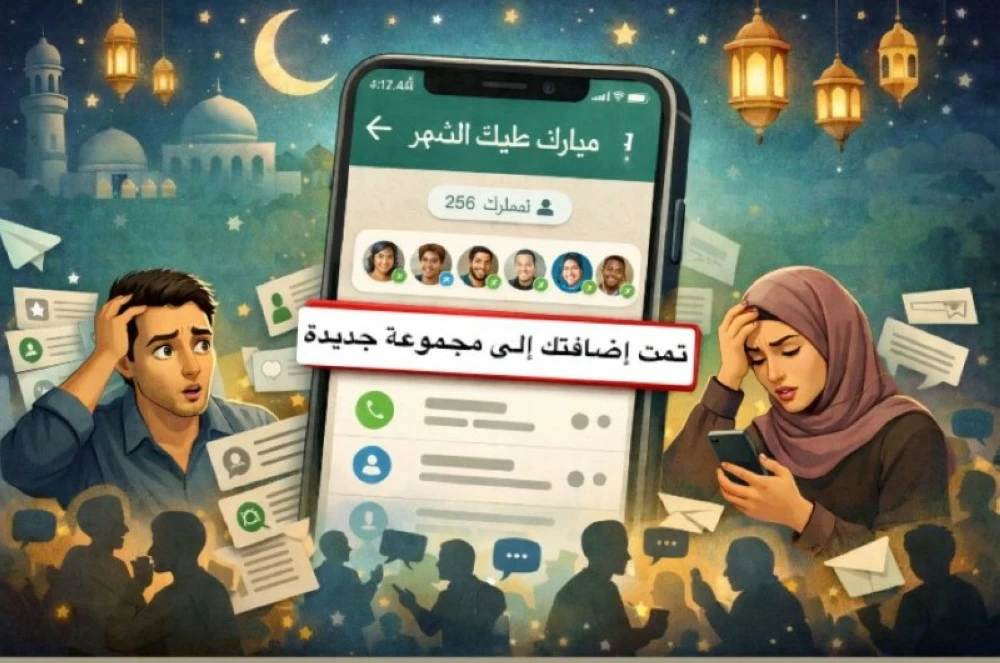
مع إعلان ثبوت رؤية هلال شهر رمضان أو عيد الفطر، يتكرر موقف رقمي محرج ومألوف يواجهه عدد من مستخدمي واتساب.
نية إرسال رسالة تهنئة جماعية تنتهي بإنشاء «مجموعة» تضم أسماءً لا يعرف بعضها بعضاً؛ إذ قد تجد نفسك مضافاً إلى «قروب واتساب» جديد مع أسماء لا تعرف أغلبها، أو قد تجد نفسك جمعت قائمتك كاملة في فضاء مفتوح نتيجة الخلط بين مسار الرسالة الجماعية ومسار إنشاء القروب داخل التطبيق.
خطأ بسيط في الإجراء، نعم، لكنه يضع المرسل والمضافين في حرج اجتماعي غير مقصود.
يتكرر هذا المشهد في كل عام لأن الدافع واحد: الرغبة في إيصال التهنئة المعلّبة إلى أكبر عدد ممكن بسرعة.
غير أن اختلاف طريقة الإرسال يغيّر طبيعة التواصل؛ فالرسالة الجماعية تبقى ضمن العلاقة الفردية بين المرسل والمتلقي، بينما القروب ينقل الجميع إلى مساحة محادثة مشتركة لم تُبنَ مسبقاً، ويجعل التفاعل فيها جماعياً لا شخصياً.
وعند النظر إلى الظاهرة من زاوية أوسع، يبرز تساؤل يتجاوز الخطأ الإجرائي نفسه: هل ما زالت رسائل التهاني تؤدي وظيفة التعبير عن المشاعر كما كانت، أم تحولت إلى صيغ جاهزة تُنسخ وتُرسل بحكم العادة؟
التفسير المحتمل يحمل جانباً نفسياً واجتماعياً، فسرعة التواصل الرقمي تشجّع الاختصار وإعادة الاستخدام، ما يقلّل من الجهد الفردي في صياغة الرسالة، دون أن يعني بالضرورة غياب الشعور، بل تغيّر طريقة التعبير عنه.
وحتى لا تقع في الحرج نفسه، وبحسب آلية الاستخدام في واتساب، فإن إرسال رسالة جماعية يتم عبر الدخول إلى «قائمة البث»، ثم إنشاء قائمة جديدة، وتحديد جهات الاتصال المستهدفة، وبعدها تُكتب رسالة واحدة تصل لكل شخص على حدة داخل محادثته الخاصة.
أما إنشاء مجموعة واتساب فيتم من خلال اختيار «مجموعة جديدة»، ثم إضافة الأعضاء، وتحديد اسم المجموعة وإعدادها، لتبدأ بعدها محادثة مشتركة تظهر فيها الرسائل والردود لجميع المشاركين.
With the announcement of the sighting of the Ramadan crescent or Eid al-Fitr, a familiar and awkward digital situation recurs for many WhatsApp users.
The intention to send a group congratulatory message often ends with the creation of a "group" that includes names that do not know each other; you may find yourself added to a new "WhatsApp group" with names you do not recognize, or you may find that you have gathered your entire contact list in an open space due to the confusion between the group message path and the group creation path within the app.
A simple procedural mistake, yes, but it puts the sender and the added individuals in an unintended social embarrassment.
This scene repeats every year because the motivation is the same: the desire to convey the packaged congratulations to as many people as possible quickly.
However, the difference in the method of sending changes the nature of communication; the group message remains within the individual relationship between the sender and the recipient, while the group shifts everyone to a shared conversation space that was not previously established, making the interaction collective rather than personal.
When looking at the phenomenon from a broader perspective, a question arises that goes beyond the procedural mistake itself: Do congratulatory messages still serve the function of expressing feelings as they once did, or have they transformed into ready-made formats that are copied and sent out of habit?
The possible explanation carries a psychological and social aspect, as the speed of digital communication encourages brevity and reuse, which reduces individual effort in crafting the message, without necessarily implying a lack of feeling, but rather a change in the way it is expressed.
To avoid falling into the same embarrassment, and according to the usage mechanism in WhatsApp, sending a group message is done by entering the "Broadcast List," then creating a new list, selecting the targeted contacts, and then writing a single message that reaches each person individually within their private conversation.
On the other hand, creating a WhatsApp group is done by selecting "New Group," then adding members, naming the group, and setting it up, after which a shared conversation begins where messages and replies appear for all participants.