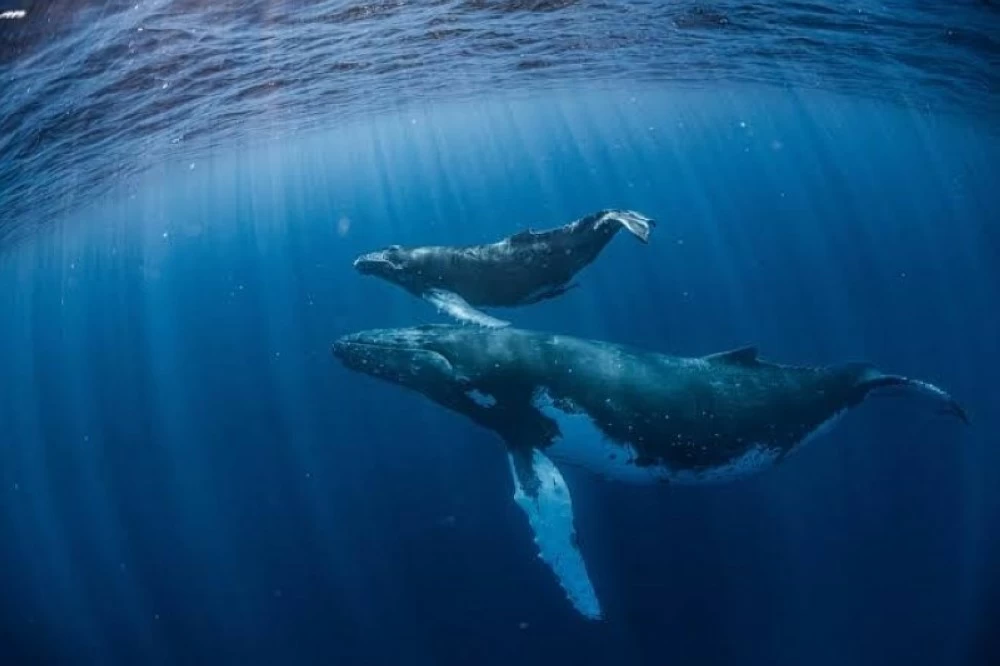
تمكن فريق دولي من علماء المحيطات من أستراليا والولايات المتحدة، ولأول مرة على أرض الواقع، من قياس حدة السمع لدى الحيتان الحدباء، ليكشفوا أنها قادرة على إدراك أصوات بترددات تصل إلى 22 كيلوهرتز من مسافات بعيدة.
لطالما شكك علماء الأحياء في قدرة الحيتان الحدباء على سماع الأصوات عالية التردد، إلا أن دراسة حديثة نُشرت في مجلة Current Biology حسمت الجدل، مؤكدة أن جميع الحيتان البالينية تتمتع بنطاق سمعي أوسع بكثير مما كان يُعتقد سابقاً.
وأوضح الباحثون أن هذه النتائج تمثل خطوة بالغة الأهمية في تطوير إستراتيجيات فعالة لحماية الحيتان من التأثيرات السلبية للضوضاء البشرية المتزايدة في المحيطات.
وقاد الدراسة فريق بحثي مشترك من جامعة كوينزلاند الأسترالية، برئاسة الأستاذة المساعدة ريبيكا دونلوب، وركزت الأبحاث على مجموعات الحيتان الحدباء في المحيط الهادئ قبالة السواحل الشرقية لأستراليا، وهي حيتان معروفة بهجراتها الموسمية الطويلة نحو القارة القطبية الجنوبية.
وخلال الدراسة، حلل العلماء تأثير مصادر الضوضاء الصناعية، مثل مراوح السفن وصخب المناطق الساحلية، على سلوك الحيتان وقدرتها على التنقل والبحث عن الغذاء.
ولجمع البيانات، ابتكر الفريق منهجاً مبتكراً شبيهاً باختبارات السمع السلوكية المستخدمة مع الأطفال، وتمت مراقبة ردود فعل الحيتان تجاه سلسلة من الأصوات المتفاوتة في الشدة والتردد، بهدف تحديد الحد الأدنى لقدرتها السمعية.
كما درس الباحثون تأثير الإشارات الصوتية عالية ومنخفضة التردد الصادرة عن أجهزة السونار، وقياس مدى تأثيرها على مسارات هجرة الحيتان، من خلال اختبارات متعددة شملت مسافات وترددات مختلفة لتقييم حساسية آذانها.
وأظهرت النتائج أن الحيتان الحدباء تستجيب بشكل أفضل للأصوات التي تراوح بين 1 و4 كيلوهرتز، لكنها قادرة أيضاً على سماع الأصوات منخفضة التردد جداً، التي تصل إلى 80 هرتز، فضلاً عن الضوضاء عالية التردد الناتجة عن أجهزة السونار حتى 22 كيلوهرتز.
وجاءت هذه النتائج مفاجئة للعلماء، إذ كانت التقديرات التشريحية السابقة تشير إلى ضعف قدرة الحيتان على سماع الأصوات التي تتجاوز 10 كيلوهرتز، ما يسلط الضوء على الحاجة الملحّة لحماية هذه الكائنات البحرية من التلوث الضوضائي عبر نطاق واسع من الترددات.
An international team of ocean scientists from Australia and the United States has, for the first time in the real world, measured the hearing ability of humpback whales, revealing that they can perceive sounds at frequencies up to 22 kilohertz from long distances.
Biologists have long questioned the ability of humpback whales to hear high-frequency sounds, but a recent study published in Current Biology has settled the debate, confirming that all baleen whales possess a much wider hearing range than previously thought.
The researchers explained that these findings represent a significant step in developing effective strategies to protect whales from the negative impacts of increasing human noise in the oceans.
The study was led by a joint research team from the University of Queensland in Australia, headed by Assistant Professor Rebecca Dunlop, and focused on humpback whale populations in the Pacific Ocean off the eastern coasts of Australia, known for their long seasonal migrations to Antarctica.
During the study, scientists analyzed the impact of industrial noise sources, such as ship propellers and coastal noise, on the behavior of whales and their ability to navigate and search for food.
To collect data, the team developed an innovative approach similar to behavioral hearing tests used with children, monitoring the whales' reactions to a series of sounds varying in intensity and frequency, aiming to determine the minimum of their hearing ability.
The researchers also studied the effects of high and low-frequency sound signals emitted by sonar devices, measuring their impact on the whales' migration paths through multiple tests that included different distances and frequencies to assess the sensitivity of their ears.
The results showed that humpback whales respond best to sounds ranging from 1 to 4 kilohertz, but they are also capable of hearing very low-frequency sounds down to 80 hertz, as well as high-frequency noise generated by sonar devices up to 22 kilohertz.
These findings came as a surprise to scientists, as previous anatomical estimates suggested that whales had a limited ability to hear sounds exceeding 10 kilohertz, highlighting the urgent need to protect these marine creatures from noise pollution across a wide range of frequencies.