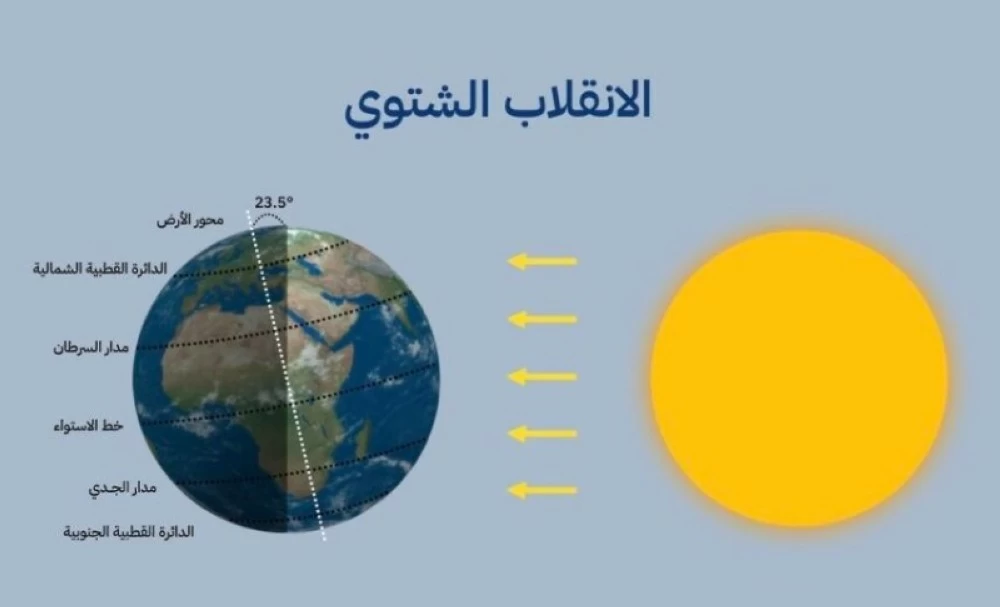
فسر فلكيون الانقلاب الشتوي، وتأثيره على طول الليل والنهار، لافتين إلى بدء الظاهرة العلمية أمس (الأحد)، وقالوا إنها تحدث بسبب ميل محور دوران الأرض بزاوية 23.5 درجة خلال رحلتها السنوية حول الشمس.
وأكد المختصون إن ذلك يؤدي إلى تعاقب الفصول واختلاف طول الليل والنهار بمعزل عن مسافة الأرض من الشمس، إذ يميل القطب الشمالي في هذا التوقيت بعيداً عن الشمس لتتعامد أشعتها تماماً على مدار الجدي جنوباً.
بدء فصل الشتاء رسمياً
وأعلنت حسابات فلكية بدء فصل الشتاء رسمياً في النصف الشمالي من الكرة الأرضية أمس الأحد 21 ديسمبر 2025، وذلك مع حدوث ظاهرة الانقلاب الشتوي التي سجلت ذروتها عند الساعة 06:03 مساءً بتوقيت مكة المكرمة، لتشكل هذه اللحظة نقطة التحول السنوية التي يرافقها أقصر نهار وأطول ليل خلال العام، في حين تشرق شمس الصيف بأطول نهار لها في النصف الجنوبي من الكوكب.
وصول الشمس إلى أدنى ارتفاع
ورصد المتخصصون وصول الشمس إلى أدنى ارتفاع لها في السماء مع شروقها من أقصى الجنوب الشرقي، مما تسبب في تسجيل ظلال الأجسام أطول مدى لها على مدار السنة نتيجة المسار الظاهري المنخفض للشمس، وهو ما جعل ساعات النهار تتراجع إلى ما دون 12 ساعة في معظم المناطق الواقعة شمال خط الاستواء، فيما غابت الشمس تماماً عن المناطق القطبية الشمالية وبقيت فوق الأفق طوال اليوم في الدائرة القطبية الجنوبية.
الاحتفاء بالانقلاب الشتوي
وشهدت مواقع تاريخية وجغرافية عدة حول العالم تجمعات بشرية للاحتفاء بهذه الظاهرة، ومن أبرزها منطقة ستونهنج في إنجلترا وقرية بيجي في مقاطعة هيلونغجيانغ الصينية، إذ توافد الزوار لمراقبة الحدث الذي يرمز لدى الكثيرين لبداية عودة الضوء والتجدد.
وأضافت البيانات أن ساعات النهار ستبدأ بالزيادة التدريجية المتواصلة اعتباراً من اليوم (الإثنين) على حساب ساعات الليل، في دورة زمنية تستمر حتى موعد الاعتدال الربيعي المرتقب في 20 مارس 2026، والذي ستتساوى فيه ساعات الليل والنهار مرة أخرى في أنحاء العالم كافة.
Astronomers explained the winter solstice and its effect on the length of night and day, noting that the scientific phenomenon began yesterday (Sunday). They stated that it occurs due to the tilt of the Earth's rotation axis at an angle of 23.5 degrees during its annual journey around the sun.
Experts confirmed that this leads to the succession of seasons and the variation in the length of night and day, regardless of the Earth's distance from the sun, as the North Pole tilts away from the sun at this time, allowing its rays to strike directly on the Tropic of Capricorn to the south.
Official Start of Winter
Astronomical calculations announced the official start of winter in the Northern Hemisphere yesterday, Sunday, December 21, 2025, coinciding with the occurrence of the winter solstice, which peaked at 06:03 PM Mecca time. This moment marks the annual turning point that accompanies the shortest day and the longest night of the year, while the summer sun shines with its longest day in the Southern Hemisphere of the planet.
Sun Reaches Its Lowest Elevation
Specialists observed the sun reaching its lowest elevation in the sky as it rose from the far southeast, causing shadows of objects to record their longest extent of the year due to the sun's low apparent path. This resulted in daytime hours dropping below 12 hours in most areas north of the equator, while the sun completely disappeared from the northern polar regions and remained above the horizon all day in the southern polar circle.
Celebrating the Winter Solstice
Various historical and geographical sites around the world witnessed gatherings of people to celebrate this phenomenon, most notably Stonehenge in England and the village of Beiji in Heilongjiang Province, China, where visitors flocked to observe the event, which symbolizes for many the beginning of the return of light and renewal.
Data added that daytime hours will begin to gradually increase continuously starting today (Monday) at the expense of nighttime hours, in a time cycle that will continue until the expected spring equinox on March 20, 2026, when night and day hours will once again be equal across the world.