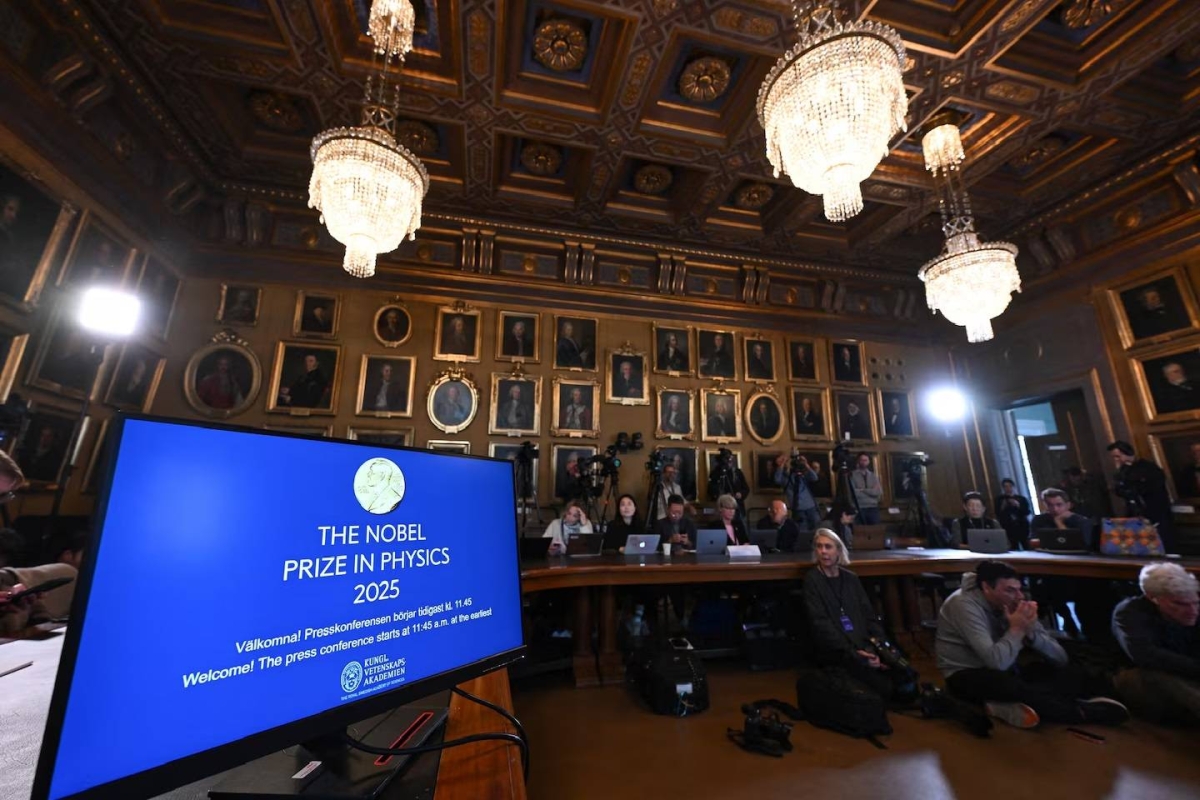
حصل العلماء الثلاثة جون كلارك، وميشيل ديفوريت، وجون مارتينيس على جائزة نوبل في الفيزياء لعام 2025؛ تقديراً لأبحاثهم الرائدة التي أثبتت أن ميكانيكا الكم لا تنطبق فقط على الجزيئات الصغيرة، بل يمكن أن تظهر في أنظمة كبيرة بحجم الدوائر الكهربائية.
الكم على مستوى الماكرو
أظهرت تجارب العلماء الثلاثة ظاهرة «الأنفاق الكمومي» في دائرة كهربائية وهي ظاهرة تسمح للجسيمات بتجاوز الحواجز وكأنها غير موجودة. وما يجعل هذا الاكتشاف مميزاً هو أنه رُصد في أنظمة يمكن رؤيتها بالعين المجردة تقريباً، وهو أمر لم يكن يُعتقد بإمكانيته سابقاً.
قفزة نحو المستقبل
ويمثل هذا الإنجاز خطوة كبرى نحو تطوير الحواسيب الكمومية، التي يُتوقع أن تُحدث ثورة في عالم التكنولوجيا والذكاء الاصطناعي؛ بسبب قدرتها الهائلة على معالجة المعلومات بسرعة غير مسبوقة.
باب جديد في الفيزياء
وقالت الأكاديمية الملكية السويدية للعلوم، التي تمنح الجائزة، إن هذه الأبحاث «دفعت حدود فيزياء الكم إلى آفاق جديدة، وأظهرت بوضوح أن الظواهر الكمومية يمكن رؤيتها في أنظمة أكبر بكثير مما كان متوقعاً».
من هم الفائزون؟
- جون كلارك: أستاذ في جامعة كاليفورنيا، ساهم في تطوير أدوات لرصد التأثيرات الكمومية في أنظمة كهربائية.
- ميشيل هـ. ديفوريت: من جامعة ييل، وقاد أبحاثاً عن كيفية تفاعل الأنظمة الكبيرة مع البيئة الكمومية.
- جون مارتينيس: من جامعة كاليفورنيا أيضاً، وعمل مع شركة «قوقل» في مشروع حاسوب كمومي حقق «تفوقاً كمومياً».
The three scientists John Clark, Michel Devorit, and John Martinez have been awarded the Nobel Prize in Physics for 2025, in recognition of their groundbreaking research that demonstrated that quantum mechanics applies not only to small particles but can also manifest in large systems the size of electrical circuits.
Quantum at the Macro Level
The experiments conducted by the three scientists showcased the phenomenon of "quantum tunneling" in an electrical circuit, a phenomenon that allows particles to bypass barriers as if they do not exist. What makes this discovery remarkable is that it was observed in systems that can be seen with the naked eye, something that was previously thought to be impossible.
A Leap into the Future
This achievement represents a major step towards the development of quantum computers, which are expected to revolutionize the world of technology and artificial intelligence due to their immense capability to process information at unprecedented speeds.
A New Chapter in Physics
The Royal Swedish Academy of Sciences, which awards the prize, stated that this research "has pushed the boundaries of quantum physics into new horizons and clearly demonstrated that quantum phenomena can be observed in systems much larger than previously expected."
Who are the Winners?
- John Clark: A professor at the University of California, contributed to the development of tools to detect quantum effects in electrical systems.
- Michel H. Devorit: From Yale University, led research on how large systems interact with the quantum environment.
- John Martinez: Also from the University of California, worked with Google on a quantum computer project that achieved "quantum supremacy."