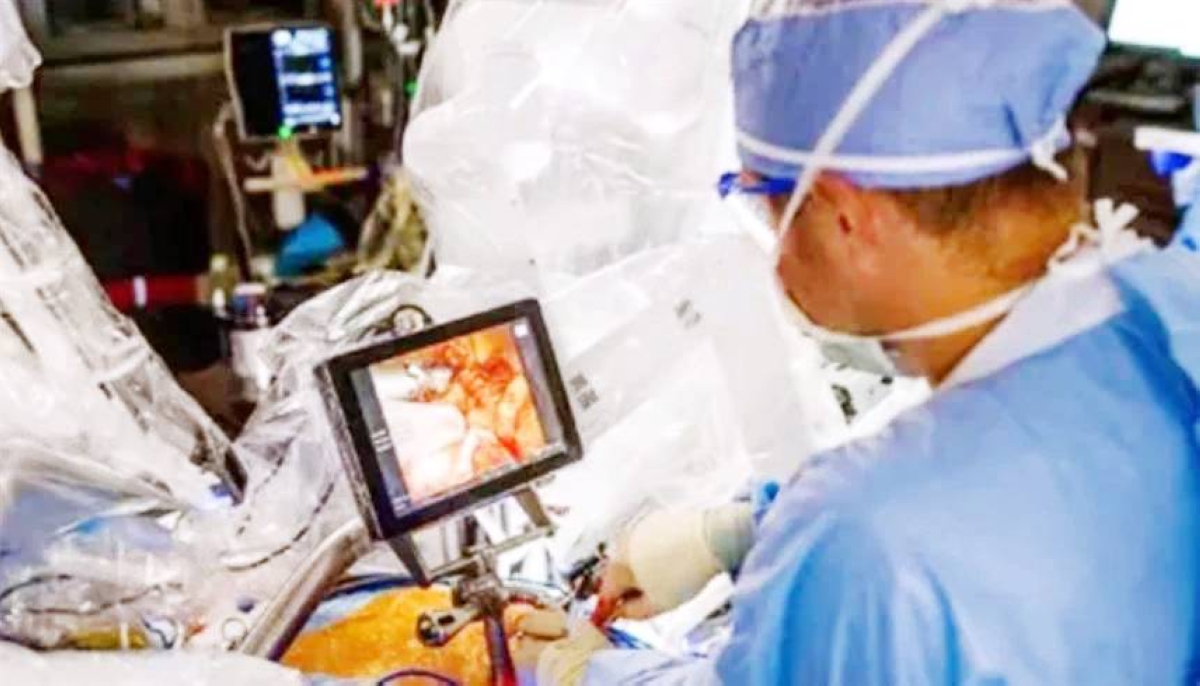
في سابقة طبية غير مسبوقة، نفّذ فريق جراحي عملية دقيقة لاستبدال صمام القلب باستخدام ذراع روبوتية متقدمة دون الحاجة إلى فتح جدار الصدر. وأكد الأطباء أن العملية أُجريت لمريض كان يعاني من تدهور حاد في وظائف القلب، وكانت حالته لا تحتمل الجراحة التقليدية، ما دفع الفريق لتطبيق التقنية الحديثة عبر القسطرة وبالاعتماد على الذكاء الاصطناعي.
الميزة الأهم في هذه العملية تمثلت في تقليل نسب المخاطر، وخفض الحاجة للتخدير العام، وتسريع فترة التعافي بدرجة ملحوظة. كما تُمكّن هذه التقنية من إجراء الجراحة في غرف عمليات أصغر وأكثر أمانًا، وتفتح آفاقًا مستقبلية لتطبيقات أوسع في جراحات القلب الدقيقة.
وبحسب الفريق الطبي، فإن الروبوت يتمتع بدرجة استجابة عالية، ويُدار بدقة فائقة تسمح له بإجراء تدخلات معقّدة في أماكن شديدة الحساسية.
روبوت يجري أول عملية استبدال صمام قلب دون فتح الصدر
29 يوليو 2025 - 18:23
|
آخر تحديث 29 يوليو 2025 - 18:23


تابع قناة عكاظ على الواتساب
«عكاظ» (لندن) OKAZ_online@
In an unprecedented medical first, a surgical team performed a delicate heart valve replacement using an advanced robotic arm without the need to open the chest wall. Doctors confirmed that the procedure was conducted on a patient suffering from severe heart function deterioration, and his condition could not withstand traditional surgery, prompting the team to apply modern techniques via catheterization, relying on artificial intelligence.
The most significant advantage of this procedure was the reduction of risk rates, decreased need for general anesthesia, and a notable acceleration in recovery time. This technique also enables surgeries to be performed in smaller, safer operating rooms, opening future prospects for broader applications in precise heart surgeries.
According to the medical team, the robot has a high degree of responsiveness and is operated with exceptional precision, allowing it to perform complex interventions in highly sensitive areas.
The most significant advantage of this procedure was the reduction of risk rates, decreased need for general anesthesia, and a notable acceleration in recovery time. This technique also enables surgeries to be performed in smaller, safer operating rooms, opening future prospects for broader applications in precise heart surgeries.
According to the medical team, the robot has a high degree of responsiveness and is operated with exceptional precision, allowing it to perform complex interventions in highly sensitive areas.