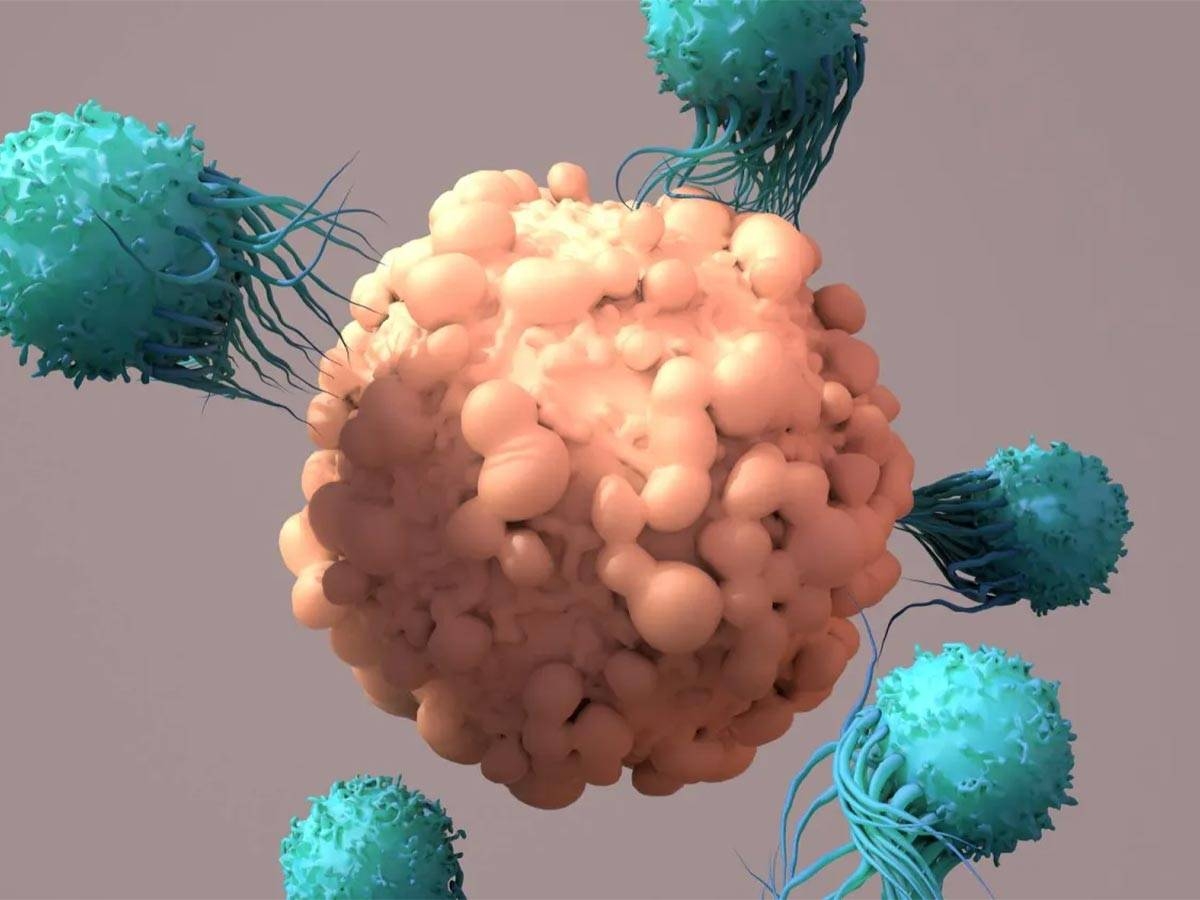
طور فريق من الباحثين من الجامعة التقنية الدانماركية منصة ذكاء اصطناعي قد تحدث ثورة في العلاج الدقيق للسرطان، من خلال تصميم بروتينات مخصصة لتوجيه الخلايا المناعية لاستهداف الأورام بسرعة وفعالية.
وأوضح الباحثون أن التقنية الحاسوبية الجديدة قادرة على تصميم جزيئات pMHC، وهي جزيئات تؤدي دوراً محورياً في الاستجابة المناعية، وخصوصاً في عرض المستضدات على سطح الخلايا ليتعرف عليها الجهاز المناعي، مثل الخلايا التائية.
وبحسب العلماء، يسرع هذا الابتكار عملية تطوير العلاجات المناعية، حيث يقلص زمنها من سنوات إلى أسابيع معدودة.
وقد اختبر الفريق البحثي المنصة على هدف معروف في أنواع مختلفة من السرطان من خلال بروتين NY-ESO-1، حيث صمموا رابطاً صغيراً يرتبط بدقة مع جزيئات هذا البروتين، وعند إدخاله في الخلايا التائية، تم إنتاج خلايا جديدة أطلق عليها اسم IMPAC-T، أظهرت فعالية في توجيه الخلايا التائية لقتل الخلايا السرطانية في تجارب مختبرية.
كما طور الباحثون فحصاً أمنياً معتمداً على الذكاء الاصطناعي، يستخدم لتقييم الروابط المصممة وضمان عدم تفاعلها مع جزيئات pMHC في الخلايا السليمة، ما يقلل من احتمالات الآثار الجانبية.
وقال الأستاذ المشارك في الجامعة التقنية الدانماركية الدكتور تيموثي جينكينز إن المنصة تستخدم الذكاء الاصطناعي لتصميم مفاتيح جزيئية تستهدف الخلايا السرطانية، وتتم عملية التصميم خلال فترة تراوح بين 4 و6 أسابيع فقط، مقارنة بالأساليب التقليدية التي تستغرق وقتاً أطول بكثير.
وأضاف أن المنصة تسهم في حل مشكلة رئيسية في العلاج المناعي، وهي قدرة الخلايا التائية على التعرف على الأهداف السرطانية المتنوعة، إذ إن هذه الخلايا تتعرف عادة على بروتينات «ببتيدات» تعرضها جزيئات pMHC على سطح الخلايا، لكن التنوع الكبير في مستقبلات هذه الخلايا يصعّب إنتاج علاجات مخصصة.
A team of researchers from the Danish Technical University has developed an artificial intelligence platform that could revolutionize precision cancer treatment by designing custom proteins to direct immune cells to target tumors quickly and effectively.
The researchers explained that the new computational technique is capable of designing pMHC molecules, which play a pivotal role in the immune response, particularly in presenting antigens on the surface of cells for recognition by the immune system, such as T cells.
According to the scientists, this innovation accelerates the development of immunotherapies, reducing the time required from years to just a few weeks.
The research team tested the platform on a well-known target in various types of cancer using the NY-ESO-1 protein, where they designed a small linker that precisely binds to the molecules of this protein. When introduced into T cells, new cells were produced, named IMPAC-T, which showed effectiveness in directing T cells to kill cancer cells in laboratory experiments.
The researchers also developed an AI-based security screening to evaluate the designed linkers and ensure they do not interact with pMHC molecules in healthy cells, thereby reducing the likelihood of side effects.
Dr. Timothy Jenkins, an associate professor at the Danish Technical University, stated that the platform uses artificial intelligence to design molecular keys that target cancer cells, and the design process takes only 4 to 6 weeks, compared to traditional methods that take much longer.
He added that the platform helps address a major issue in immunotherapy, which is the ability of T cells to recognize diverse cancer targets. These cells typically recognize proteins or "peptides" presented by pMHC molecules on the surface of cells, but the significant diversity in the receptors of these cells makes it challenging to produce customized treatments.