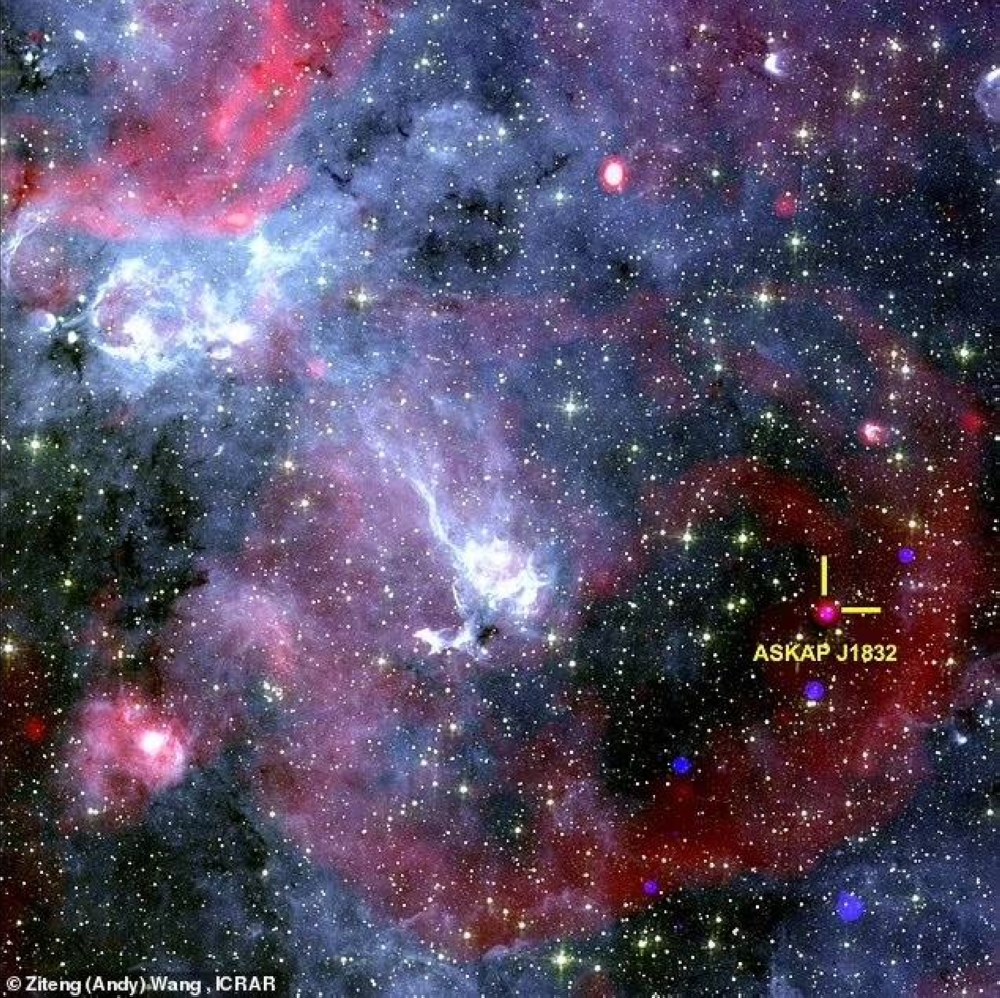
في أعماق الفضاء، على بعد 14700 سنة ضوئية من الأرض، رصد العلماء جسماً كونياً غامضاً يُعرف باسم ASKAP J1832-0911 يصدر إشارات مشتركة من موجات الراديو والأشعة السينية كل 44 دقيقة لمدة دقيقتين.
وحسب موقع mail online، يُعد هذا الاكتشاف الأول من نوعه، حيث لم يُسبق رصد جرم من فئة المتغيرات طويلة المدة (LPT) يصدر أشعة سينية، مما يثير تساؤلات حول طبيعته وقوانين الفيزياء التي تحكمه.
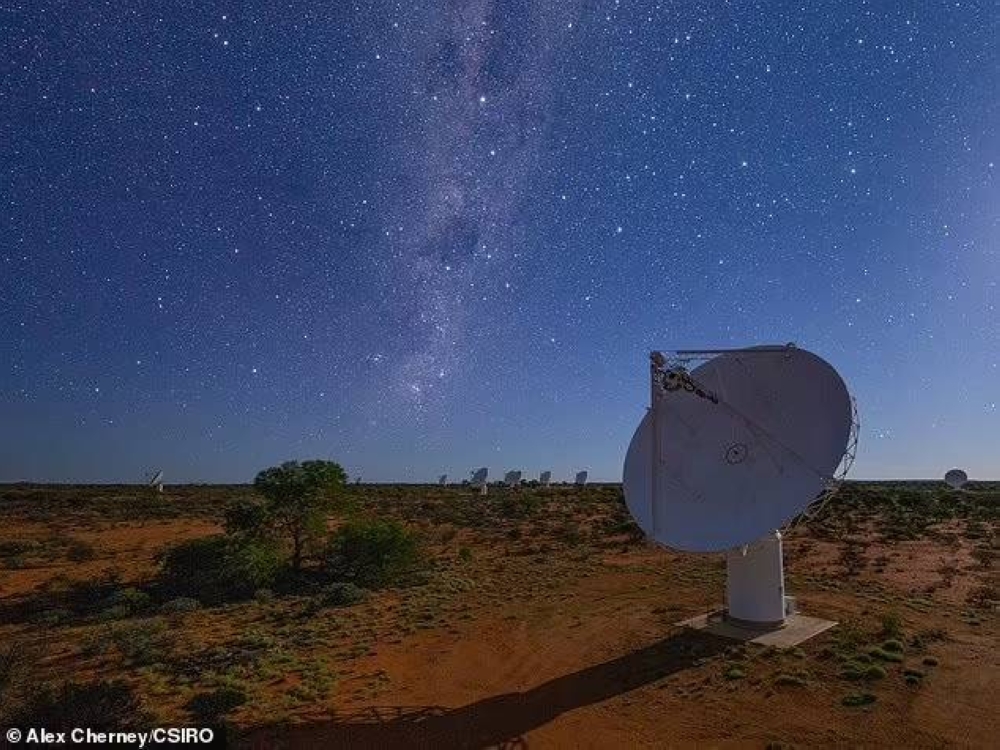
تم رصد هذه الظاهرة الكونية في مستوى المجرة، وهي منطقة مكتظة بالنجوم والغازات والغبار، باستخدام تلسكوب ASKAP الراديوي في أستراليا، التابع لوكالة العلوم الوطنية الأسترالية (CSIRO).
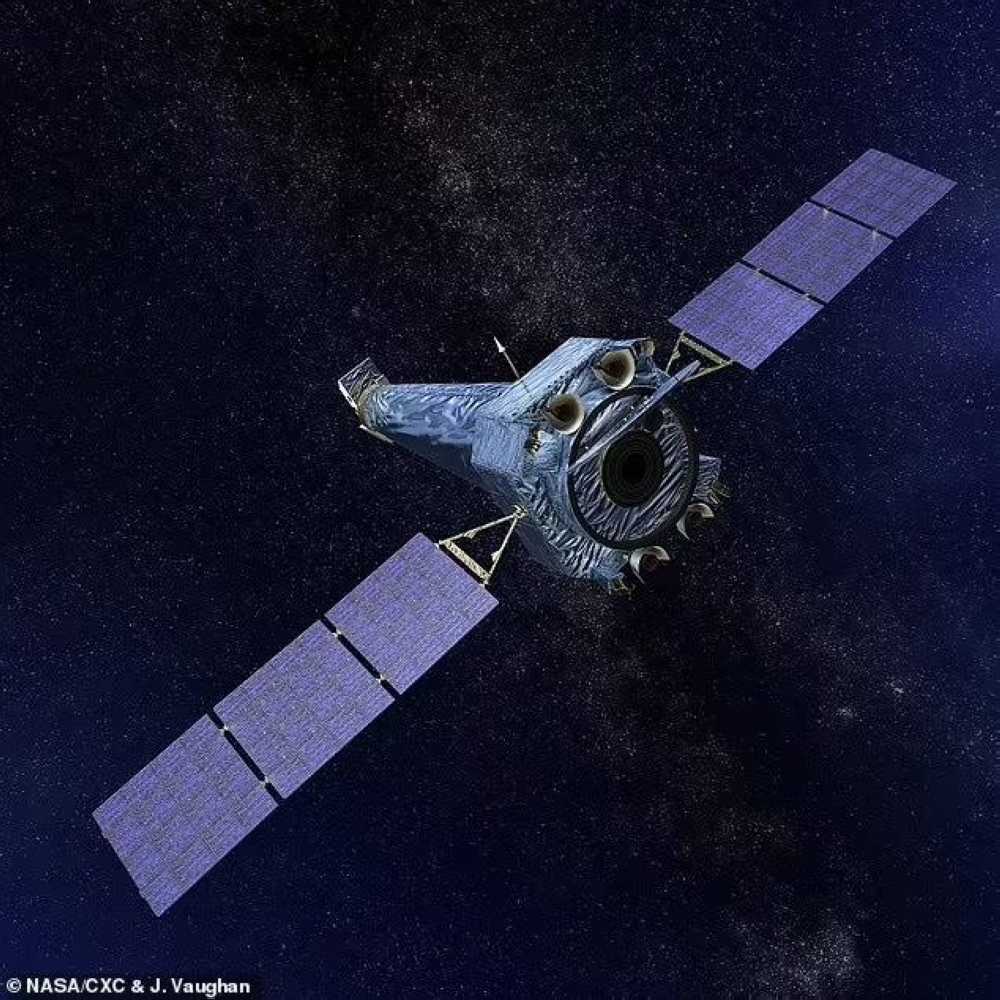
وبالمصادفة، تزامن رصد إشارات الراديو مع رصد أشعة سينية بواسطة مرصد شاندرا الفضائي التابع لناسا، الذي كان يراقب نفس المنطقة من السماء.
وقال الدكتور آندي وانغ من جامعة كيرتن في أستراليا: «اكتشاف أن هذا الجرم يصدر أشعة سينية كان بمثابة العثور على إبرة في كومة قش».
وأضاف أن الصدفة السعيدة في تزامن رصد التلسكوبين سمحت بتسجيل هذه الظاهرة غير المسبوقة.
ويُعتبر ASKAP J1832-0911 لغزاً كونياً، حيث لا تُفسر النظريات الحالية سبب إصدار إشاراته المنتظمة التي تُضاء وتُطفأ بفترات طويلة وغير معتادة.
ويقترح العلماء أن الجرم قد يكون مغناطيساً نجمياً (نواة نجم ميت بمجال مغناطيسي قوي) أو نظاماً ثنائياً يضم نجماً قزماً أبيض شديد المغنطة.
لكن هذه الفرضيات لا تفسر بشكل كامل الإشارات المزدوجة للراديو والأشعة السينية.
وأوضحت البروفيسورة ناندا ريا من معهد علوم الفضاء في إسبانيا: «اكتشاف جرم واحد من هذا النوع يشير إلى احتمال وجود المزيد، كما أن رصد الأشعة السينية المتغيرة يفتح آفاقاً جديدة لفهم طبيعته الغامضة».
وأشارت إلى أن الأشعة السينية، التي تمتلك طاقة أعلى من موجات الراديو، توفر دليلاً مباشراً على خصائص الجرم المدمج، بينما تشير موجات الراديو إلى وجود مجال مغناطيسي منظم.
وتُعد المتغيرات طويلة المدة (LPTs) اكتشافاً حديثاً نسبياً، حيث تم رصد أولاها في عام 2022، ووصل عدد الأجسام المكتشفة إلى 10 حتى الآن.
ويتميز ASKAP J1832-0911 بكونه الوحيد الذي يصدر أشعة سينية، مما يجعله مرشحاً محتملاً لتمثيل فئة جديدة من الأجسام الكونية.
ويُعتقد أن هذه الإشارات قد تكشف عن آليات فيزيائية جديدة أو نماذج تطور نجمي لم تُدرس من قبل.
يواصل العلماء المراقبة لفهم الظاهرة، حيث يمكن أن تساهم في إعادة صياغة فهمنا للكون.
يُثير هذا الاكتشاف تساؤلات حول طبيعة الأجسام الكونية وكيفية تفاعلها مع بيئتها. إذا تأكد أن ASKAP J1832-0911 يمثل فئة جديدة، فقد يدفع العلماء إلى إعادة النظر في قوانين الفيزياء الحالية.
كما أن تزامن الإشارات بين موجات الراديو والأشعة السينية يوفر أدلة قيمة، لكنه يزيد من تعقيد اللغز، مما يتطلب مزيداً من الرصد والتحليل.
In the depths of space, 14,700 light-years from Earth, scientists have observed a mysterious cosmic object known as ASKAP J1832-0911 that emits signals in both radio waves and X-rays every 44 minutes for two minutes.
According to Mail Online, this discovery is the first of its kind, as no object of the long-period variable (LPT) class has previously been observed emitting X-rays, raising questions about its nature and the physical laws governing it.
This cosmic phenomenon was observed at the galactic level, an area crowded with stars, gases, and dust, using the ASKAP radio telescope in Australia, operated by the Commonwealth Scientific and Industrial Research Organisation (CSIRO).
Coincidentally, the observation of the radio signals coincided with the detection of X-rays by NASA's Chandra Space Observatory, which was monitoring the same region of the sky.
Dr. Andy Wang from Curtin University in Australia stated, "Discovering that this object emits X-rays was like finding a needle in a haystack."
He added that the happy coincidence of the two telescopes' observations allowed for the recording of this unprecedented phenomenon.
ASKAP J1832-0911 is considered a cosmic mystery, as current theories do not explain the reason behind its regular signals that turn on and off in long and unusual intervals.
Scientists suggest that the object may be a magnetar (the core of a dead star with a strong magnetic field) or a binary system that includes a highly magnetized white dwarf star.
However, these hypotheses do not fully explain the dual signals of radio waves and X-rays.
Professor Nanda Ria from the Institute of Space Sciences in Spain explained, "The discovery of a single object of this type indicates the possibility of more, and the observation of variable X-rays opens new horizons for understanding its mysterious nature."
She noted that X-rays, which have higher energy than radio waves, provide direct evidence of the properties of the embedded object, while radio waves indicate the presence of an organized magnetic field.
Long-period variables (LPTs) are a relatively recent discovery, with the first one observed in 2022, and the number of discovered objects has reached 10 so far.
ASKAP J1832-0911 is unique in that it is the only one emitting X-rays, making it a potential candidate to represent a new class of cosmic objects.
These signals are believed to reveal new physical mechanisms or stellar evolution models that have not been studied before.
Scientists continue to monitor the phenomenon to understand it better, as it could contribute to reshaping our understanding of the universe.
This discovery raises questions about the nature of cosmic objects and how they interact with their environment. If it is confirmed that ASKAP J1832-0911 represents a new class, it may prompt scientists to reconsider current physical laws.
Additionally, the synchronization of signals between radio waves and X-rays provides valuable clues, but it complicates the mystery, requiring further observation and analysis.