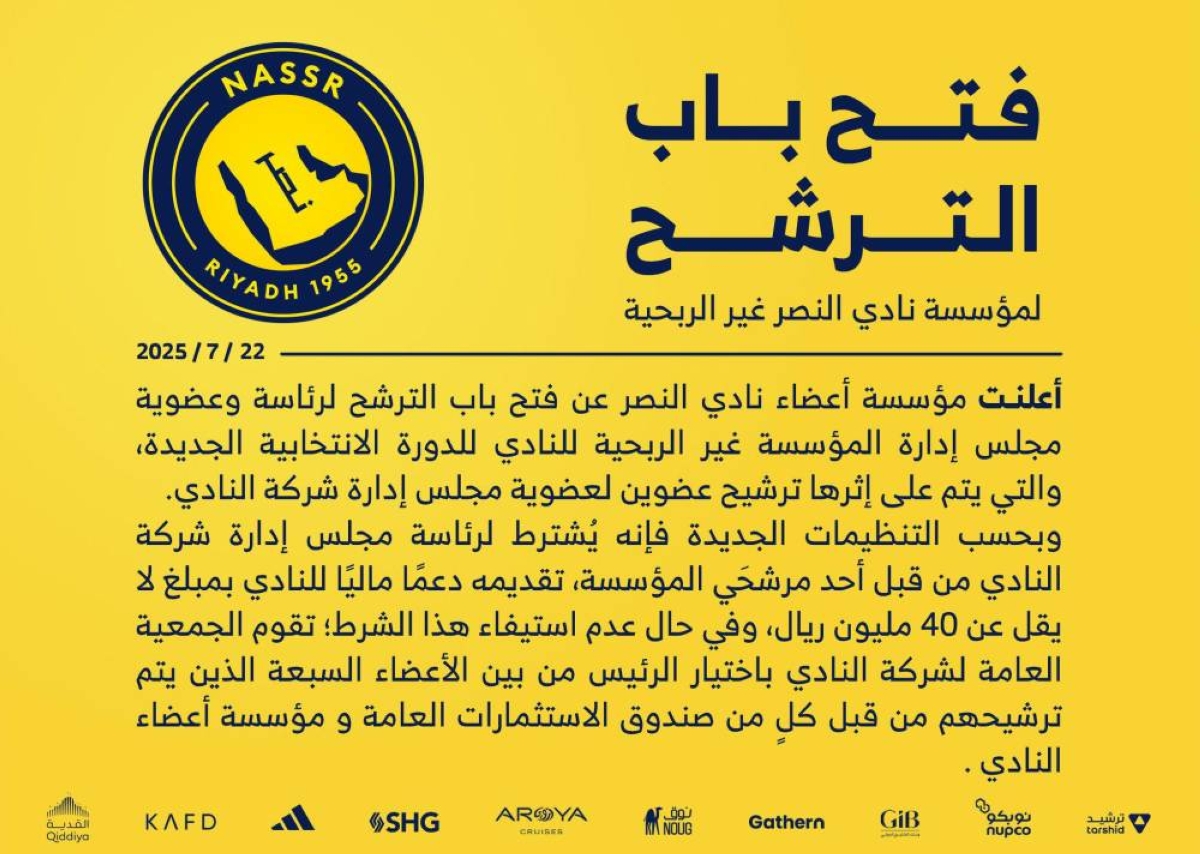
فتحت مؤسسة نادي النصر غير الربحية باب الترشح لرئاسة وعضوية مجلس إدارة النادي، واضعة شرطاً مالياً واضحاً ينص على ضرورة دعم أحد المرشحين للنادي بمبلغ لا يقل عن 40 مليون ريال. وهو شرط أثار تفاعلاً واسعاً في الوسط الرياضي، بين من اعتبره تعزيزاً للاستقرار المالي، ومن قارن ذلك بما يجري في كبرى الأندية العالمية.
في أوروبا، لا تُفرض شروط مالية مباشرة كدعم نقدي للترشح، لكنها تستند إلى أنظمة ضمانات مالية تكفل عدم انهيار النادي في حال سوء الإدارة. أبرز هذه النماذج يظهر في إسبانيا، حيث يُطلب من مرشح رئاسة ناديَي برشلونة وريال مدريد تقديم ضمان بنكي يُعادل 15% من ميزانية النادي السنوية. وفي حالات معينة، يتجاوز هذا الضمان 100 مليون يورو، وهو ما يُعدّ بمثابة تعهد مالي شخصي أمام الأعضاء، دون أن يُعتبر تبرعاً للنادي.
أما في إنجلترا، حيث تغيب الانتخابات المباشرة، فإن ملكية الأندية خاضعة لقوانين صارمة، أهمها ما يُعرف بـ«اختبار المالكين والمديرين» الذي تُجريه رابطة الدوري الإنجليزي الممتاز (Premier League)، الذي يتحقق من الملاءة المالية، والنزاهة، والقدرة الإدارية للمرشح أو المستثمر.
وفي ألمانيا، يخضع المرشحون أو الشركات المالكة لمراجعة شاملة وفق قواعد الترخيص المالي للاتحاد الألماني (DFL)، تضمن الاستقرار المالي والتخطيط طويل المدى.
الفرق الجوهري في التجربة السعودية يظهر في تحويل الدعم إلى شرط مكتوب ومباشر، بينما تعتمد أوروبا على الضمانات والتأمينات المصرفية كأداة قانونية لحماية النادي. لكن النتيجة واحدة: كلا النظامين يسعى لضمان ألا يقود النادي من لا يمتلك قدرة مالية أو التزاماً طويل الأجل.
اللافت أن شرط 40 مليون ريال لا ينطبق على الرئيس فقط، بل يُعد أحد عوامل حسم المنصب في حال عدم استيفاء الشرط من أي مرشح، إذ يتم حينها اختيار الرئيس من الأعضاء السبعة الذين يُرشحهم كل من صندوق الاستثمارات العامة ومؤسسة أعضاء النادي.
في المحصلة، يظهر أن الأندية السعودية بدأت تتجه نحو نموذج حوكمي حديث، قد لا يطابق أوروبا في الشكل، لكنه يتقاطع معها في الهدف: حماية النادي من العبث المالي، وتثبيت أقدامه في بيئة تنافسية عالية الكلفة.
The non-profit Al-Nasr Club Foundation has opened the nomination for the presidency and membership of the club's board of directors, setting a clear financial condition that requires supporting one of the candidates for the club with an amount no less than 40 million riyals. This condition has sparked widespread reactions in the sports community, with some considering it a reinforcement of financial stability, while others compared it to what is happening in the largest global clubs.
In Europe, direct financial conditions such as cash support for candidacy are not imposed; instead, they rely on financial guarantee systems that ensure the club does not collapse in the event of mismanagement. One of the most prominent models appears in Spain, where candidates for the presidency of FC Barcelona and Real Madrid are required to provide a bank guarantee equivalent to 15% of the club's annual budget. In certain cases, this guarantee exceeds 100 million euros, which is considered a personal financial commitment to the members, without being regarded as a donation to the club.
In England, where direct elections are absent, club ownership is subject to strict laws, the most important of which is known as the "Owners' and Directors' Test" conducted by the Premier League, which verifies the financial solvency, integrity, and managerial capability of the candidate or investor.
In Germany, candidates or owning companies are subjected to a comprehensive review according to the financial licensing rules of the German Football League (DFL), ensuring financial stability and long-term planning.
The fundamental difference in the Saudi experience lies in converting support into a written and direct condition, while Europe relies on guarantees and bank securities as a legal tool to protect the club. However, the outcome is the same: both systems aim to ensure that the club is not led by someone who lacks financial capability or long-term commitment.
Notably, the 40 million riyal condition does not apply only to the president but is also one of the determining factors for the position if any candidate fails to meet the requirement, in which case the president is chosen from the seven members nominated by the Public Investment Fund and the club members' foundation.
In conclusion, it appears that Saudi clubs are beginning to move towards a modern governance model, which may not match Europe in form, but intersects with it in purpose: protecting the club from financial mismanagement and solidifying its footing in a highly competitive and costly environment.