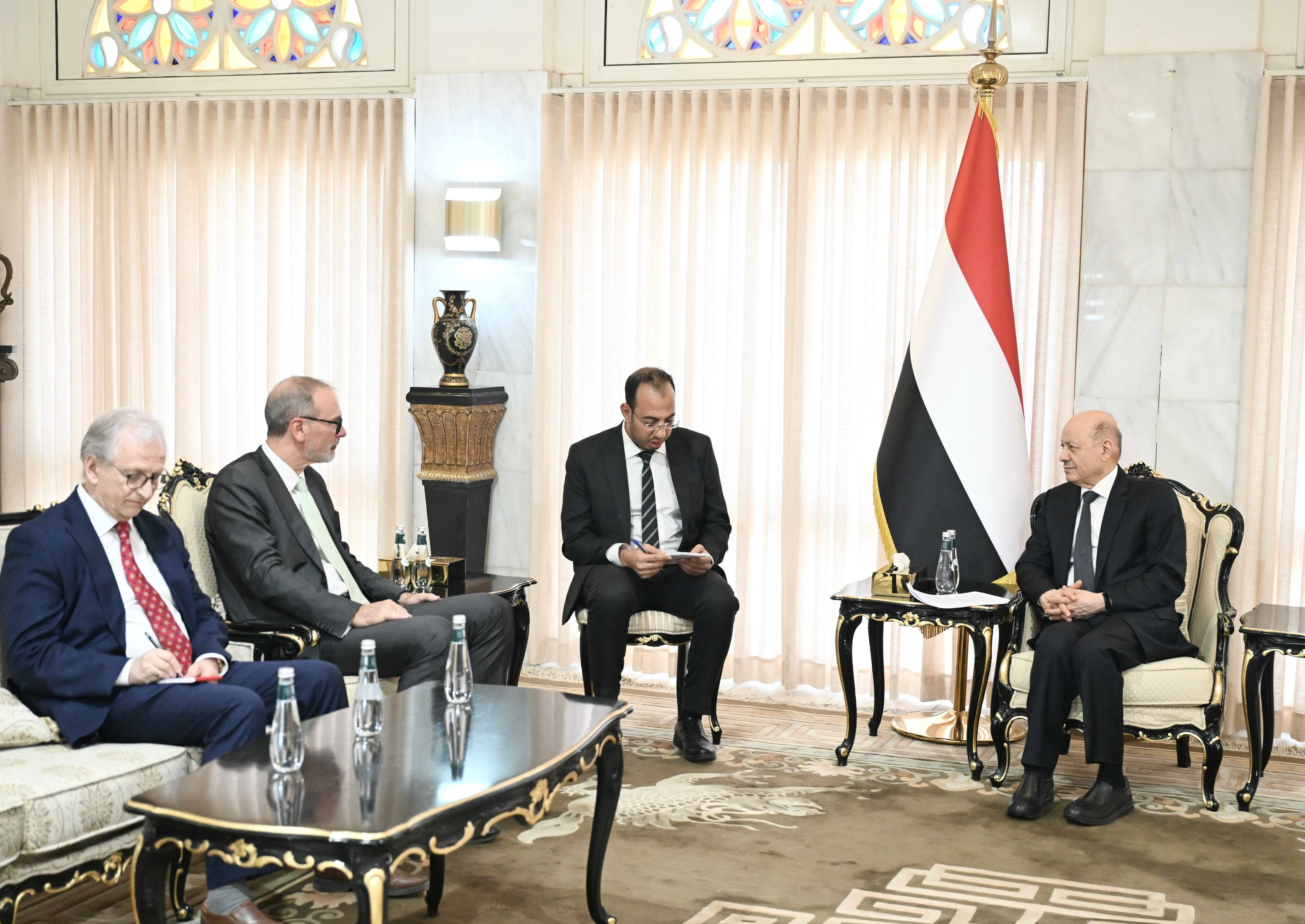
حذر رئيس مجلس القيادة الرئاسي اليمني الدكتور رشاد العليمي، من خطورة الدور المتزايد لشبكات الحرس الثوري الإيراني المشاركة في حرب المليشيا الحوثية ضد الشعب اليمني وتهديد الملاحة الدولية، وتحويل الأراضي اليمنية إلى منصة لابتزاز المجتمعين الإقليمي والدولي.
وأكد العليمي خلال استقباله مدير شؤون الشرق الأوسط وشمال أفريقيا بوزارة الخارجية الألمانية كليمنس هاخ والوفد المرافق له اليوم (الثلاثاء)، أن هذه الشبكات تضم عشرات الخبراء الذين يشاركون في التخطيط وإدارة العمليات وتطوير القدرات الصاروخية والطائرات المسيرة وتهديد الملاحة الدولية، ما يكشف تدخلاً يتجاوز التمويل والتسليح إلى المشاركة المباشرة في إدارة الحرب، وتهديد الممرات المائية.
ولفت إلى أن النظام الإيراني ومليشياته يسعى لتعويض تراجع نفوذ أذرعه في عدد من دول المنطقة بتكثيف استثماره في المليشيا الحوثية، مستغلاً موقع اليمن الاستراتيجي وقربه من ممرات التجارة الدولية، مؤكداً أن السماح بنقل مزيد من الخبرات والأسلحة والتقنيات إلى هذه المليشيا سيضاعف كلفة ردعها، ويطيل معاناة اليمنيين، ويجعل أمن المنطقة والملاحة الدولية رهينة لحسابات المشاريع التخريبية العابرة للحدود.
وأشار إلى أن عملية «فجر اليمن» ماضية لتحقيق أهدافها كاملة في استعادة مؤسسات الدولة وبسط سلطتها على كامل أراضيها بإسناد مخلص من تحالف دعم الشرعية بقيادة المملكة العربية السعودية.
وأعرب العليمي عن شكره وتقديره للمملكة على دعمها الاقتصادي والإنساني الشامل في هذه الظروف الاستثنائية، مستعرضاً جرائم الحرب والانتهاكات الجسيمة لحقوق الإنسان التي ترتكبها المليشيا الحوثية، بما في ذلك عمليات القتل والتنكيل والاختطاف والإخفاء القسري واحتجاز العاملين الأمميين والناشطين الحقوقيين.
وأشار إلى أن خطر هذه المليشيا تجاوز في امتداده وأدواته أخطار تنظيمي القاعدة وداعش، ما يستوجب التعامل الدولي معها بمستوى هذا التهديد.
وأعرب العليمي عن تطلع الحكومة اليمنية إلى دور ألماني فاعل لحشد التوافق داخل الاتحاد الأوروبي من أجل إدراج المليشيا الحوثية على قائمة الإرهاب، وتشجيع الدول الأعضاء على اتخاذ ما تتيحه تشريعاتها الوطنية من إجراءات بحقها وشبكاتها الإجرامية، ومنابرها التحريضية في مختلف أنحاء العالم.
وكانت وزارة الداخلية اليمنية عرضت أسماء 21 خبيراً من الحرس الثوري وحزب الله يقودون المليشيا الحوثية، موضحة أن القيادات الموجودة في صنعاء بمركز القيادة علي محمد رمضاني القائد في الحرس الثوري، عبدالرضا شهلائي الحرس الثوري مستشار عسكري، يشرف على التخطيط للعمليات العسكرية، وعلي حسين نجاتي مستشار استراتيجي، مسؤول عن التنسيق السياسي والعسكري.
كما يعمل في صنعاء خبراء من حزب الله ميثم فؤاد مرتضى ويتولى مهمة التدريب التكتيكي، والإشراف على غرف العمليات المشتركة، وإدارة الأزمات.
وأفاد التقرير أن هناك خبراء إيرانيين في صعدة وهم حميد رضا جودرزي الذي يتولى مهمة الإشراف على ورش تجميع الطائرات المسيّرة بعيدة المدى وخسرو مسعود دهقان الذي يتولى دمج الكاميرات الحرارية وأنظمة توجيه الطائرات، إضافة إلى محمد رضا كاظمي المسؤول عن إدارة الخدمات اللوجستية وتخزين المكونات الإلكترونية الحساسة، فرامرز كيان زاد الذي يتولى الإشراف على وحدات الصواريخ التكتيكية والباليستية.
وفي محافظة حجة، يتواجد فيها مجتبى سيروس صالحي قيادي في الحرس الثوري ومسؤول برمجة أنظمة التوجيه للقوارب والغواصات غير المأهولة وفريبورز ناصر مهدوي قيادي في الحرس الثوري وضابط ارتباط بحري، يتولى التنسيق مع سفن الدعم والقطع البحرية في البحر الأحمر.
وحول تواجد خبراء حزب الله في الحديدة أوضح التقرير أن كاوه مهران بور القيادي في الحرس الثوري وهو متخصص في أنظمة التوجيه وهندسة الغواصات، وبهروز علي رضا فلاح القيادي في الحرس الثوري ومهمته تهريب المواد الحساسة عبر الممرات المائية وتأمين الشحنات، كما يتواجد إسفنديار جمشيد خسروي القيادي في الحرس الثوري ويتولى صيانة وتطوير محركات الغواصات الصغيرة غير المأهولة، وغلام حسين رحيمي يتولى تطوير الرؤوس الحربية المتفجرة المخصصة للاختراق البحري، وجهاد قاسم سويدان القيادي في حزب الله والمستشار في العمليات البحرية، وتدريب القوات الخاصة البحرية، وزراعة الألغام، ومصطفى كمال بزي القيادي في حزب الله والذي يتولى الإشراف على الخدمات اللوجستية وخطوط الإمداد الساحلية، وهادي حسين شمس القيادي في حزب الله ومسنداً له القيادة الميدانية البحرية وتنسيق العمليات ضد السفن التجارية، وخليل إبراهيم حمود القيادي في حزب الله ويتولى صيانة ودمج أنظمة الرادار الخاصة بالمراقبة الساحلية.
أما في محافظة عمران، فهناك خبراء من الحرس الثوري وحزب الله وهم سياوش فرشام همتي يتولى تطوير برمجيات الملاحة الفضائية المقاومة للتشويش، وبلال أحمد شبلاق قيادي من حزب الله ويتولى تشفير شبكات الاتصالات العسكرية وربط أنظمة الرادار ببعضها.
كما يتواجد في الخوخة شمال الحديدة القيادي في حزب الله عباس علي حيدر ويتولى الحرب الإلكترونية، والتشويش، والمراقبة البحرية، واعتراض الاتصالات أو الإشارات، وعباس علي حيدر أيضاً مهمته الحرب الإلكترونية، والتشويش، والمراقبة البحرية، واعتراض الاتصالات أو الإشارات.
The President of the Yemeni Presidential Leadership Council, Dr. Rashad Al-Alimi, warned of the increasing danger posed by Iranian Revolutionary Guard networks participating in the Houthi militia's war against the Yemeni people and threatening international navigation, turning Yemeni territory into a platform for extorting the regional and international communities.
Al-Alimi confirmed during his meeting with Clemens Hach, the Director for Middle East and North Africa at the German Foreign Ministry, and his accompanying delegation today (Tuesday), that these networks include dozens of experts who participate in planning and managing operations, developing missile capabilities and drones, and threatening international navigation, revealing an intervention that goes beyond funding and armament to direct participation in managing the war and threatening maritime corridors.
He pointed out that the Iranian regime and its militias are seeking to compensate for the decline in the influence of its arms in several countries in the region by intensifying its investment in the Houthi militia, exploiting Yemen's strategic location and its proximity to international trade routes. He emphasized that allowing the transfer of more expertise, weapons, and technologies to this militia will double the cost of deterring it, prolong the suffering of Yemenis, and make the security of the region and international navigation hostage to the calculations of cross-border destructive projects.
He noted that the "Fajr Yemen" operation is ongoing to achieve its full objectives of restoring state institutions and asserting its authority over all its territories, with sincere support from the Coalition to Support Legitimacy led by the Kingdom of Saudi Arabia.
Al-Alimi expressed his gratitude and appreciation to the Kingdom for its comprehensive economic and humanitarian support in these exceptional circumstances, reviewing the war crimes and serious human rights violations committed by the Houthi militia, including killings, torture, kidnapping, enforced disappearances, and the detention of UN workers and human rights activists.
He pointed out that the danger posed by this militia has extended and its tools have surpassed the threats of the Al-Qaeda and ISIS organizations, necessitating international engagement with it at the level of this threat.
Al-Alimi expressed the Yemeni government's aspiration for an active German role to rally consensus within the European Union to include the Houthi militia on the terrorism list, and to encourage member states to take whatever actions their national legislations allow against it, its criminal networks, and its incitement platforms around the world.
The Yemeni Ministry of Interior presented the names of 21 experts from the Revolutionary Guard and Hezbollah leading the Houthi militia, clarifying that the leaders present in Sanaa include Ali Mohammad Ramadani, a commander in the Revolutionary Guard, Abdul-Ridha Shahlaei, a military advisor in the Revolutionary Guard overseeing military operations planning, and Ali Hussein Najati, a strategic advisor responsible for political and military coordination.
Experts from Hezbollah, including Maytham Fouad Mortada, are also working in Sanaa, tasked with tactical training, overseeing joint operations rooms, and crisis management.
The report indicated that there are Iranian experts in Saada, including Hamid Reza Joudarzi, who supervises workshops for assembling long-range drones, and Khosrow Masoud Dehghan, who integrates thermal cameras and drone guidance systems, in addition to Mohammad Reza Kazemi, who manages logistics services and stores sensitive electronic components, and Faramarz Kian Zadeh, who supervises tactical and ballistic missile units.
In Hajjah Governorate, there is Mojtaba Sirus Salehi, a leader in the Revolutionary Guard responsible for programming guidance systems for unmanned boats and submarines, and Fariborz Nasser Mahdavi, a leader in the Revolutionary Guard and a naval liaison officer, coordinating with support ships and naval vessels in the Red Sea.
Regarding the presence of Hezbollah experts in Al-Hudaydah, the report clarified that Kaveh Mehran Pour, a leader in the Revolutionary Guard specializing in guidance systems and submarine engineering, and Behrouz Ali Reza Fallah, a leader in the Revolutionary Guard responsible for smuggling sensitive materials through maritime corridors and securing shipments, are present. Additionally, Isfandiar Jamshid Khosravi, a leader in the Revolutionary Guard, is responsible for maintaining and developing engines for small unmanned submarines, and Gholam Hossein Rahimi is responsible for developing explosive warheads designed for maritime penetration, while Jihad Qassem Suwaydan, a leader in Hezbollah, serves as a consultant for naval operations, training special naval forces, planting mines, and Mustafa Kamal Bazi, a leader in Hezbollah, oversees logistics services and coastal supply lines. Hadi Hussein Shams, a leader in Hezbollah, is tasked with field naval command and coordinating operations against commercial ships, and Khalil Ibrahim Hamoud, a leader in Hezbollah, is responsible for maintaining and integrating radar systems for coastal surveillance.
In Amran Governorate, there are experts from the Revolutionary Guard and Hezbollah, including Siawash Farsham Hemmati, who develops anti-jamming satellite navigation software, and Bilal Ahmed Shablak, a leader from Hezbollah responsible for encrypting military communication networks and linking radar systems together.
In Al-Khawkhah, north of Al-Hudaydah, Hezbollah leader Abbas Ali Haidar is responsible for electronic warfare, jamming, maritime surveillance, and intercepting communications or signals. Abbas Ali Haidar's mission also includes electronic warfare, jamming, maritime surveillance, and intercepting communications or signals.