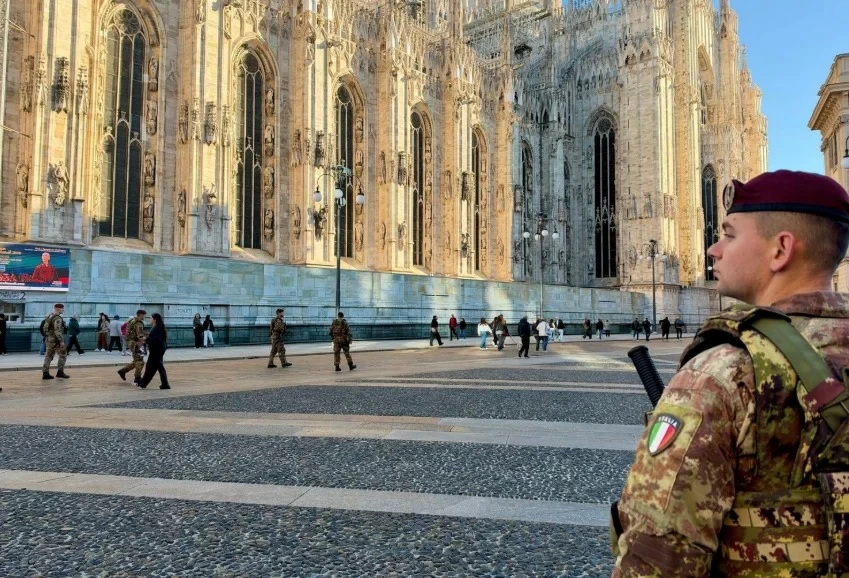
انتشر مئات الجنود الإيطاليين من لواء المظليين «فولغوري» في شوارع ميلانو، في إطار تعزيز الإجراءات الأمنية عقب أعمال عنف شهدتها المدينة خلال الأيام الماضية، وسط جدل سياسي بشأن صلاحيات الجيش في حفظ الأمن داخل المدن.
ونشر وزير الدفاع الإيطالي غويدو كروزيتو صورا لجنود يسيّرون دوريات في ساحة الدومو، إحدى أبرز ساحات ميلانو، إلى جانب مشاهد لعسكريين يستعدون للانتشار ويجهزون معداتهم ومركبات «لينس» العسكرية.
ويأتي الانتشار ضمن عملية «ستراده سيكوري» (الشوارع الآمنة)، بعد موافقة الحكومة على إرسال 500 جندي إضافي إلى ميلانو. وبدأ نشر هذه التعزيزات السبت 24 أكتوبر، على أن يستمر حتى نهاية العام، بهدف دعم قوات الشرطة وتعزيز الحراسة والمراقبة في المواقع الحساسة والمناطق التي تحتاج إلى وجود أمني أكبر.
وبحسب وزارة الدفاع الإيطالية، سيسهم الجنود الإضافيون في تعزيز نقاط الحراسة ومراقبة المناطق الحيوية، بما يتيح للشرطة وقوات الدرك التركيز بدرجة أكبر على منع الجرائم والتدخل الميداني ومهام حفظ النظام العام، حيث يشمل الانتشار أيضا عسكريين متخصصين في تشغيل الطائرات المسيّرة.
لكن دور المظليين سيظل محكوما بالإطار القانوني لعملية «الشوارع الآمنة»، ولن يمنحهم صلاحيات الشرطة القضائية التي تتيح تنفيذ مهام التحقيق وإنفاذ القانون على نحو أوسع، حيث جاء ذلك بعدما اعترض الرئيس الإيطالي سيرجيو ماتاريلا على منح الجنود هذه الصلاحيات، في نقاش أثار تساؤلات بشأن حدود الدور العسكري في التعامل مع الاضطرابات داخل المدن.
وكان كروزيتو قد أشار إلى القيود المفروضة على العسكريين، ومنها عدم امتلاكهم بعض الأدوات المستخدمة في التعامل مع الحشود، مثل الصاعق الكهربائي ورذاذ الفلفل، مع تأكيد أن مهمتهم تتمثل في مساندة قوات الأمن ضمن الصلاحيات المحددة لهم.
ووصف ماتاريلا أعمال العنف التي شهدتها ميلانو بأنها «غير مقبولة»، معربا عن تضامنه مع عناصر الأمن الذين أصيبوا خلال المواجهات. وقال، خلال افتتاح الجمعية الوطنية التاسعة والثلاثين لاتحاد المقاطعات الإيطالية، إن ضمان أمن المدن والبلديات مهمة أساسية، وإنه لا يمكن القبول بأي شكل من أشكال العنف فيها.
وشهدت ميلانو خلال عطلة نهاية الأسبوع في 17 و18 أكتوبر أعمال شغب وتخريب في وسط المدينة، تخللتها مواجهات مع الشرطة ورشق عناصرها بالحجارة وأجسام أخرى، فضلا عن إضرام النيران وتخريب ممتلكات ونهب متاجر، وأدت الاضطرابات إلى تشديد الإجراءات الأمنية في المناطق المركزية، وسط مخاوف من تكرارها خلال احتجاجات جديدة.
ولا تنفصل هذه التطورات عن موجة احتجاجات طلابية شهدتها مدن إيطالية عدة، بينها روما وتورينو، في 16 أكتوبر، ورفع المشاركون فيها مطالب بزيادة الإنفاق على التعليم وتقليص المخصصات الموجهة للتسلح. وألقى بعض المحتجين الحجارة والمفرقعات على الشرطة، فيما دعت رئيسة الوزراء جورجيا ميلوني أحزاب المعارضة إلى إدانة أعمال العنف، مؤكدة أن حق التظاهر لا يبرر الاعتداء على قوات الأمن أو تخريب الممتلكات.
Hundreds of Italian soldiers from the "Folgore" Paratroopers Brigade have spread out in the streets of Milan as part of enhanced security measures following violent incidents that occurred in the city over the past few days, amid political debate regarding the military's powers in maintaining security within cities.
Italian Defense Minister Guido Crosetto shared images of soldiers patrolling the Duomo Square, one of Milan's most prominent squares, alongside scenes of military personnel preparing for deployment and equipping their "Lince" military vehicles.
The deployment is part of Operation "Strade Sicure" (Safe Streets), following the government's approval to send an additional 500 soldiers to Milan. The deployment of these reinforcements began on Saturday, October 24, and will continue until the end of the year, aimed at supporting police forces and enhancing security and surveillance in sensitive locations and areas that require a greater security presence.
According to the Italian Ministry of Defense, the additional soldiers will contribute to strengthening guard points and monitoring vital areas, allowing the police and gendarmerie to focus more on crime prevention, field interventions, and public order maintenance tasks, as the deployment also includes military personnel specialized in operating drones.
However, the role of the paratroopers will remain governed by the legal framework of Operation "Safe Streets," and they will not be granted judicial police powers that would allow them to carry out investigative and law enforcement tasks more broadly, as this came after Italian President Sergio Mattarella objected to granting soldiers these powers, in a discussion that raised questions about the limits of the military's role in dealing with disturbances within cities.
Crosetto had pointed out the restrictions imposed on military personnel, including their lack of certain tools used for crowd control, such as electric tasers and pepper spray, while emphasizing that their mission is to support security forces within the defined powers assigned to them.
Mattarella described the violent incidents witnessed in Milan as "unacceptable," expressing solidarity with the security personnel who were injured during the confrontations. He stated, during the opening of the thirty-ninth National Assembly of the Italian Provinces Union, that ensuring the security of cities and municipalities is a fundamental task, and that no form of violence can be accepted within them.
Milan witnessed riots and vandalism in the city center over the weekend of October 17 and 18, which included clashes with police and the throwing of stones and other objects at them, as well as arson, property destruction, and looting of stores. The disturbances led to tightened security measures in central areas, amid fears of their recurrence during new protests.
These developments are linked to a wave of student protests that took place in several Italian cities, including Rome and Turin, on October 16, where participants raised demands for increased spending on education and a reduction in allocations for armament. Some protesters threw stones and fireworks at the police, while Prime Minister Giorgia Meloni called on opposition parties to condemn the acts of violence, asserting that the right to protest does not justify attacks on security forces or property destruction.