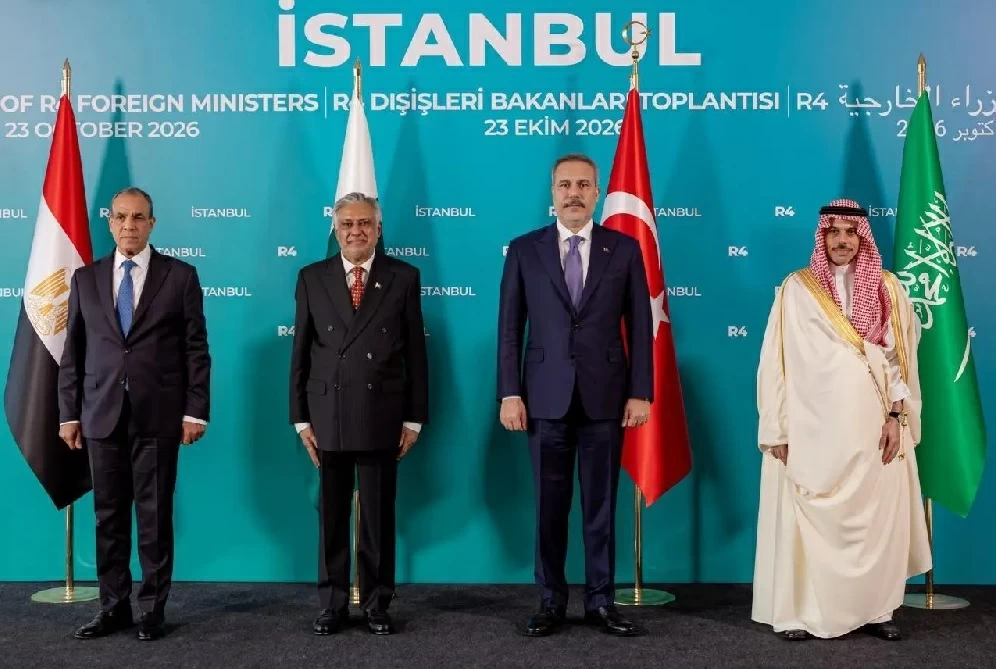
اجتمع وزراء خارجية المملكة العربية السعودية، وجمهورية تركيا، وجمهورية مصر العربية، وجمهورية باكستان الإسلامية، (المجموعة الرباعية) اليوم في إسطنبول، لمناقشة عددٍ من القضايا الإقليمية ذات الاهتمام المشترك، وذلك انطلاقاً من التزامهم بالإسهام في الجهود الدبلوماسية، واسترشاداً بالمصلحة المشتركة في تعزيز السلام والاستقرار في المنطقة وخارجها، بما يتماشى مع مبادئ ومقاصد ميثاق الأمم المتحدة.
وأكد الوزراء أن الاحتلال الإسرائيلي يُمثل المصدر الأساسي لعدم الاستقرار في المنطقة وخارجها، وأن السياسات الإسرائيلية تُرسخ شعوراً عميقاً بالظلم في الرأي العام العالمي، داعين إلى التطبيق العاجل لحل الدولتين وفقاً لقرارات الأمم المتحدة ذات الصلة، وجددوا دعمهم للحقوق المشروعة للشعب الفلسطيني، بما في ذلك حقه غير القابل للتصرف في تقرير المصير، وإقامة دولة فلسطينية مستقلة ذات سيادة وقابلة للحياة ومتصلة الأراضي، على أساس حدود الرابع من يونيو 1967 وعاصمتها القدس الشرقية، وفقاً لقرارات مجلس الأمن الدولي ذات الصلة؛ بهدف تحقيق سلاماً شاملاً في الشرق الأوسط.
ودعا الوزراء إلى وقفٍ فوريٍّ للعنف الإسرائيلي المستمر، ووقف محاولات تغيير الوضع القانوني والتاريخي للقدس، ووضع حدٍّ لمزيدٍ من الدمار والمأساة الإنسانية في فلسطين، معبرين عن إدانتهم لجميع أنشطة الاستيطان السابقة والحالية في الضفة الغربية والقدس، فضلاً عن عنف المستوطنين ضد الفلسطينيين، ومشددين على الحاجة المُلحة إلى استمرار تدفق المساعدات الإنسانية وإعادة إعمار غزة دون انقطاع.
وفيما يتعلق باليمن، أدان الوزراء بأشد العبارات التصعيد غير المقبول من الميليشيا الحوثية الذي فاقم المعاناة الإنسانية، واستمرار هجماتها على المملكة العربية السعودية، لا سيما تلك التي تستهدف المدنيين والبنية التحتية المدنية، والهجمات التي استهدفت السفن التجارية في البحر الأحمر وباب المندب، معربين عن تضامنهم الكامل مع المملكة العربية السعودية وحكومة اليمن، داعين الميليشيا الحوثية إلى الوقف الفوري لجميع الأعمال العسكرية والتهديدات والهجمات، والعودة إلى العملية السياسية بحسن نية.
وبشأن النزاع العسكري بين الولايات المتحدة / إسرائيل وإيران، وكذلك حول مضيق هرمز، شدد الوزراء على الحاجة المُلحة إلى معالجة هذا النزاع حصراً عبر الحوار والدبلوماسية، ومنع استهداف المدنيين والبنية التحتية المدنية، بما في ذلك السفن، معربين عن دعمهم لمذكرة التفاهم الموقعة في إسلام آباد، ورحبوا بالجهود الدبلوماسية المتواصلة لمنع المزيد من التصعيد، ومجددين التزامهم بحلٍّ تفاوضيٍّ مستدام.
وأكد الوزراء الأهمية البالغة لحرية الملاحة، والسلامة والأمن الدائمين للملاحة البحرية، وحماية حقوق الملاحة وحرياتها، مشيرين إلى أن تعطيل الممرات البحرية يهدد أمن وازدهار الجميع، من خلال عرقلة سلاسل الإمداد العالمية، وتدفقات الطاقة والأسمدة والغذاء، مما يؤثر على الفئات السكانية الضعيفة في المنطقة وخارجها، الأمر الذي يتطلب جهوداً جماعية من المجتمع الدولي لمواجهة هذه التحديات.
ورفض الوزراء أي تدابير أو قيود تعيق الملاحة المشروعة، ودعوا إلى الاستئناف السريع والكامل للمرور بأمن وأمان ودون عوائق عبر مضيق هرمز.
واتفق الوزراء على مواصلة التشاور والتنسيق الوثيق بشأن المسائل المذكورة آنفاً.
The Foreign Ministers of the Kingdom of Saudi Arabia, the Republic of Turkey, the Arab Republic of Egypt, and the Islamic Republic of Pakistan (the Quadrilateral Group) met today in Istanbul to discuss a number of regional issues of common interest, based on their commitment to contributing to diplomatic efforts, and guided by the common interest in promoting peace and stability in the region and beyond, in accordance with the principles and purposes of the United Nations Charter.
The ministers affirmed that the Israeli occupation represents the primary source of instability in the region and beyond, and that Israeli policies entrench a deep sense of injustice in global public opinion. They called for the urgent implementation of the two-state solution in accordance with relevant United Nations resolutions, and reiterated their support for the legitimate rights of the Palestinian people, including their inalienable right to self-determination, and the establishment of an independent, sovereign, and viable Palestinian state connected by land, based on the borders of June 4, 1967, with East Jerusalem as its capital, in accordance with relevant United Nations Security Council resolutions; with the aim of achieving comprehensive peace in the Middle East.
The ministers called for an immediate cessation of ongoing Israeli violence, an end to attempts to change the legal and historical status of Jerusalem, and to put a stop to further destruction and humanitarian tragedy in Palestine, expressing their condemnation of all previous and current settlement activities in the West Bank and Jerusalem, as well as settler violence against Palestinians, emphasizing the urgent need for the continuous flow of humanitarian aid and the reconstruction of Gaza without interruption.
Regarding Yemen, the ministers strongly condemned the unacceptable escalation by the Houthi militia, which has exacerbated the humanitarian suffering, and the continued attacks on the Kingdom of Saudi Arabia, particularly those targeting civilians and civilian infrastructure, as well as attacks on commercial vessels in the Red Sea and Bab al-Mandab. They expressed their full solidarity with the Kingdom of Saudi Arabia and the Government of Yemen, calling on the Houthi militia to immediately cease all military actions, threats, and attacks, and to return to the political process in good faith.
Concerning the military conflict between the United States/Israel and Iran, as well as the Strait of Hormuz, the ministers emphasized the urgent need to address this conflict exclusively through dialogue and diplomacy, and to prevent targeting civilians and civilian infrastructure, including ships. They expressed their support for the memorandum of understanding signed in Islamabad, welcomed ongoing diplomatic efforts to prevent further escalation, and reiterated their commitment to a sustainable negotiated solution.
The ministers affirmed the utmost importance of freedom of navigation, the safety and security of maritime navigation, and the protection of navigation rights and freedoms, noting that the disruption of maritime corridors threatens the security and prosperity of all by obstructing global supply chains, energy flows, fertilizers, and food, which affects vulnerable populations in the region and beyond, necessitating collective efforts from the international community to address these challenges.
The ministers rejected any measures or restrictions that hinder legitimate navigation and called for the swift and complete resumption of safe and unobstructed passage through the Strait of Hormuz.
The ministers agreed to continue close consultation and coordination on the aforementioned issues.