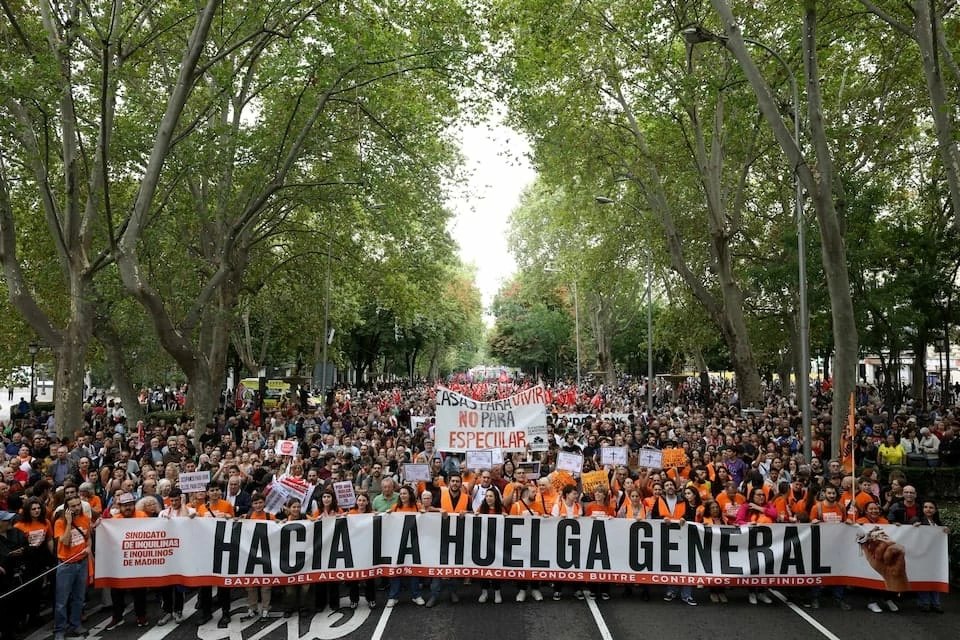
خرج عشرات الآلاف إلى شوارع مدريد ومدن إسبانية أخرى، (السبت)، للمطالبة بتحرك عاجل لمواجهة أزمة السكن المتفاقمة، وذلك بعد رفض البرلمان إجراءات حكومية كانت تهدف إلى معالجة الغضب الشعبي المتزايد بشأن الإخلاءات وأزمة ارتفاع تكاليف السكن.
وتجمع المحتجون في العاصمة مدريد، فيما رفع بعضهم لافتات تدعو إلى إضراب عام، بعد أن رفضت المعارضة في البرلمان، (الجمعة)، حزمة الإجراءات التي طرحتها الحكومة لمعالجة أزمة السكن، والتي تصاعدت حدتها عقب واقعة إخلاء امرأة تبلغ من العمر 87 عامًا من منزلها في مدريد.
دعوات لإضراب عام
وقالت فاليريا راكو، المتحدثة باسم اتحاد المستأجرين، للصحفيين في مدريد، إن الدعوة إلى إضراب عام ستُطرح بعد إجراء محادثات مع النقابات العمالية.
ورفع محتجون في العاصمة لافتة كتب عليها «نحو الإضراب العام»، مطالبين بتحرك سياسي لوقف عمليات الإخلاء والتخفيف من حدة أزمة السكن.
وبحسب الحكومة الإسبانية، شارك نحو 70 ألف شخص في مظاهرة مدريد، بينما شهدت مدن أخرى احتجاجات مماثلة.
وفي مدينة فالنسيا جنوب شرقي البلاد، اندلعت مواجهات بين محتجين والشرطة، التي استخدمت الرصاص المطاطي والغاز المسيل للدموع لتفريق المتظاهرين.
وتمكن نحو 30 محتجًا من دخول «مدينة الفنون والعلوم»، وهي أحد أبرز المعالم الثقافية في فالنسيا، قبل أن تتدخل الشرطة لإخراجهم من المبنى.
وفي المقابل، سارت احتجاجات أخرى في نحو 50 مدينة إسبانية بشكل سلمي.
انتخابات مبكرة تلوح في الأفق
وتأتي الاحتجاجات بعد فشل تمرير التشريعات الحكومية المتعلقة بأزمة السكن، وسط تقارير إعلامية إسبانية أفادت بأن رئيس الوزراء بيدرو سانشيز قد يدعو إلى انتخابات مبكرة في نوفمبر القادم.
وأشارت التقارير إلى أن سانشيز قد يراقب حجم الاحتجاجات المقررة (السبت) قبل اتخاذ قرار بشأن الدعوة إلى انتخابات مبكرة.
وفي برشلونة ومدينة هوسبيتالت دي يوبريغات القريبة منها، أُلغيت الاحتجاجات التي كانت مقررة بسبب الأمطار الغزيرة.
وتشهد إسبانيا منذ فترة تصاعدًا في الجدل حول أزمة السكن، مع ارتفاع الضغوط على المستأجرين وزيادة المخاوف من الإخلاءات، فيما تطالب اتحادات المستأجرين بتحرك حكومي أكبر للحد من تداعيات الأزمة.
Tens of thousands took to the streets of Madrid and other Spanish cities on Saturday, demanding urgent action to address the worsening housing crisis, following the parliament's rejection of government measures aimed at addressing the growing public anger over evictions and the rising cost of housing.
Protesters gathered in the capital, Madrid, with some holding signs calling for a general strike, after the opposition in parliament rejected on Friday a package of measures proposed by the government to tackle the housing crisis, which intensified following the eviction of an 87-year-old woman from her home in Madrid.
Calls for a General Strike
Valeria Racco, a spokesperson for the Tenants' Union, told reporters in Madrid that the call for a general strike would be made after discussions with labor unions.
Protesters in the capital raised a banner that read "Towards a General Strike," demanding political action to stop evictions and alleviate the housing crisis.
According to the Spanish government, about 70,000 people participated in the Madrid demonstration, while other cities witnessed similar protests.
In the city of Valencia in the southeast of the country, clashes broke out between protesters and police, who used rubber bullets and tear gas to disperse the demonstrators.
About 30 protesters managed to enter the "City of Arts and Sciences," one of Valencia's most prominent cultural landmarks, before police intervened to remove them from the building.
In contrast, protests in about 50 other Spanish cities proceeded peacefully.
Early Elections on the Horizon
The protests come after the failure to pass government legislation related to the housing crisis, amid Spanish media reports that Prime Minister Pedro Sánchez may call for early elections in November.
Reports indicated that Sánchez might monitor the scale of the planned protests on Saturday before making a decision regarding calling for early elections.
In Barcelona and the nearby city of Hospitalet de Llobregat, protests that were scheduled were canceled due to heavy rain.
Spain has been experiencing a rise in the debate over the housing crisis for some time, with increasing pressure on tenants and growing fears of evictions, while tenants' unions are calling for greater government action to mitigate the impact of the crisis.