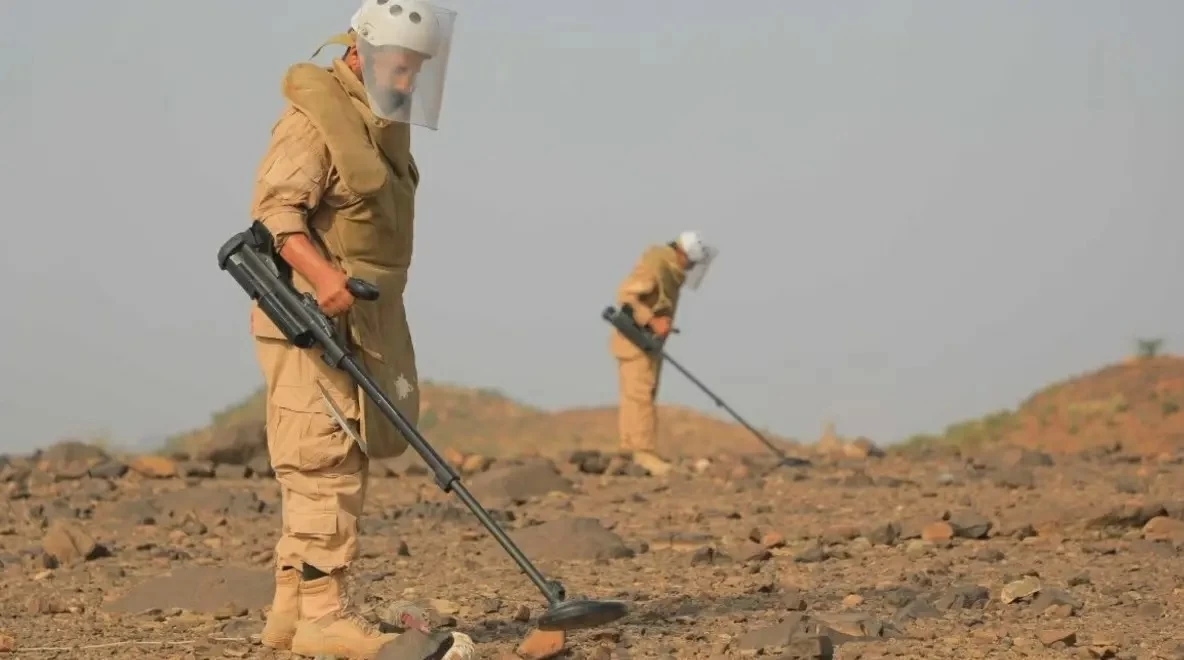
في استمرار للجهود السعودية لحماية الشعب اليمني وتأمين حياة المدنيين في مختلف المناطق المحررة، نجح مشروع «مسام» لنزع الألغام في اليمن من نزع 7101 لغم وذخيرة غير منفجرة وعبوة ناسفة خلال يوليو الماضي.
وقال المشروع في بيان إنه في إطار عملياته المستمرة لتطهير الأراضي اليمنية من مخلفات الحرب، تمكنت فرقه الميدانية من نزع 7101 لغم وذخيرة غير منفجرة وعبوة ناسفة وتطهير نحو 1.66 مليون متر مربع، مبيناً أن الإحصائية المعلنة لعملية التطهير شملت 6556 ذخيرة غير منفجرة، و393 لغماً مضاداً للدبابات، و89 لغماً مضاداً للأفراد، إضافة إلى 63 عبوة ناسفة.
جانب من برامج «مسام» التوعوية بالألغام.
إحصاءات بنجاحات المشروع
ولفت البيان إلى أنه خلال الأسبوع الأخير من يوليو تم نزع 1448 لغماً وذخيرة غير منفجرة وعبوة ناسفة، توزعت على 1310 ذخائر غير منفجرة، و83 لغماً مضاداً للدبابات، و17 لغماً مضاداً للأفراد، و38 عبوة ناسفة، كما تم تطهير 336470 متراً مربعاً من الأراضي اليمنية الموبوءة بالألغام، ومواصلة الجهود لتأمين المناطق المتضررة من الألغام ومخلفات الحرب.
ولفت المشروع إلى أنه تم نزع 578226 لغماً وذخيرة غير متفجرة وعبوة ناسفة منذ انطلاق أعماله في يونيو 2018، بينهم 11249 لغماً وذخيرة غير منفجرة وعبوة ناسفة في مديرية ميدي بمحافظة حجة وحدها، كما تم تطهير 4210134 متراً مربعاً من الأراضي في ميدي، في إطار العمليات الهادفة إلى إعادة تأهيل المناطق المتأثرة وتمكين السكان من العودة الآمنة إلى أراضيهم.
جانب من البرامج التوعوية بخطر الألغام.
حماية الأرواح اليمنية
وأكد مدير عام مشروع «مسام» لنزع الألغام في اليمن، أسامة القصيبي، استمرار جهود المشروع الرامية إلى حماية المدنيين وتأمين الأراضي اليمنية من مخلفات الحرب، مبيناً أن إجمالي ما نزعته الفرق منذ بدء المشروع يشمل 409726 ذخيرة غير منفجرة، و152285 لغماً مضاداً للدبابات، إضافة إلى 7604 ألغام مضادة للأفراد، و8611 عبوة ناسفة.
ولفت إلى أن الفرق الهندسية تمكنت حتى 31 يوليو 2026، من تطهير 83731831 متراً مربعاً من الأراضي اليمنية، بما يسهم في إعادة فتح مساحات واسعة أمام السكان، وتعزيز فرص العودة الآمنة واستئناف الأنشطة الزراعية والتنموية في المناطق التي كانت ملوثة بالألغام والذخائر غير المنفجرة.
المشروع يعيد الحياة للأراضي اليمنية
ويواصل مشروع «مسام» تنفيذ عملياته الميدانية في عدد من المحافظات اليمنية، ضمن جهود مستمرة لنزع الألغام ومخلفات الحرب والحد من المخاطر التي تهدد حياة المدنيين.
ولم تقتصر جهود مشروع مسام على جوانب نزع الألغام وتطهير الأرض منها بل إنه ينفذ برامج توعوية لأبناء الأرياف والقرى التي شهدت معارك خلال السنوات الماضية وتم تحريرها عبر عدد من الوسائل منها التوعية المدرسية، والشعبية، والمعارض الدورية، والتحذيرات المباشرة بكل الوسائل الممكنة بما فيها الإذاعات والتلفزيون والصحافة، كما تؤكد مراراً الدعوات التي يطلقها المشروع عبر فرقه المنتشرة في كل المحافظات اليمنية النداءات المتكررة للمدنيين للإبلاغ عن أي خطر أو أجسام مشبوهة.
وساهمت جهود مشروع مسام السعودي لنزع الألغام في اليمن في عودة الحياة إلى مختلف الأرياف والقرى اليمنية بما فيها الساحلية، كما أمنت مصادر الرعي والمزارع وطهرت السواحل أمام الصيادين.
In continuation of Saudi efforts to protect the Yemeni people and secure the lives of civilians in various liberated areas, the "Masam" project for mine clearance in Yemen succeeded in removing 7,101 mines, unexploded ordnance, and explosive devices during last July.
The project stated in a statement that as part of its ongoing operations to clear Yemeni lands from the remnants of war, its field teams managed to remove 7,101 mines, unexploded ordnance, and explosive devices, and cleared approximately 1.66 million square meters, indicating that the announced statistics for the clearance operation included 6,556 unexploded ordnance, 393 anti-tank mines, 89 anti-personnel mines, in addition to 63 explosive devices.
جانب من برامج «مسام» التوعوية بالألغام.
Project Success Statistics
The statement noted that during the last week of July, 1,448 mines, unexploded ordnance, and explosive devices were removed, distributed among 1,310 unexploded ordnance, 83 anti-tank mines, 17 anti-personnel mines, and 38 explosive devices. Additionally, 336,470 square meters of mine-affected Yemeni land were cleared, continuing efforts to secure areas affected by mines and remnants of war.
The project highlighted that a total of 578,226 mines, unexploded ordnance, and explosive devices have been removed since its operations began in June 2018, including 11,249 mines and unexploded ordnance and explosive devices in the Midi district of Hajjah governorate alone. Furthermore, 4,210,134 square meters of land in Midi have been cleared as part of the operations aimed at rehabilitating affected areas and enabling residents to return safely to their lands.
جانب من البرامج التوعوية بخطر الألغام.
Protecting Yemeni Lives
The Director General of the "Masam" project for mine clearance in Yemen, Osama Al-Qusaybi, confirmed the project's ongoing efforts to protect civilians and secure Yemeni lands from the remnants of war, indicating that the total removed by the teams since the project's inception includes 409,726 unexploded ordnance, 152,285 anti-tank mines, in addition to 7,604 anti-personnel mines and 8,611 explosive devices.
He pointed out that by July 31, 2026, the engineering teams had managed to clear 83,731,831 square meters of Yemeni land, contributing to reopening vast areas for residents and enhancing opportunities for safe return and resuming agricultural and developmental activities in areas that were contaminated with mines and unexploded ordnance.
The Project Revives Yemeni Lands
The "Masam" project continues to carry out its field operations in several Yemeni governorates, as part of ongoing efforts to clear mines and remnants of war and reduce the risks threatening civilian lives.
The efforts of the Masam project are not limited to mine clearance and land purification; it also implements awareness programs for the residents of rural areas and villages that witnessed battles in recent years and were liberated through various means, including school awareness, community outreach, periodic exhibitions, and direct warnings through all possible means, including radio, television, and press. The project repeatedly emphasizes calls through its teams spread across all Yemeni governorates for civilians to report any danger or suspicious objects.
The efforts of the Saudi Masam project for mine clearance in Yemen have contributed to the return of life to various Yemeni rural areas and villages, including coastal ones, as well as securing grazing sources and farms and clearing the coasts for fishermen.