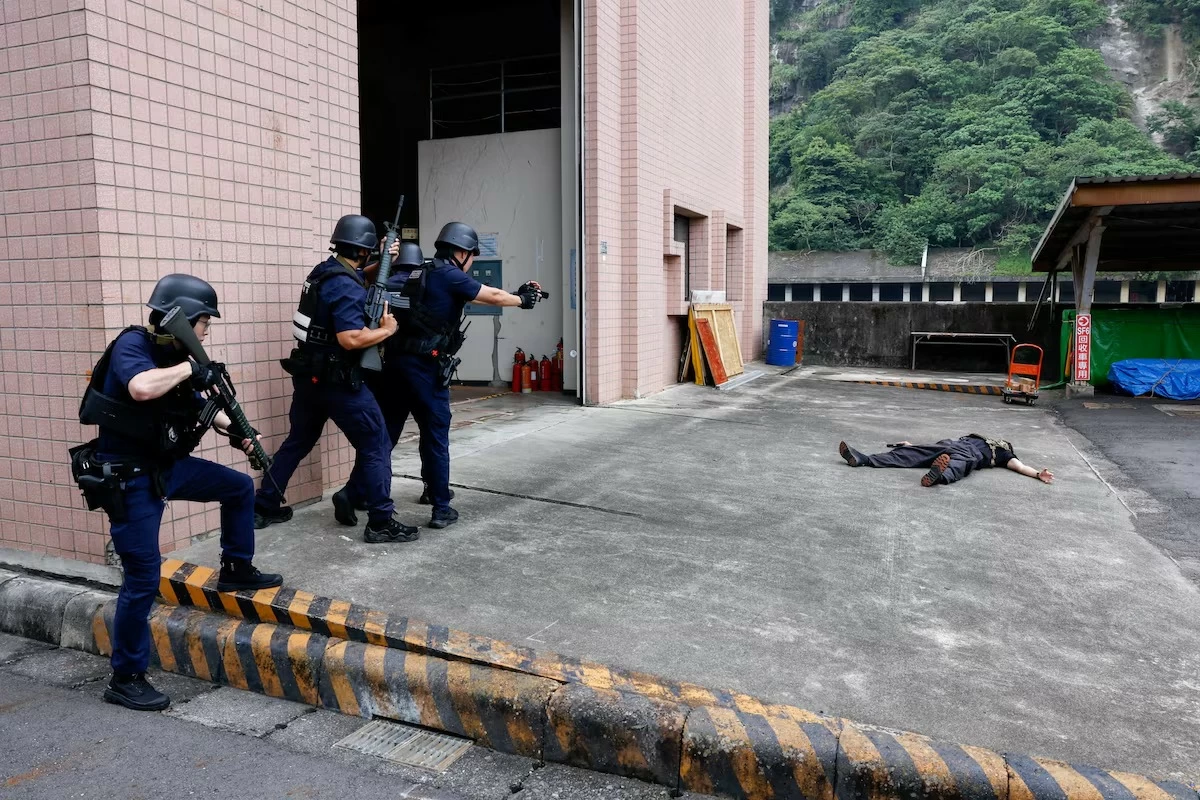
في ظل تصاعد التوترات مع الصين، أجرت تايوان واحدة من أكبر مناوراتها الوطنية لاختبار جاهزيتها في مواجهة سيناريو غزو شامل، تضمن حصارًا بحريًا وهجمات إلكترونية وحربًا إعلامية وزلزالًا مدمرًا وانهيارًا للبنية التحتية، وصولًا إلى اجتياح عسكري واسع للجزيرة.
وشارك في التدريبات أكثر من 370 مسؤولًا حكوميًا وعسكريًا في مقاطعة نانتو وسط تايوان، في إطار خطة يقودها الرئيس لاي تشينغ-تي لتعزيز قدرة البلاد على الصمود أمام الأزمات العسكرية والكوارث الطبيعية، مع تزايد الضغوط العسكرية الصينية على الجزيرة.
سيناريو يحاكي أسوأ الكوابيس
بدأت المناورات بفرض حصار صيني على تايوان، تزامن مع زلزال بقوة 6.8 درجة استغلته بكين لنشر الفوضى، قبل أن تتوالى الأزمات عبر تعطيل البث التلفزيوني، وتخريب البنية التحتية، وإثارة الذعر بين المواطنين، وحدوث سحب جماعي للأموال من البنوك، واندلاع اضطرابات مدنية، وصولًا إلى إطلاق غزو عسكري كامل.
وبحسب وكالة «رويترز» - التي حضرت التدريبات المغلقة - فإن التدريبات هدفت إلى اختبار قدرة السلطات المحلية والحكومة المركزية والجيش على إدارة الأزمات والحفاظ على عمل المؤسسات الحيوية تحت ظروف الحرب.
رسالة إلى الصين
وقال الوزير التايواني بلا حقيبة، تشي ليان-تشنغ، المشرف على المناورات، إن الخطر يقترب من البلاد أكثر من أي وقت مضى.
وأضاف: «خصمنا يقف على أعتابنا مباشرة عبر مضيق تايوان»، مؤكدًا أن الدفاع عن الوطن مسؤولية أبنائه، مع اعترافه بوجود نقاط ضعف قد تظهر في حال وقوع كارثة حقيقية.
وأشار إلى أن الهدف من التدريبات هو قياس مدى استعداد المؤسسات لتطبيق خطط الطوارئ عمليًا، وليس مجرد تنفيذ سيناريوهات نظرية.
دمج المدنيين والجيش
وشملت المناورات إسقاط طائرة مسيرة صينية افتراضية كانت تستهدف محطة كهرباء، وإنشاء مراكز لتوزيع المواد الغذائية، إضافة إلى إدارة أزمة نتجت عن الزلزال المفترض، الذي أسفر في السيناريو عن مقتل 12 شخصًا.
واستخدم المشاركون نظامًا تكتيكيًا متطورًا طوره الجيش الأمريكي لعرض مواقع الأهداف المعادية في الوقت الفعلي، إلى جانب منصات حكومية تفاعلية لمتابعة حركة سيارات الإسعاف والموارد، في إطار تعزيز التكامل بين المؤسسات المدنية والعسكرية.
وقال نائب الأمين العام لمجلس الأمن القومي التايواني، لين فاي-فان، إن الرسالة الموجهة إلى الصين واضحة، وهي أن المجتمع التايواني أصبح أكثر استعدادًا، ما سيجعل أي قرار بشن حرب أكثر كلفة وأقل ضمانًا للنجاح.
دروس من أوكرانيا والشرق الأوسط
وأوضح المسؤولون أن تصميم المناورات استند إلى الدروس المستفادة من الحرب في أوكرانيا والصراعات في الشرق الأوسط.
وشملت التدريبات نقل بعض الخدمات الطبية إلى منشآت تحت الأرض، وإجراء هجمات إلكترونية تجريبية بواسطة خبراء لاختبار قدرة الشبكات الحكومية على الصمود أمام الهجمات السيبرانية.
كما تضمن أحد السيناريوهات استهداف مركز إدارة الأزمات بطائرة مسيرة، ما أدى افتراضيًا إلى فقدان الاتصال بـ75 مسؤولًا، واضطرت السلطات إلى تشغيل مركز قيادة بديل.
مواجهة الحرب الإعلامية
ولم تقتصر المناورات على الجوانب العسكرية، بل اختبرت أيضًا قدرة السلطات على مواجهة حملات التضليل الإعلامي.
وتضمن السيناريو اختراق محطات تلفزيونية محلية واستبدال بثها بدعاية صينية، إضافة إلى توزيع منشورات مضللة في الشوارع بهدف إثارة الذعر بين السكان.
وردت السلطات بعقد مؤتمرات صحفية افتراضية وتدريب المسؤولين على التحقق من المعلومات والتمييز بين الأخبار الحقيقية والمزيفة.
وقال لي إي-يوان، وهو مسؤول محلي يبلغ من العمر 75 عامًا وقاد فريقًا للاستجابة المجتمعية، إن التدريب ساعده على فهم أساليب التضليل الحديثة، مضيفًا: «إذا هاجم الطرف الآخر، فسيستخدم الذكاء الاصطناعي بالتأكيد لنشر معلومات كاذبة».
استعداد لمواجهة حرب محتملة
وفي إطار السيناريو، كُلفت مقاطعة نانتو، وهي المقاطعة الوحيدة غير الساحلية في تايوان، بالتحول إلى منطقة خلفية تستقبل المدنيين الفارين من المناطق الساحلية، وتوفر الدعم اللوجستي للقوات التي ستواجه أي هجوم صيني.
وتأتي هذه التدريبات في وقت تواصل فيه الصين تكثيف أنشطتها العسكرية حول الجزيرة، حيث أعلنت تايوان تزامنًا مع انتهاء المناورات رصد دورية قتالية صينية مشتركة ضمت سفنًا حربية و22 طائرة عسكرية، بينها قاذفات قادرة على حمل أسلحة نووية.
في المقابل، اتهم مكتب شؤون تايوان في الصين الرئيس التايواني لاي تشينغ-تي بتصعيد التوترات، محذرًا من أن سياساته قد تدفع المنطقة نحو مواجهة عسكرية.
Amid escalating tensions with China, Taiwan conducted one of its largest national drills to test its readiness for a scenario of a full-scale invasion, which included a naval blockade, cyberattacks, media warfare, a devastating earthquake, and infrastructure collapse, culminating in a large-scale military invasion of the island.
More than 370 government and military officials participated in the exercises in Nantou County in central Taiwan, as part of a plan led by President Lai Ching-te to enhance the country's resilience against military crises and natural disasters, amid increasing Chinese military pressure on the island.
A Scenario That Mirrors Worst Nightmares
The maneuvers began with a Chinese blockade of Taiwan, coinciding with a 6.8 magnitude earthquake that Beijing exploited to sow chaos, followed by a series of crises including disruption of television broadcasts, sabotage of infrastructure, panic among citizens, mass withdrawals of money from banks, and civil unrest, leading up to a full military invasion.
According to Reuters - which attended the closed drills - the exercises aimed to test the ability of local authorities, the central government, and the military to manage crises and maintain the operation of vital institutions under wartime conditions.
A Message to China
Taiwan's minister without portfolio, Chi Lian-cheng, who oversaw the maneuvers, stated that the danger is closer to the country than ever before.
He added, "Our adversary stands right at our doorstep across the Taiwan Strait," emphasizing that defending the homeland is the responsibility of its citizens, while acknowledging that vulnerabilities may emerge in the event of a real disaster.
He pointed out that the goal of the drills is to measure the readiness of institutions to practically implement emergency plans, rather than merely executing theoretical scenarios.
Integrating Civilians and the Military
The exercises included the simulated downing of a Chinese drone targeting a power station, the establishment of food distribution centers, and the management of a crisis resulting from the hypothetical earthquake, which in the scenario resulted in the deaths of 12 people.
Participants used an advanced tactical system developed by the U.S. military to display enemy target locations in real-time, along with interactive government platforms to track ambulance movements and resources, as part of enhancing integration between civilian and military institutions.
Taiwan's National Security Council Deputy Secretary-General Lin Fei-fan stated that the message to China is clear: the Taiwanese society has become more prepared, making any decision to wage war more costly and less guaranteed for success.
Lessons from Ukraine and the Middle East
Officials explained that the design of the maneuvers was based on lessons learned from the war in Ukraine and conflicts in the Middle East.
The drills included relocating some medical services to underground facilities and conducting experimental cyberattacks by experts to test the resilience of government networks against cyberattacks.
One of the scenarios involved targeting a crisis management center with a drone, which virtually resulted in the loss of communication with 75 officials, forcing authorities to activate an alternative command center.
Confronting Media Warfare
The maneuvers were not limited to military aspects but also tested the authorities' ability to counter disinformation campaigns.
The scenario included hacking local television stations and replacing their broadcasts with Chinese propaganda, as well as distributing misleading flyers in the streets to incite panic among the population.
Authorities responded by holding virtual press conferences and training officials to verify information and distinguish between real and fake news.
Li Yi-yuan, a 75-year-old local official who led a community response team, stated that the training helped him understand modern disinformation tactics, adding, "If the other side attacks, they will certainly use artificial intelligence to spread false information."
Preparedness for Potential War
In the scenario, Nantou County, the only non-coastal county in Taiwan, was tasked with becoming a rear area to receive civilians fleeing from coastal regions and providing logistical support to the forces that would confront any Chinese attack.
These drills come at a time when China continues to intensify its military activities around the island, with Taiwan announcing, coinciding with the end of the maneuvers, the monitoring of a joint Chinese combat patrol that included warships and 22 military aircraft, including bombers capable of carrying nuclear weapons.
In contrast, China's Taiwan Affairs Office accused Taiwanese President Lai Ching-te of escalating tensions, warning that his policies could push the region toward military confrontation.