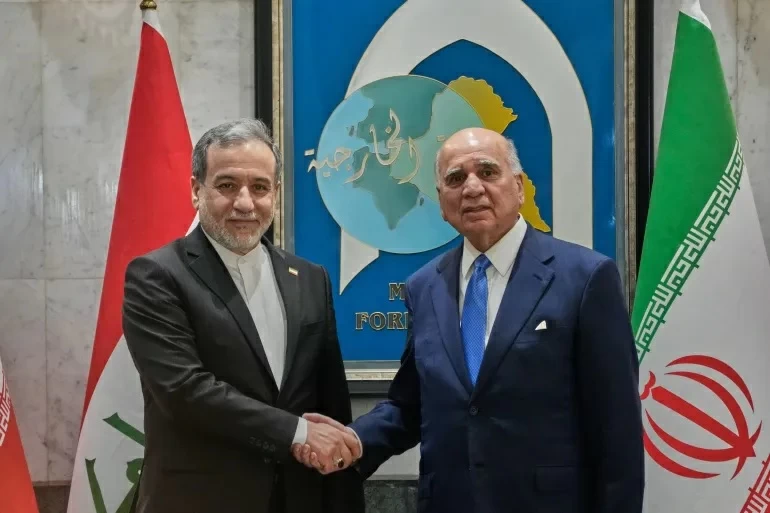
لا تزال طهران تواصل التصعيد في مضيق هرمز، إذ ادعى وزير خارجيتها عباس عراقجي، أن بلاده وحدها المسؤولة عن إعادة حركة الملاحة في الممر الدولي إلى مستويات ما قبل الحرب.
وقال عراقجي، في مؤتمر صحفي مشترك مع نظيره العراقي فؤاد حسين في بغداد اليوم الأحد: «الأمور ستعود لسابق عهدها في هرمز بعد إزالة العوائق»، وفق تعبيره. واعتبر أن «تدخل أي طرف آخر سيؤدي فقط إلى تعقيد عملية عودة حركة الشحن في الخليج إلى وضعها الطبيعي».
ولفت إلى أن إيران ستواصل التعاون مع الحكومة الجديدة برئاسة علي الزيدي. وأشار إلى أن بلاده مصممة على مواصلة العلاقات الاستراتيجية مع العراق.
من جهته، أفاد وزير خارجية العراق بأن الزيارة بحثت مذكرة التفاهم بين أمريكا وإيران. وقال إن نظيره الإيراني أطلعه على التفاهمات مع واشنطن. وشدد على أهمية العلاقات بين بغداد وطهران.
وأوضح أن إغلاق مضيق هرمز أدى إلى توقف تدفق النفط العراقي، داعياً إلى فتحه دون عوائق. وحذّر من أن استمرار الحرب سيؤدي إلى دمار المنطقة.
وتصاعد التوتر في المنطقة مع تبادل الضربات مجدداً بين الولايات المتحدة وإيران على مدى يومي السبت والأحد، إذ شن الجيش الأمريكي مجدداً، فجر اليوم، غارات على جنوب إيران، إثر استهداف سفينة في مضيق هرمز.
في المقابل، رد الحرس الثوري بالاعتداء على الكويت والبحرين. وهدد بوقف المفاوضات مع الجانب الأمريكي والرد بشكل أكبر على أي تصعيد جديد.
ولوّح الرئيس دونالد ترمب بإزالة إيران عن الوجود في حال وجدت الولايات المتحدة نفسها مضطرة لاستئناف الحرب، متهماً طهران بانتهاك اتفاق وقف إطلاق النار.
يذكر أن مذكرة التفاهم التي وقعت بين الجانبين الأمريكي والإيراني في 18 يونيو المؤلفة من 14 بنداً، نصت على وقف الأعمال العدائية بين البلدين، وتشكيل لجان عمل من أجل بحث عدد من الملفات، بينها مضيق هرمز، وآلية رفع العقوبات عن إيران، فضلاً عن الأموال الإيرانية المجمدة في الخارج.
وكان من المنتظر أن تجتمع اللجان الفنية خلال الأيام القادمة في قطر وإسلام أباد.
Tehran continues to escalate tensions in the Strait of Hormuz, as its Foreign Minister Abbas Araghchi claimed that his country alone is responsible for restoring navigation in the international corridor to pre-war levels.
Araghchi said at a joint press conference with his Iraqi counterpart Fuad Hussein in Baghdad today, Sunday: "Things will return to their previous state in Hormuz after removing the obstacles," as he put it. He considered that "the intervention of any other party will only complicate the process of restoring shipping in the Gulf to its normal state."
He pointed out that Iran will continue to cooperate with the new government led by Ali Al-Zaydi. He noted that his country is determined to continue strategic relations with Iraq.
For his part, the Iraqi Foreign Minister stated that the visit discussed the memorandum of understanding between the U.S. and Iran. He said that his Iranian counterpart briefed him on the understandings with Washington. He emphasized the importance of relations between Baghdad and Tehran.
He explained that the closure of the Strait of Hormuz has led to a halt in the flow of Iraqi oil, calling for its opening without obstacles. He warned that the continuation of the war will lead to the destruction of the region.
Tensions in the region have escalated with renewed exchanges of strikes between the United States and Iran over the weekend, as the U.S. military launched airstrikes on southern Iran early today, following an attack on a ship in the Strait of Hormuz.
In response, the Revolutionary Guard attacked Kuwait and Bahrain. They threatened to halt negotiations with the U.S. side and respond more aggressively to any new escalation.
President Donald Trump hinted at the possibility of erasing Iran from existence if the United States finds itself compelled to resume war, accusing Tehran of violating the ceasefire agreement.
It is noteworthy that the memorandum of understanding signed between the U.S. and Iranian sides on June 18, consisting of 14 points, stipulated the cessation of hostilities between the two countries and the formation of working committees to discuss several issues, including the Strait of Hormuz, the mechanism for lifting sanctions on Iran, as well as the Iranian funds frozen abroad.
The technical committees were expected to meet in the coming days in Qatar and Islamabad.