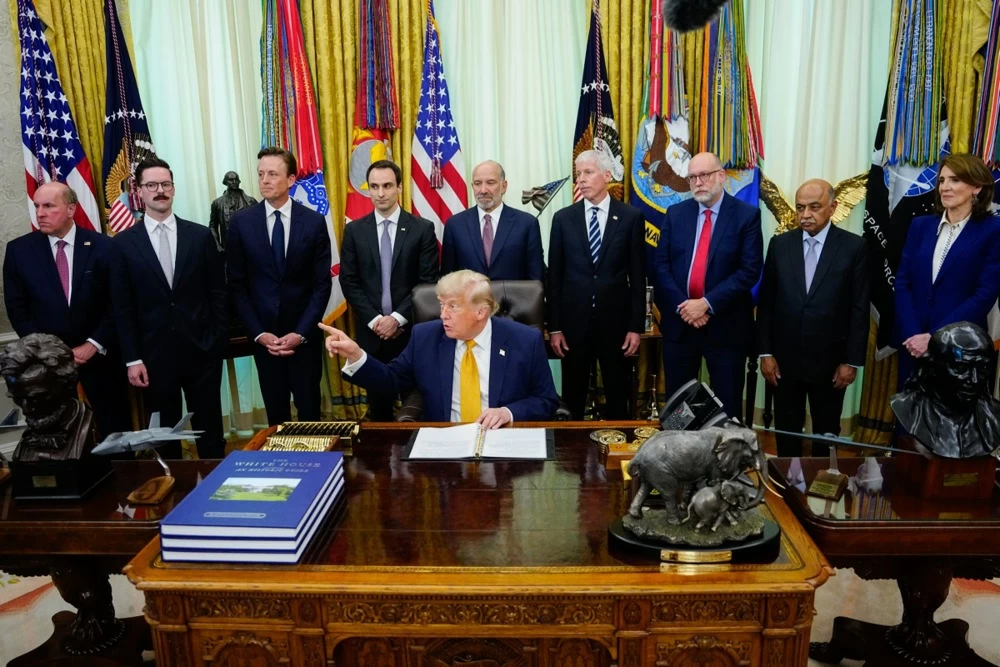
أعلن الرئيس الأمريكي دونالد ترمب اليوم (الإثنين)، توقيع اتفاق في سويسرا للإفراج عن 12 مليار دولار من الأصول المجمدة، التي ستستخدم حصراً لشراء المحاصيل من المزارعين الأمريكيين، موضحاً أنه تم الاتفاق في سويسرا على خط اتصال بشأن مضيق هرمز لتجنب أي نزاع.
وقال ترمب في مؤتمر صحفي: «إيران تبلي بلاء حسناً للغاية في ما يتعلق بمضيق هرمز، نحقق تقدماً جيداً في مسار التفاوض للتوصل إلى اتفاق عادل ومعقول معها»، موضحاً أنه من المفترض ألا تستخدم إيران عائدات النفط لإعادة بناء جيشها بل لشراء الغذاء لشعبها.
وهدد ترمب بالحرب إذا أساءت إيران التصرف، قائلاً: «إذا أساءت إيران التصرف سأقوم بما يجب علي القيام به»، مشيراً إلى أن الطريقة التي يتعامل بها مع إيران لن تسبب كساداً اقتصادياً عالمياً.
وأشار إلى أن مضيق هرمز مفتوح بالكامل، مبيناً أنه يعمل على حل المشكلات بما فيها تلك التي تتعلق بنتنياهو.
وأضاف: «أتعامل مع إيران بطريقة مختلفة تماماً عن أوباما والديمقراطيين»، مبيناً أن فريق التفاوض بقيادة فانس قام بعمل جيد.
وجدد ترمب حديثه حول قدرات إيران قائلاً: «قضينا على قدرات إيران العسكرية وهي في وضع صعب».
في المقابل، قال رئيس البرلمان الإيراني محمد باقر قاليباف: «تم التنسيق لاجتماعات بيني وبين نائب الرئيس الأمريكي جي دي فانس عند الحاجة لمتابعة بنود مذكرة التفاهم وحل أي اختلاف بشأنها»، موضحاً أنه تم رفع العقوبات على بيعهم للنفط والبتروكيماويات بشكل مؤقت إلى حين التوصل لاتفاق نهائي.
وأضاف: «اتفقنا في سويسرا على إيجاد مركز اتصال بشأن أي مشكلة أو حادث قد يحدث في ما يتعلق بمضيق هرمز وتوصلنا إلى تفاهمات وآليات مشتركة مع أمريكا بشأن ضمان سيادة لبنان ووحدة أراضيه»، مبيناً أنه جرى الاتفاق على الإفراج عن الأصول المجمدة بمقدار 12 مليار دولار.
وأبدى قاليباف مخاوفهم من الأمريكيين قائلاً: «كنا ولا نزال لا نثق بالولايات المتحدة ومن الحكمة أن نبقى كذلك في المستقبل»، مهدداً بالرد بالتفاوض أو بالصواريخ على أي مشكلة في التنفيذ.
واعتبر رئيس البرلمان الإيراني أن معارضة إسرائيل الشديدة للاتفاق يكمن في أنهم يرون فيه نهاية إسرائيل على حد زعمه.
U.S. President Donald Trump announced today (Monday) the signing of an agreement in Switzerland to release $12 billion in frozen assets, which will be used exclusively to purchase crops from American farmers, clarifying that a communication line regarding the Strait of Hormuz was agreed upon in Switzerland to avoid any conflict.
Trump said at a press conference: “Iran is doing very well regarding the Strait of Hormuz; we are making good progress in the negotiation process to reach a fair and reasonable agreement with them,” explaining that Iran is supposed to use oil revenues not to rebuild its military but to buy food for its people.
He threatened war if Iran misbehaves, saying: “If Iran misbehaves, I will do what I have to do,” indicating that the way he deals with Iran will not cause a global economic recession.
He pointed out that the Strait of Hormuz is fully open, stating that he is working on resolving issues, including those related to Netanyahu.
He added: “I deal with Iran in a completely different way than Obama and the Democrats,” noting that the negotiating team led by Vance has done a good job.
Trump reiterated his comments about Iran's capabilities, saying: “We have eliminated Iran's military capabilities, and they are in a difficult position.”
In contrast, Iranian Parliament Speaker Mohammad Baqer Qalibaf said: “Meetings have been coordinated between me and U.S. Vice President J.D. Vance as needed to follow up on the terms of the memorandum of understanding and resolve any differences regarding it,” explaining that sanctions on their oil and petrochemical sales have been temporarily lifted until a final agreement is reached.
He added: “We agreed in Switzerland to establish a contact center regarding any problem or incident that may occur concerning the Strait of Hormuz, and we reached understandings and joint mechanisms with America regarding the guarantee of Lebanon's sovereignty and territorial integrity,” indicating that an agreement was made to release the frozen assets amounting to $12 billion.
Qalibaf expressed their concerns about the Americans, saying: “We have never trusted the United States and it is wise to remain so in the future,” threatening to respond through negotiations or missiles to any issues in implementation.
The Iranian Parliament Speaker considered that Israel's strong opposition to the agreement stems from their belief that it signifies the end of Israel, according to his claims.