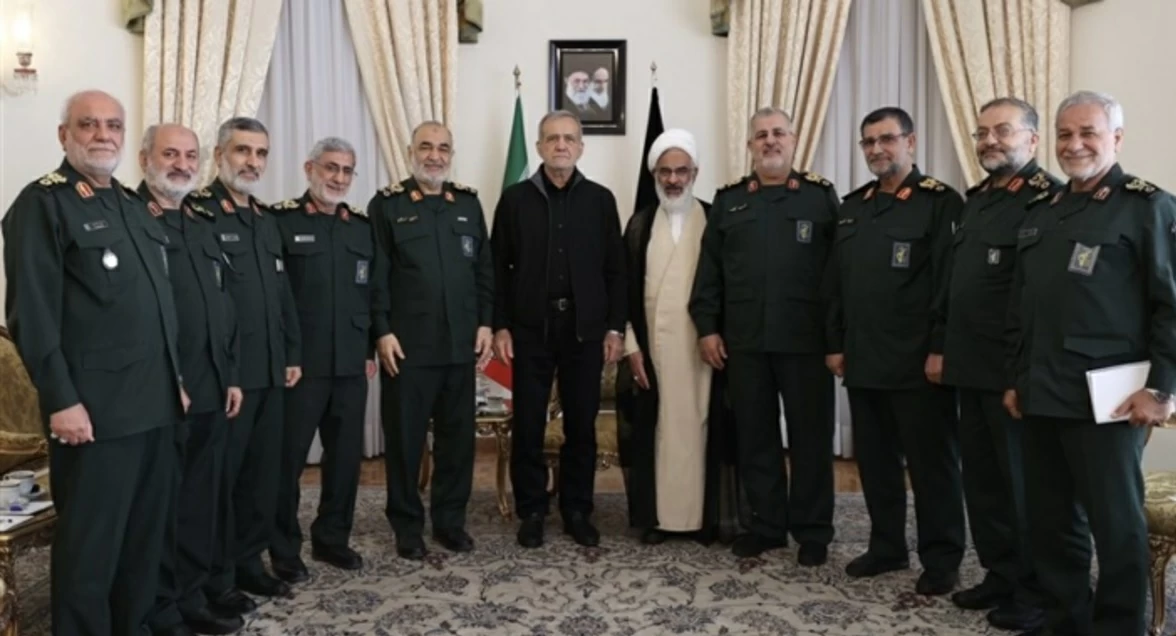
تعيش إيران حالة من الضبابية والانقسام في مراكز القرار، وسط تساؤلات متزايدة في الأوساط الغربية حول من يحكم فعلياً داخل طهران.
وأعاد الرئيس الإيراني مسعود بزشكيان، اليوم (الأحد)، الجدل إلى الواجهة عندما أكد أن إدارة البلاد يجب ألا تنحصر في دائرة محدودة من صانعي القرار، في تصريح فُسّر على نطاق واسع بأنه إشارة إلى تنامي نفوذ جهات نافذة داخل الدولة، وفي مقدمتها الحرس الثوري.
وكانت صحيفة «التلغراف» البريطانية قد ذكرت أن الرواية الإعلامية السائدة صوّرت رئيس البرلمان محمد باقر قاليباف على أنه «بوتين إيران»، إلا أن الواقع يبدو أكثر تعقيداً، خصوصاً مع استمرار سيطرة الحرس الثوري على مفاصل النظام ومراكز النفوذ الرئيسية.
وذكرت الصحيفة أنه رغم صعود أحمد وحيدي، فإن نفوذه لا يزال بحاجة إلى قاعدة دعم أوسع داخل الأجيال الشابة في الحرس الثوري وقوات الباسيج، ما يفسر أهمية الدور الذي يؤديه القائد السابق للحرس الثوري محمد علي جعفري، الذي عاد إلى دائرة التأثير بعد سنوات من الابتعاد عن الواجهة.
وأشارت إلى أن جعفري كان مهندساً رئيسياً لإعادة هيكلة الحرس الثوري، ومؤسساً لشبكات تنظيمية وأيديولوجية واسعة تُعرف بـ«الحلقة الوسطى»، وهي شبكة تضم آلاف المجموعات الشبابية الموالية للنظام، وتُستخدم للتعبئة السياسية والتأثير في المزاج الانتخابي وإعادة تشكيل التوازنات الداخلية.
ورجحت الصحيفة وجود تحالف غير معلن بين وحيدي وجعفري يقوم على تبادل المصالح والنفوذ، إذ يوفر جعفري شبكاته التنظيمية وخبرته الأمنية، فيما يمنح وحيدي الغطاء المؤسسي لهذا التوجه.
وذكر كاتب المقال أن هذا التحالف لا يعكس تقارباً شخصياً فحسب، بل يمثل إعادة هندسة لمراكز القوة داخل الحرس الثوري، وقد يفضي إلى صعود جيل أكثر تشدداً وأيديولوجية، مع تراجع نفوذ التيار البراغماتي، وهو تحول قد ينعكس على سياسات إيران الداخلية والإقليمية خلال المرحلة القادمة.
ويُعد الحرس الثوري أحد أبرز مراكز النفوذ في إيران، إذ لا يقتصر دوره على الجانب العسكري، بل يمتد إلى قطاعات اقتصادية واستثمارية واسعة، فضلاً عن تأثيره في ملفات السياسة الإقليمية والعلاقات الخارجية.
وتزداد حدة التنافس بين التيارات السياسية الإيرانية كلما اقتربت البلاد من استحقاقات مهمة أو مفاوضات حساسة. وبحسب تقارير غربية، فإن الخلافات لا تقتصر على الجوانب السياسية، بل تمتد إلى إدارة الاقتصاد وتوزيع الموارد وتحديد أولويات الإنفاق.
Iran is experiencing a state of ambiguity and division in decision-making centers, amid increasing questions in Western circles about who is actually in power within Tehran.
The Iranian president, Masoud Bezhakian, reignited the debate today (Sunday) when he asserted that the management of the country should not be confined to a limited circle of decision-makers, a statement widely interpreted as a reference to the growing influence of powerful entities within the state, foremost among them the Revolutionary Guard.
The British newspaper "The Telegraph" reported that the prevailing media narrative portrayed Parliament Speaker Mohammad Baqer Qalibaf as the "Putin of Iran," but the reality appears to be more complex, especially with the continued dominance of the Revolutionary Guard over the system's key components and centers of influence.
The newspaper noted that despite the rise of Ahmad Vahidi, his influence still requires a broader support base among the younger generations in the Revolutionary Guard and the Basij forces, which explains the importance of the role played by former Revolutionary Guard commander Mohammad Ali Jafari, who has returned to the sphere of influence after years of being away from the forefront.
It pointed out that Jafari was a key architect of the restructuring of the Revolutionary Guard and the founder of extensive organizational and ideological networks known as the "middle circle," which includes thousands of youth groups loyal to the regime and is used for political mobilization, influencing electoral moods, and reshaping internal balances.
The newspaper speculated about an unannounced alliance between Vahidi and Jafari based on mutual interests and influence, as Jafari provides his organizational networks and security expertise, while Vahidi offers institutional cover for this direction.
The article's author mentioned that this alliance reflects not only a personal rapprochement but also represents a re-engineering of power centers within the Revolutionary Guard, which may lead to the rise of a more hardline and ideological generation, with the decline of the pragmatic current's influence, a shift that could affect Iran's domestic and regional policies in the coming phase.
The Revolutionary Guard is considered one of the most prominent centers of influence in Iran, as its role extends beyond the military aspect to encompass vast economic and investment sectors, in addition to its impact on regional political issues and foreign relations.
The intensity of competition among Iranian political currents increases as the country approaches significant deadlines or sensitive negotiations. According to Western reports, the disagreements are not limited to political aspects but extend to economic management, resource distribution, and prioritizing spending.