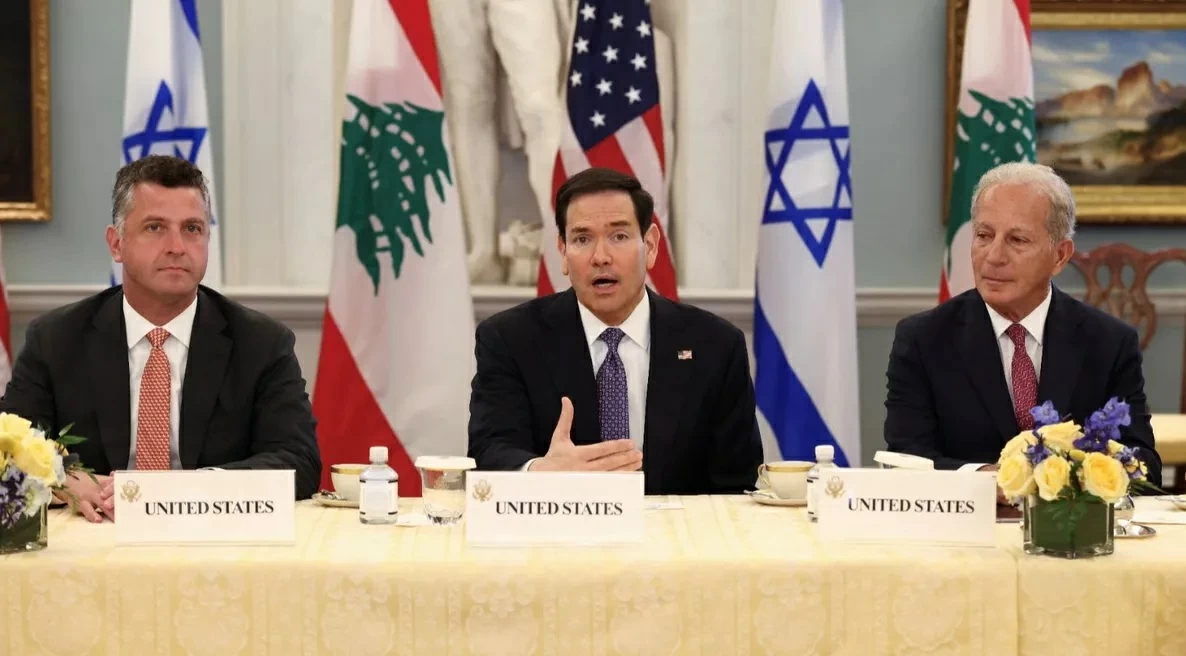
في خطوة وُصفت بالتاريخية، احتضنت وزارة الخارجية الأمريكية في 14 أبريل 2026 اجتماعاً ثلاثياً رفيع المستوى، جمع مسؤولين من الولايات المتحدة ولبنان وإسرائيل، في أول تواصل واسع بهذا المستوى بين بيروت وتل أبيب منذ 1993، فاتحاً الباب أمام مسار تفاوضي مباشر برعاية واشنطن.
اجتماع نادر يعيد فتح القنوات
شارك في الاجتماع وزير الخارجية الأمريكي ماركو روبيو، إلى جانب عدد من كبار المسؤولين والدبلوماسيين من الجانبين اللبناني والإسرائيلي، في لقاء أعاد كسر الجمود السياسي الممتد لعقود.
وبحث المجتمعون بصورة «بنّاءة»، وفق البيان الرسمي، آليات إطلاق مفاوضات مباشرة بين لبنان وإسرائيل، تمهيداً لتسوية شاملة للملفات العالقة.
واشنطن: لا مسارات موازية.. والاتفاق برعايتنا
أكدت الولايات المتحدة أن أي اتفاق لوقف الأعمال العدائية يجب أن يتم بين الحكومتين اللبنانية والإسرائيلية بوساطة أمريكية، رافضةً أي قنوات أو مسارات منفصلة.
وشددت على دعمها لحق إسرائيل في الدفاع عن نفسها في مواجهة هجمات «حزب الله»، في موقف يعكس ثبات الرؤية الأمريكية تجاه التوازنات الأمنية في المنطقة.
نزع السلاح.. نقطة التقاء حساسة
برز ملف السلاح كأحد أبرز محاور النقاش، إذ أعربت واشنطن عن دعمها لخطط الحكومة اللبنانية لاستعادة احتكار استخدام القوة، وإنهاء النفوذ الإيراني داخل لبنان.
في المقابل، أكدت إسرائيل التزامها بنزع سلاح جميع الجماعات غير التابعة للدولة، وتفكيك بنيتها التحتية، معربةً عن استعدادها للعمل مع الحكومة اللبنانية لتحقيق هذا الهدف، بما يضمن أمن الطرفين.
رهانات الإعمار والاستثمار
وأوضحت واشنطن أن انطلاق هذا المسار التفاوضي قد يفتح الباب أمام مساعدات دولية واسعة لإعادة إعمار لبنان، ودعم تعافيه الاقتصادي، إلى جانب توسيع فرص الاستثمار لكلا البلدين.
كما عبّرت عن أملها في أن تتجاوز هذه المحادثات إطار اتفاق 2024، وصولاً إلى اتفاق سلام شامل يعزز الاستقرار الإقليمي.
لبنان: السيادة أولاً.. ووقف النار ضرورة
من جهته، شدد الوفد اللبناني على ضرورة التنفيذ الكامل لإعلان وقف الأعمال العدائية الصادر في نوفمبر 2024، مؤكداً التمسك بمبادئ السيادة وسلامة الأراضي.
ودعت بيروت إلى وقف فوري لإطلاق النار، واتخاذ خطوات عملية لمعالجة الأزمة الإنسانية الحادة التي خلّفها النزاع، في ظل أوضاع معيشية ضاغطة.
اتفاق على مفاوضات مباشرة
واختُتم الاجتماع باتفاق جميع الأطراف على إطلاق مفاوضات مباشرة، على أن يُحدد زمانها ومكانها لاحقاً، في خطوة تُعيد رسم ملامح المشهد السياسي بين لبنان وإسرائيل بعد أكثر من ثلاثة عقود من القطيعة.
وأعلنت الخارجية الأمريكية، في ختام الاجتماع إمكانية تقديم الولايات المتحدة مساعدات مالية ملموسة وكبيرة للبنان، شرط نجاح مفاوضاته مع إسرائيل وتقدمه في مسار التهدئة والسلام.
وأشار بيان مشترك أمريكي-لبناني-إسرائيلي صدر عقب الاجتماع إلى أن المفاوضات المباشرة بين بيروت وتل أبيب قد تفتح الباب أمام مساعدات أمريكية ودولية ضخمة لإعادة إعمار لبنان، ودعم التعافي الاقتصادي، وتوسيع فرص الاستثمار للبنان والمنطقة.
وشارك في الاجتماع وزير الخارجية الأمريكي ماركو روبيو، وسفير لبنان لدى واشنطن ندى حمادة معوض، وسفير إسرائيل لدى الولايات المتحدة يحيئيل لايتر، إلى جانب سفير الولايات المتحدة لدى لبنان.
ووصف روبيو اللقاء بأنه «فرصة تاريخية»، مؤكداً أن الإدارة الأمريكية مستعدة لدعم أي تقدم حقيقي يؤدي إلى وقف إطلاق النار المستدام وترتيبات أمنية تضمن استقرار الحدود اللبنانية-الإسرائيلية.
يأتي هذا الإعلان في سياق أول محادثات مباشرة بين لبنان وإسرائيل منذ أكثر من 30 عاماً، تحت رعاية أمريكية مباشرة، ويعد الاجتماع خطوة تحضيرية لمفاوضات أوسع تهدف إلى تهدئة التصعيد العسكري على الحدود الجنوبية اللبنانية، ومعالجة نفوذ «حزب الله»، وترتيب أمني يسمح بانسحاب إسرائيلي مقابل سيطرة الجيش اللبناني على الجنوب.
ويعاني لبنان من أزمة اقتصادية حادة ودمار واسع في البنية التحتية نتيجة التصعيد العسكري الأخير مع إسرائيل، وتعتبر واشنطن المساعدات الأمريكية الموعودة التي قد تشمل دعماً لإعادة الإعمار والاستثمار حافزاً اقتصادياً مهماً للحكومة اللبنانية، في وقت يواجه البلد تحديات مالية كبيرة ونزوحاً داخلياً واسعاً.
In a move described as historic, the U.S. Department of State hosted a high-level trilateral meeting on April 14, 2026, bringing together officials from the United States, Lebanon, and Israel, marking the first extensive contact at this level between Beirut and Tel Aviv since 1993, opening the door to a direct negotiation process under Washington's sponsorship.
A rare meeting that reopens channels
U.S. Secretary of State Marco Rubio participated in the meeting alongside several senior officials and diplomats from both the Lebanese and Israeli sides, in a gathering that broke the political deadlock that has persisted for decades.
The attendees discussed in a "constructive" manner, according to the official statement, the mechanisms for launching direct negotiations between Lebanon and Israel, paving the way for a comprehensive settlement of outstanding issues.
Washington: No parallel tracks... and the agreement under our sponsorship
The United States confirmed that any agreement to cease hostilities must be made between the Lebanese and Israeli governments with American mediation, rejecting any separate channels or tracks.
It emphasized its support for Israel's right to defend itself against attacks from "Hezbollah," reflecting a steadfast American vision regarding security balances in the region.
Disarmament... a sensitive point of convergence
The issue of arms emerged as one of the main discussion points, with Washington expressing its support for the Lebanese government's plans to regain a monopoly on the use of force and to end Iranian influence within Lebanon.
In contrast, Israel reaffirmed its commitment to disarming all non-state groups and dismantling their infrastructure, expressing its readiness to work with the Lebanese government to achieve this goal, ensuring the security of both parties.
Betting on reconstruction and investment
Washington clarified that the initiation of this negotiation track could open the door to extensive international aid for the reconstruction of Lebanon and support for its economic recovery, along with expanding investment opportunities for both countries.
It also expressed hope that these talks would go beyond the framework of the 2024 agreement, leading to a comprehensive peace agreement that enhances regional stability.
Lebanon: Sovereignty first... and a ceasefire is essential
For its part, the Lebanese delegation emphasized the necessity of fully implementing the ceasefire declaration issued in November 2024, reaffirming its commitment to the principles of sovereignty and territorial integrity.
Beirut called for an immediate ceasefire and practical steps to address the acute humanitarian crisis left by the conflict, amid pressing living conditions.
Agreement on direct negotiations
The meeting concluded with all parties agreeing to launch direct negotiations, with the timing and location to be determined later, in a step that redraws the political landscape between Lebanon and Israel after more than three decades of estrangement.
The U.S. State Department announced at the end of the meeting the possibility of providing substantial financial assistance to Lebanon, contingent upon the success of its negotiations with Israel and its progress towards de-escalation and peace.
A joint American-Lebanese-Israeli statement issued after the meeting indicated that direct negotiations between Beirut and Tel Aviv could open the door to massive American and international aid for the reconstruction of Lebanon, supporting economic recovery, and expanding investment opportunities for Lebanon and the region.
U.S. Secretary of State Marco Rubio, Lebanon's Ambassador to Washington Nada Hamadeh Mouawad, Israel's Ambassador to the United States Mike Herzog, along with the U.S. Ambassador to Lebanon, participated in the meeting.
Rubio described the meeting as a "historic opportunity," affirming that the U.S. administration is ready to support any genuine progress that leads to a sustainable ceasefire and security arrangements that ensure the stability of the Lebanese-Israeli borders.
This announcement comes in the context of the first direct talks between Lebanon and Israel in over 30 years, under direct American sponsorship, and the meeting is considered a preparatory step for broader negotiations aimed at de-escalating military tensions along the southern Lebanese border, addressing Hezbollah's influence, and establishing a security arrangement that allows for an Israeli withdrawal in exchange for the Lebanese army's control over the south.
Lebanon is suffering from a severe economic crisis and widespread destruction of infrastructure due to the recent military escalation with Israel, and Washington views the promised American aid, which may include support for reconstruction and investment, as an important economic incentive for the Lebanese government, at a time when the country faces significant financial challenges and widespread internal displacement.