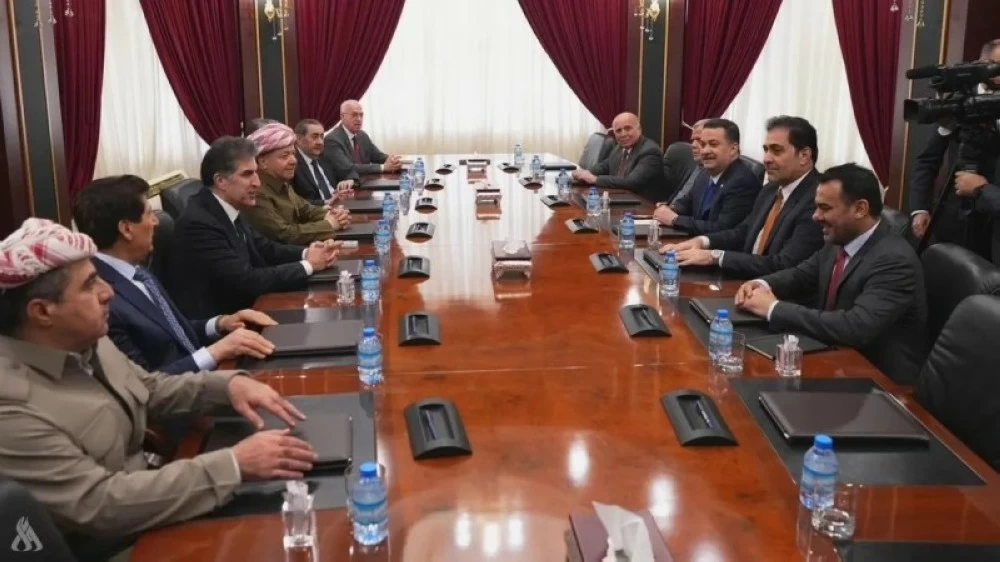
فيما يستمر الانسداد السياسي في العراق، يعقد تحالف «الإطار التنسيقي»، اليوم (الإثنين)، اجتماعاً لمناقشة الاستحقاقات الدستورية وفي مقدمتها ملف انتخاب رئيس الجمهورية، وأسباب تأخر حسم هذا المنصب السيادي.
ويبحث الاجتماع تقييم تطورات المشهد النيابي، وإمكانية تهيئة الأجواء لعقد جلسة برلمانية مكتملة النصاب، ومناقشة الخيارات المطروحة للتعامل مع الخلافات القائمة بين القوى الكردية بشأن مرشح رئاسة الجمهورية، وتأثيره على بقية الاستحقاقات الدستورية.
وكشفت مصادر سياسية، أن خلافات الأحزاب الكردية ما زالت تعطل انتخاب رئيس الجمهورية، في وقت دخلت أزمة الإطار التنسيقي الحاكم حالة من التوتر بسبب إشكالية انتخاب رئيس الوزراء. وجدد ائتلاف دولة القانون تمسكه بترشح زعيمه نوري المالكي لرئاسة الحكومة.
وأفادت المصادر بأن هناك خيارين أمام محادثات التحالف الحاكم، الأول: تقديم مرشح تسوية، والثاني الإبقاء على حكومة محمد شياع السوداني كحل للخروج من المأزق.
لكن ائتلاف دولة القانون سارع إلى نفي أي نية لانسحاب المالكي من الترشح لرئاسة الوزراء، مؤكداً في بيان مقتضب أن المالكي لا ينوي الانسحاب ما دفع أطراف الإطار إلى تكثيف الاجتماعات الفردية بين أجنحته لإجراء مناقشات معمقة بحثا عن مخرج.
وشهدت الاجتماعات تباينات، إذ طرحت بعض قيادات الإطار بشكل جدي فكرة استمرار حكومة السوداني مع مقترح توسيع صلاحياتها عبر البرلمان. وجاء هذا الطرح خلال الاجتماع الأخير للتحالف الذي عقد في غياب قيس الخزعلي زعيم «العصائب»، إلى جانب عمار الحكيم زعيم «تيار الحكمة».
وشهدت مجلس النواب تعطيلاً لجلسات انتخاب رئيس الجمهورية، نتيجة عدم توصل الحزبين الكرديين الرئيسيين إلى اتفاق نهائي حول مرشح موحد، الأمر الذي أدى إلى تجاوز المدد الدستورية المنصوص عليها في المادة (70) من الدستور.
ويعتبر انتخاب رئيس الجمهورية خطوة محورية لفتح الطريق أمام تكليف مرشح الكتلة النيابية الأكثر تمثيلاً بتشكيل الحكومة، ما يجعل استمرار الخلافات يعصف بالمشهد السياسي، وسط دعوات داخلية لتغليب التوافق والالتزام بالاستحقاقات الدستورية، تفادياً لمزيد من التعطيل والارتدادات السياسية.
As the political deadlock continues in Iraq, the "Coordination Framework" alliance is holding a meeting today (Monday) to discuss constitutional entitlements, primarily the election of the President of the Republic, and the reasons for the delay in resolving this sovereign position.
The meeting will evaluate the developments in the parliamentary scene, the possibility of creating an environment for a fully attended parliamentary session, and discuss the options available to address the existing disagreements among the Kurdish forces regarding the presidential candidate, and its impact on the other constitutional entitlements.
Political sources revealed that the disagreements among the Kurdish parties are still obstructing the election of the President of the Republic, at a time when the crisis within the ruling Coordination Framework has entered a state of tension due to the issue of electing the Prime Minister. The State of Law Coalition reiterated its commitment to nominating its leader, Nouri al-Maliki, for the premiership.
The sources indicated that there are two options before the ruling coalition's negotiations: the first is to present a compromise candidate, and the second is to maintain Mohammed Shia' al-Sudani's government as a solution to exit the impasse.
However, the State of Law Coalition quickly denied any intention for al-Maliki to withdraw from the premiership candidacy, affirming in a brief statement that al-Maliki does not intend to withdraw, which prompted the parties within the framework to intensify individual meetings among its wings to conduct in-depth discussions in search of an exit.
The meetings witnessed divergences, as some leaders of the framework seriously proposed the idea of continuing al-Sudani's government with a suggestion to expand its powers through the parliament. This proposal came during the last meeting of the alliance, which was held in the absence of Qais al-Khazali, the leader of "Asa'ib Ahl al-Haq," alongside Ammar al-Hakim, the leader of the "Wisdom Movement."
The House of Representatives has experienced a disruption in the sessions for electing the President of the Republic due to the failure of the two main Kurdish parties to reach a final agreement on a unified candidate, which has led to exceeding the constitutional deadlines stipulated in Article (70) of the constitution.
The election of the President of the Republic is considered a pivotal step to pave the way for assigning the candidate of the most representative parliamentary bloc to form the government, which makes the continuation of disagreements disrupt the political scene, amidst internal calls to prioritize consensus and adhere to constitutional entitlements, in order to avoid further disruption and political repercussions.