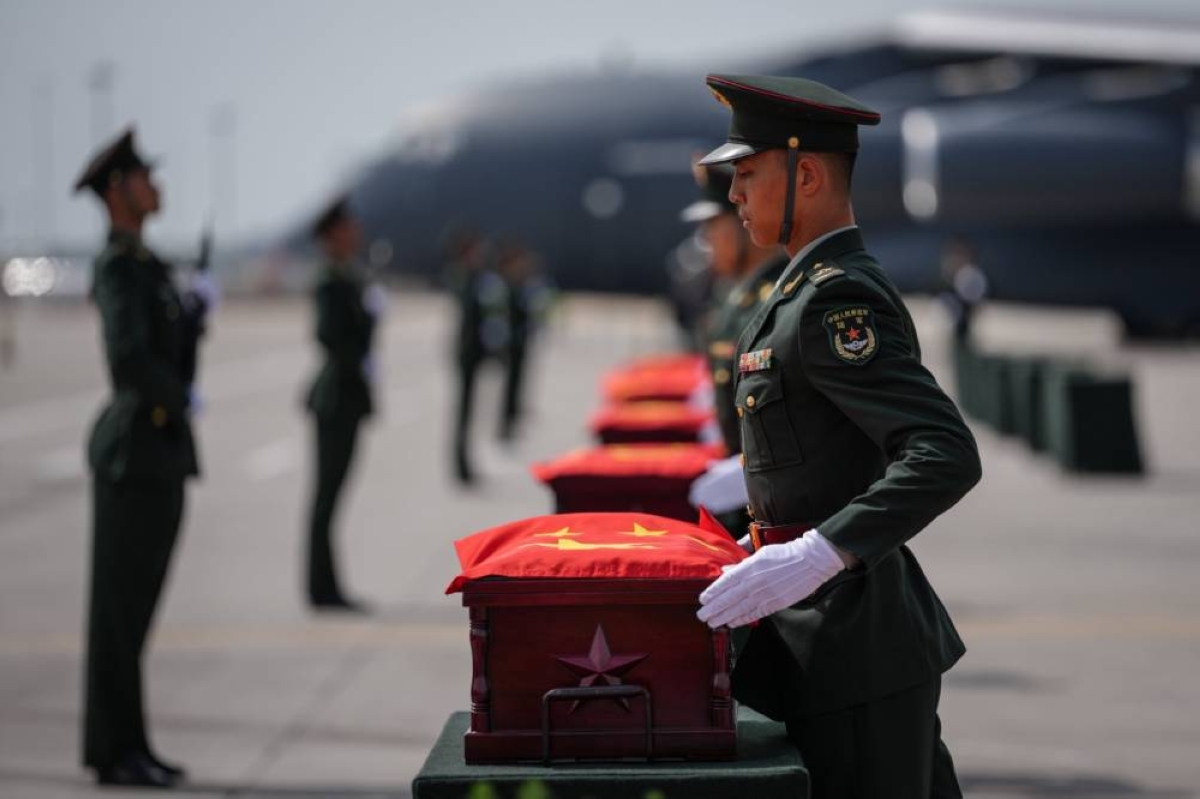
في خطوة إنسانية تعكس جهودًا مستمرة للتصالح مع الماضي، أعادت كوريا الجنوبية اليوم رفات 30 جنديًا من متطوعي الجيش الشعبي الصيني، الذين قُتلوا خلال حرب كوريا (1950-1953)، إلى جمهورية الصين الشعبية، وذلك في جو من الاحترام والتعاون بين البلدين، رغم التوترات التاريخية الناتجة عن النزاع الذي شكل شبه الجزيرة الكورية حتى اليوم.
بدأت الاحتفالية الرسمية في مطار إنتشون الدولي بسيول، حيث أشرف مسؤولون كوريون وصينيون على نقل التابوتات المغطاة بالعلم الصيني إلى طائرة نقل عسكرية من طراز Y-20، ورافقت الطائرة أربع طائرات مقاتلة من طراز J-20 أثناء دخولها المجال الجوي الصيني، في عرض يعبر عن الشرف الوطني.
ووصل رفات الجنود إلى مطار تاوشيان الدولي في شنيانغ بمقاطعة لياونينغ، حيث استقبله عدد كبير من العائلات والمسؤولين، وسط مشاعر من الحزن والامتنان، ووصف مسؤول صيني المشهد بأنه «هؤلاء ضحايا الحرب عادوا أخيرًا إلى أرض الوطن، ليستريحوا في سلام بعد عقود من الغياب» عودة 1011 رفاتاً صينياً
وتأتي إعادة الرفات في إطار اتفاقية وقعتها كوريا الجنوبية والصين في عام 2014، تهدف إلى إعادة رفات الجنود الصينيين الذين دفنوا في مقابر جماعية على الأراضي الكورية الجنوبية بعد الحرب، ومنذ ذلك الحين، تمت إعادة أكثر من 1011 رفاتاً صينياً، بما في ذلك 88 رفاتاً في عام 2022.
ومع ذلك، لم تُجرَ مراسم رسمية كاملة في السنوات الأخيرة بسبب التوترات السياسية، لكن هذه العملية تمت دون احتفالية كبيرة هذا العام، مع التركيز على الجانب الإنساني، وفقًا لوزارة الدفاع الكورية، تم حفر هذه الرفات من مواقع في مناطق مثل إنجي وهونغسونغ، وتم التحقق من هويتها جزئيًا من خلال التحاليل العلمية للزي العسكري والذخيرة.
أزمة الحرب الكورية
اندلعت حرب كوريا في 25 يونيو 1950، عندما غزت كوريا الشمالية، بدعم من الاتحاد السوفييتي والصين، شبه الجزيرة الكورية في محاولة لتوحيد البلاد تحت حكم شيوعي، وكانت كوريا مقسمة منذ نهاية الحرب العالمية الثانية في 1945، بعد تحريرها من الاحتلال الياباني، على خط العرض 38، حيث أصبحت الشمالية تحت النفوذ السوفييتي والجنوبية تحت الولايات المتحدة.
وتدخلت قوات الأمم المتحدة، بقيادة الولايات المتحدة، لدعم كوريا الجنوبية، ما أدى إلى اشتباكات عنيفة أسفرت عن مقتل ملايين الأشخاص، ودخلت الصين الحرب في أكتوبر 1950، عندما أرسلت «متطوعي الجيش الشعبي» لمساعدة كوريا الشمالية، خوفًا من اقتراب القوات الأمريكية من حدودها. هدنة دون معاهدة سلام
وشارك نحو 2.9 مليون جندي صيني، وخسر أكثر من 360 ألفًا منهم حياتهم أو أصيبوا، وفقًا للإحصاءات الرسمية الصينية، وانتهت الحرب بهدنة في 27 يوليو 1953، دون معاهدة سلام رسمية، ما يعني أن الطرفين لا يزالان في حالة حرب فنية حتى اليوم.
وأدت الحرب إلى مقتل نحو 2.5 مليون مدني وجندي من جميع الأطراف، بما في ذلك 36 ألف جندي أمريكي و400 ألف كوري جنوبي، ورغم الخصومة التاريخية، أصبحت عمليات إعادة الرفات رمزًا للتعاون بين كوريا الجنوبية والصين،خصوصاً في ظل التحديات الجيوسياسية الحالية.
وفي الصين، يُحتفل بهؤلاء الجنود كـ«شهداء الحرب لمقاومة الغزو الأمريكي ومساعدة كوريا»، ويُدفنون في مقابر مثل مقبرة الشهداء في شنيانغ، التي تستقبل معظم الرفات بسبب أصل معظم الجنود من شمال شرق الصين.
In a humanitarian step that reflects ongoing efforts to reconcile with the past, South Korea today returned the remains of 30 soldiers from the Chinese People's Volunteer Army, who were killed during the Korean War (1950-1953), to the People's Republic of China, in an atmosphere of respect and cooperation between the two countries, despite the historical tensions resulting from the conflict that has shaped the Korean Peninsula to this day.
The official ceremony began at Incheon International Airport in Seoul, where Korean and Chinese officials oversaw the transfer of the coffins covered with the Chinese flag to a Y-20 military transport aircraft, accompanied by four J-20 fighter jets as it entered Chinese airspace, in a display that expresses national honor.
The remains of the soldiers arrived at Taoxian International Airport in Shenyang, Liaoning Province, where they were welcomed by a large number of families and officials, amidst feelings of sadness and gratitude. A Chinese official described the scene as "These war victims have finally returned home to rest in peace after decades of absence." Return of 1,011 Chinese Remains
The return of the remains comes as part of an agreement signed by South Korea and China in 2014, aimed at repatriating the remains of Chinese soldiers buried in mass graves on South Korean territory after the war. Since then, more than 1,011 Chinese remains have been returned, including 88 remains in 2022.
However, no full official ceremonies have been held in recent years due to political tensions, but this process took place without a major celebration this year, focusing on the humanitarian aspect. According to the Korean Ministry of Defense, these remains were excavated from sites in areas such as Inje and Hongseong, and their identities were partially verified through scientific analyses of military uniforms and ammunition.
The Korean War Crisis
The Korean War broke out on June 25, 1950, when North Korea, supported by the Soviet Union and China, invaded the Korean Peninsula in an attempt to unify the country under communist rule. Korea had been divided since the end of World War II in 1945, after being liberated from Japanese occupation, along the 38th parallel, with the north coming under Soviet influence and the south under the United States.
United Nations forces, led by the United States, intervened to support South Korea, leading to violent clashes that resulted in the deaths of millions of people. China entered the war in October 1950, when it sent "People's Volunteer" troops to assist North Korea, fearing the approach of American forces to its borders. Ceasefire Without a Peace Treaty
About 2.9 million Chinese soldiers participated, with more than 360,000 of them losing their lives or being injured, according to official Chinese statistics. The war ended with a ceasefire on July 27, 1953, without an official peace treaty, meaning that both sides remain in a technical state of war to this day.
The war resulted in the deaths of approximately 2.5 million civilians and soldiers from all sides, including 36,000 American soldiers and 400,000 South Koreans. Despite the historical animosity, the repatriation operations have become a symbol of cooperation between South Korea and China, especially in light of current geopolitical challenges.
In China, these soldiers are celebrated as "martyrs of the war against American invasion and in support of Korea," and they are buried in cemeteries such as the Martyrs' Cemetery in Shenyang, which receives most of the remains due to the origin of most soldiers from Northeast China.