


دان المجلس الوزاري لمجلس التعاون الخليجي جريمة الإبادة الجماعية التي ترتكبها قوات الاحتلال الإسرائيلية ضد سكان قطاع غزة، وسياسة الحصار المتعمدة التي أدت إلى إحداث المجاعة في قطاع غزة، وسياسة التطهير العرقي والعقاب الجماعي.
ودعا، خلال الاجتماع الوزاري للمجلس في دورته الخامسة والستين بعد المائة بالكويت برئاسة وزير الخارجية الكويتي رئيس الدورة الحالية للمجلس الوزاري عبدالله علي عبدالله اليحيا، وبمشاركة وزراء خارجية دول مجلس التعاون، والأمين العام لمجلس التعاون لدول الخليج العربية، اليوم (الإثنين)، إلى أهمية الحفاظ على الأمن البحري والممرات المائية والتصدي للأنشطة التي تهدد أمن واستقرار المنطقة والعالم.
ونوه المجلس بنتائج الاجتماع الوزاري المشترك مع وزير خارجية اليابان، الذي عُقد في 1 سبتمبر 2025م، في دولة الكويت، ووجه المجلس بتكثيف الجهود لتنفيذ خطة العمل المشترك التي تم الاتفاق عليها في إطار الشراكة الاستراتيجية بين الجانبين.
ورحب المجلس باعتماد الجمعية العامة للأمم المتحدة لقرار التعاون بين الأمم المتحدة ومجلس التعاون لدول الخليج العربية، الذي يعكس المكانة الرفيعة التي يحظى بها مجلس التعاون بصفته شريكاً إقليمياً فاعلاً في دعم الأمن والسلم الدوليين. واستعرض المجلس الوزاري تقرير الأمانة العامة بشأن العمل الخليجي المشترك وجهود الدول الأعضاء، وأكد قرارات مجلس التعاون بهذا الشأن.
وبحث المجلس مستجدات القضايا الإقليمية والدولية، مؤكداً مواقف مجلس التعاون الثابتة وقرارته السابقة بشأن هذه القضايا..
الوضع في غزة
أكد المجلس قرار الجمعية العامة للأمم المتحدة الصادر في 12 يونيو 2025م، بشأن الوقف الفوري والدائم وغير المشروط لإطلاق النار في قطاع غزة، وتمكين السكان المدنيين في القطاع من الحصول على الخدمات الأساسية والمساعدات الإنسانية دون عوائق، وضرورة الامتثال للقانون الدولي والقانون الدولي الإنساني، وحماية المدنيين، ورفض تهجيرهم أو إبعادهم من القطاع.
وأكد المجلس الوزاري ضرورة التوصل إلى اتفاق فوري وشامل لوقف إطلاق النار في قطاع غزة، وإطلاق سراح الرهائن والمحتجزين، وحماية السكان المدنيين، وتسهيل إيصال المساعدات الإنسانية بشكل عاجل ودون انقطاع، مشيداً بجهود الوساطة التي تقوم بها دولة قطر وجمهورية مصر العربية والولايات المتحدة الأمريكية، داعياً إلى التنفيذ الكامل لقرار مجلس الأمن رقم 2735 في يونيو 2024م.
ودان المجلس الوزاري بأشد العبارات جريمة الإبادة الجماعية التي ترتكبها قوات الاحتلال الإسرائيلية ضد سكان قطاع غزة، وسياسة الحصار المتعمدة التي أدت إلى إحداث المجاعة في قطاع غزة، وسياسة التطهير العرقي والعقاب الجماعي وقتل المدنيين والصحفيين، والتعذيب والإعدام الميداني، والإخفاء والإبعاد القسري، والنهب، واستمرارها في تدمير الأحياء السكنية والمستشفيات والمدارس والجامعات والمساجد والكنائس والبنى التحتية، التي تهدف إلى تهجير سكان القطاع وإعادة استيطانه. وطالب المجلس المجتمع الدولي باتخاذ إجراءات فورية لوقف هذه الجرائم التي ترتكبها حكومة الاحتلال الإسرائيلية، واتخاذ خطوات جدية لمنعها ومحاسبة مرتكبيها.
وشدد المجلس على ما ورد في بيان اللجنة الوزارية المكلفة من القمة العربية الإسلامية الاستثنائية المشتركة بشأن التطورات في قطاع غزة، الصادر في 9 أغسطس 2025م، الذي أكد الرفض القاطع لمحاولات إسرائيل اقتطاع أراضي القطاع أو فرض الحكم العسكري عليه، مؤكداً أهمية توحيد قطاع غزة والضفة الغربية تحت مظلة السلطة الفلسطينية.
وأكد المجلس ما ورد في البيان الصادر عن الدورة الاستثنائية لمجلس وزراء خارجية الدول الأعضاء في منظمة التعاون الإسلامي، في 25 أغسطس 2025م، بشأن ضرورة اضطلاع المجتمع الدولي بمسؤولياته إزاء ما ورد في تقرير التصنيف المرحلي المتكامل للأمن الغذائي (IPC)، المعتمد من الأمم المتحدة، بشأن المجاعة في قطاع غزة، الذي حمل الاحتلال الإسرائيلي المسؤولية الكاملة عن هذه الجريمة وتداعياتها.
ودان المجلس استهداف إسرائيل للمنظمات الإنسانية والأممية، والاعتداءات المستمرة على قوافل المساعدات الإنسانية، مؤكداً مسؤولية قوات الاحتلال الإسرائيلية في إيصال المساعدات الإنسانية الضرورية، وعدم عرقلة عمل المنظمات الدولية، مشدداً على قرار مجلس الأمن 2730 بشأن حماية العاملين في المجال الإنساني وضمان وصول المساعدات دون عوائق، مرحباً بالبيان الصادر في 12 أغسطس 2025م، عن الاتحاد الأوروبي وعدد من الدول الصديقة، الذي أكد ضرورة إدخال المساعدات الإنسانية إلى قطاع غزة. كما رحب المجلس بالبيان الصادر في 21 يوليو 2025م، عن 26 من الشركاء الدوليين، بطلب إنهاء الحرب على قطاع غزة بشكل فوري ورفع كافة القيود عن المساعدات الإنسانية وسرعة إيصالها بشكل آمن لسكان القطاع.
وجدد المجلس دعمه للجهود التي تبذلها دولة قطر بالتنسيق مع شركائها في الوساطة، مصر، وأمريكا، لوقف إطلاق النار في قطاع غزة، وإطلاق سراح الرهائن والمحتجزين وإدخال كافة المساعدات للمدنيين.
ونوه المجلس بقرار ألمانيا تعليق عمليات تسليم معدات عسكرية للاحتلال الإسرائيلي، ودعا المجتمع الدولي، خصوصاً الدول التي ما زالت تدعم إسرائيل، لوقف الدعم العسكري لها، وفقاً للقانون الدولي والقانون الدولي الإنساني.
القضية الفلسطينية
أكد المجلس الوزاري مواقفه الثابتة وقرارته السابقة بشأن مركزية القضية الفلسطينية، وضرورة إنهاء الاحتلال الإسرائيلي، وإقامة دولة فلسطينية مستقلة على حدود 1967م، عاصمتها القدس الشرقية، وفق مبادرة السلام العربية وقرارات الشرعية الدولية.
وأشاد المجلس بنجاح المؤتمر الدولي رفيع المستوى حول تسوية القضية الفلسطينية بالحلول السلمية وتطبيق حل الدولتين برئاسة مشتركة (المملكة العربية السعودية وجمهورية فرنسا)، الذي عقد في 28-30 يوليو 2025م، في مقر الأمم المتحدة، والذي أكد دعم كافة الجهود الرامية لإنهاء الحرب في قطاع غزة، وتحقيق تسوية عادلة ومستدامة للقضية الفلسطينية من خلال تطبيق حل الدولتين، وتوحيد قطاع غزة والضفة الغربية تحت مظلة السلطة الفلسطينية، وضمان الاستقرار والأمن لجميع الدول في المنطقة، مؤكداً دعم جهود التحالف الدولي لتنفيذ حل الدولتين، ودعم جهود المملكة العربية السعودية والدول المشاركة في المؤتمر، لوضع جدول زمني لتجسيد الدولة الفلسطينية المستقلة، وإنهاء الاحتلال الإسرائيلي، داعياً كافة الدول الراغبة في السلام للانضمام إلى هذه المبادرة.
وأشاد المجلس بالإجراءات التي بدأتها فرنسا، والمملكة المتحدة، والبرتغال، ومالطا، وكندا، وأستراليا، ونيوزيلندا وغيرها للاعتراف بدولة فلسطين، مما يؤكد توافق المجتمع الدولي على حق الشعب الفلسطيني في تأسيس دولته المستقلة. ودعا المجلس الدول كافة إلى سرعة الاعتراف بدولة فلسطين، للمساهمة في إنهاء الاحتلال الإسرائيلي، وفي تلبية الحقوق المشروعة للشعب الفلسطيني الشقيق.
ودان المجلس مخطط الاحتلال الإسرائيلي بنقل سلطة إدارة الحرم الإبراهيمي الشريف والإشراف عليه من وزارة الأوقاف والشؤون الدينية الفلسطينية وبلدية الخليل إلى المجلس الديني اليهودي، في خطوة تمثل تعدياً خطيراً على الوضع التاريخي والقانوني القائم في الحرم الإبراهيمي الشريف. كما دان خطط إسرائيل للاستيطان في منطقة «E1»، في تصعيد خطير يهدف إلى تقسيم الضفة الغربية وإحباط حل الدولتين، كما دان دعوة الكنيست الإسرائيلي إلى فرض السيادة الإسرائيلية على الضفة الغربية المحتلة، وتصريحات المسؤولين الإسرائيليين بهذا الشأن.
وأكد المجلس البيان المشترك الصادر في 15 أغسطس 2025م، عن وزراء خارجية 31 دولة عربية وإسلامية والأمناء العامين لكل من جامعة الدول العربية، ومنظمة التعاون الإسلامي، ومجلس التعاون لدول الخليج العربية، الذي دان فيه تصريحات رئيس وزراء الاحتلال الإسرائيلي بشأن ما يُسمى بـ«إسرائيل الكبرى»، في انتهاك خطير لميثاق الأمم المتحدة والقانون الدولي، ولأسس العلاقات الدولية المستقرة، وتهديد للأمن القومي العربي، وللأمن والاستقرار في المنطقة والعالم.
ودان المجلس استمرار أعمال العنف التي يشنها المستوطنون بحماية من قوات الاحتلال ضد المدنيين وحرق مدنهم وقراهم ومزارعهم، ودان كافة الممارسات الاستفزازية التي تهدف إلى تهجير الفلسطينيين، التي تزيد التصعيد والتوتر في المنطقة، وتُعيق جهود تحقيق السلام والاستقرار، مؤكداً أن الحل العادل الشامل والدائم للقضية الفلسطينية لا يمكن تحقيقه إلا من خلال المفاوضات المباشرة والحوار الدبلوماسي بين جميع الأطراف وصولاً إلى حل مستدام للقضية الفلسطينية.
وأكد المجلس دعم إدارة أوقاف القدس وشؤون المسجد الأقصى المبارك الأردنية، باعتبارها الجهة الشرعية الحصرية صاحبة الاختصاص بإدارة المسجد الأقصى المبارك، في إطار الوصاية الهاشمية التاريخية على المقدسات الإسلامية والمسيحية في القدس، ودعم جهود لجنة القدس برئاسة جلالة الملك محمد السادس ملك المملكة المغربية.
الاحتلال الإيراني للجزر الثلاث التابعة لدولة الإمارات العربية المتحدة
أكد المجلس الوزاري مواقفه الثابتة وقرارته السابقة بشأن إدانة استمرار احتلال إيران للجزر الثلاث (طنب الكبرى وطنب الصغرى وأبو موسى) التابعة للإمارات العربية المتحدة.
وجدد المجلس تأكيده دعم حق السيادة للإمارات العربية المتحدة على جزرها الثلاث، وعلى المياه الإقليمية والإقليم الجوي والجرف القاري والمنطقة الاقتصادية الخالصة للجزر الثلاث باعتبارها جزءاً لا يتجزأ من أراضي الإمارات العربية المتحدة، واعتبار أن أي قرارات أو ممارسات أو أعمال تقوم بها إيران على الجزر الثلاث باطلة ولاغية ولا تغير شيئاً من الحقائق التاريخية والقانونية التي تُجمع على حق سيادة الإمارات العربية المتحدة على جزرها الثلاث، ودعا المجلس إيران للاستجابة لمساعي الإمارات العربية المتحدة لحل القضية عن طريق المفاوضات المباشرة أو اللجوء إلى محكمة العدل الدولية.
احترام العراق لسيادة الكويت
أكد المجلس الوزاري مواقفه الثابتة وقرارته السابقة بشأن أهمية تنظيم الملاحة في خور عبدالله، واحترام العراق لسيادة دولة الكويت ووحدة أراضيها والجزر والمرتفعات التابعة لها، وكامل مناطقها البحرية، والالتزام بالتعهدات والاتفاقيات الثنائية والدولية وكافة قرارات الأمم المتحدة ذات الصلة، خصوصاً قرار مجلس الأمن رقم 833 (1993م) بشأن ترسيم الحدود الكويتية-العراقية البرية والبحرية، ودعا المجلس إلى استكمال ترسيم الحدود البحرية بين البلدين لما بعد العلامة البحرية 162، وفقاً لقواعد ومبادئ القانون الدولي، واتفاقية الأمم المتحدة لقانون البحار لعام (1982)، وشدد المجلس على أهمية إحراز تقدم إيجابي في هذا الشأن، مؤكداً أهمية الالتزام التام للجنة الفنية والقانونية المشتركة لترسيم الحدود البحرية لما بعد العلامة رقم 162 بما تضمنته محاضرها كافة.
ودعا المجلس العراق إلى الالتزام باتفاقية تنظيم الملاحة البحرية في خور عبدالله الموقعة بين دولة الكويت والعراق في 29 أبريل 2012م، وبروتوكول المبادلة الأمني الموقع في 2008م وخارطته المعتمدة في الخطة المشتركة لضمان سلامة الملاحة في خور عبدالله الموقعة في 28 ديسمبر 2014م واللتين تضمنتا آلية واضحة ومحددة للتعديل والإلغاء.
وأكد المجلس دعم قرار مجلس الأمن 2732 (2024)، وعلى أهمية ضمان استمرار متابعة مجلس الأمن لتطورات ومستجدات ملف الأسرى والمفقودين الإنساني وملف الممتلكات الكويتية بما في ذلك الأرشيف الوطني، وذلك انطلاقاً من قرارات مجلس الأمن ذات الصلة لا سيما القرارات 686 (1991)، 687 (1991)، 1284 (1999)، وضرورة الاستمرار تحت مظلة مجلس الأمن وذلك على النحو الوارد في القرار 2107 (2013) الذي حدد إطار رفع التقارير ذات الصلة بملفات دولة الكويت إلى مجلس الأمن دون غيره من أجهزة الأمم المتحدة، والتأكيد على أن البديل العادل والأنسب بعد إنهاء أعمال بعثة الأمم المتحدة لمساعدة العراق (UNAMI) يكمن في تعيين الأمين العام منسق رفيع المستوى لمتابعة ملفات الكويت الإنسانية والوطنية، باعتبارها آلية قد سبق تجربتها وأثبتت نجاحها في السابق، كما أنها تضمن الإشراف الأممي لملفات دولة الكويت الوطنية، وإيلائها الاهتمام المناسب والتشديد على أهمية تحديد فترة زمنية مناسبة لمراجعة مجلس الأمن لعمل آلية المنسق رفيع المستوى، وضمان مواصلة آلية كتابة التقارير الدورية المعنية بذات المسألة بما يسهم في إحراز تطورات ملموسة في هذا الشأن، ودعوة حكومة العراق للتعاون لإحراز تقدم في هذا الشأن وإلى بذل أقصى الجهود للوصول إلى حل نهائي لهذه الملفات.
حقل الدرة
أكد المجلس الوزاري مواقفه الثابتة وقرارته السابقة بشأن ملكية حقل الدرة، مؤكداً أن حقل الدرة يقع بأكمله في المناطق البحرية لدولة الكويت، وأن ملكية الثروات الطبيعية في المنطقة المغمورة المقسومة المحاذية للمنطقة المقسومة السعودية - الكويتية، بما فيها حقل الدرة بكامله، هي ملكية مشتركة بين المملكة العربية السعودية ودولة الكويت فقط، ولهما وحدهما كامل الحقوق لاستغلال الثروات الطبيعية في تلك المنطقة، وفقاً لأحكام القانون الدولي واستناداً إلى الاتفاقيات المبرمة والنافذة بينهما، وأكد رفضه القاطع لأي ادعاءات بوجود حقوق لأي طرف آخر في هذا الحقل أو المنطقة المغمورة المحاذية للمنطقة المقسومة بحدودها المعينة بين المملكة العربية السعودية ودولة الكويت.
تعزيز مبادئ التسامح والتعايش السلمي ومكافحة الإرهاب والتطرف
دان المجلس الوزاري الاعتداء الذي استهدف بعثة الأمم المتحدة المتكاملة المتعددة الأبعاد لتحقيق الاستقرار في جمهورية أفريقيا الوسطى «مينوسكا»، في 27 يونيو 2025م، وأدى إلى سقوط عدد من القتلى والجرحى، مؤكداً تضامن مجلس التعاون مع الأمم المتحدة وبعثاتها الإنسانية والدول المشاركة في الجهود الدولية الرامية إلى تحقيق السلام والاستقرار في المنطقة والعالم.
كما دان المجلس الهجوم الإرهابي في جمهورية باكستان الإسلامية، الذي استهدف قافلة عسكرية في مقاطعة خيبر بختونخوا في 30 يونيو 2025م، وأدى إلى مقتل وإصابة العديد من الضحايا، وعبر المجلس عن خالص التعازي لحكومة وشعب جمهورية باكستان الإسلامية، ولذوي الضحايا، وصادق التمنيات بالشفاء العاجل للمصابين.
دعم سورية
رحب المجلس الوزاري بالاتفاق الذي أنجز لإنهاء الأزمة في محافظة السويداء، مؤكداً ضرورة تنفيذه لحماية سورية ووحدتها ومواطنيها، مشيداً بالتزام الرئيس السوري أحمد الشرع بمحاسبة كل المسؤولين عن التجاوزات بحق المواطنين السوريين في محافظة السويداء، ودعم كل جهود بسط الأمن وسيادة الدولة والقانون في جميع الأراضي السورية ونبذ العنف والطائفية ومحاولات بث الفتنة والتحريض والكراهية.
ودان المجلس الهجوم الإرهابي الذي استهدف كنيسة مار إلياس في مدينة دمشق، في 22 يونيو 2025م، وأدى إلى سقوط قتلى ومصابين، معبراً عن خالص التعازي لحكومة وشعب الجمهورية العربية السورية، ولذوي الضحايا، وصادق التمنيات بالشفاء العاجل للمصابين. ودعا المجلس جميع مكونات الشعب السوري إلى تغليب الحوار والتكاتف لبناء دولة سورية موحدة، ويجدد دعوته للمجتمع الدولي لدعم سورية والتصدي للانتهاكات الإسرائيلية المتواصلة.
كما دان المجلس الهجمات والانتهاكات الإسرائيلية المتكررة على الجمهورية العربية السورية الشقيقة، واعتداءاتها السافرة على سيادتها واستقرارها، مما يزعزع أمنها ووحدة وسلامة أراضيها ومواطنيها، ويقوض جهود الحكومة السورية لبناء سورية الجديدة، مؤكداً دعمه الكامل للإجراءات التي تتخذها الحكومة السورية لحفظ الأمن والاستقرار، ورفضه لأي دعوات انفصالية تهدف إلى تقسيم سورية.
وأكد المجلس ما جاء في قرار مجلس الأمن 2782، في 30 يونيو 2025م، بشأن ضرورة التزام جميع الأطراف باتفاقية فض الاشتباك لعام 1974م، مؤكداً أن هضبة الجولان أرض سورية عربية، ودان المجلس قرارات الاحتلال الإسرائيلية بالتوسع في الاستيطان في الجولان المحتلة، واحتلال المنطقة العازلة على الحدود السورية، في انتهاك جسيم لميثاق الأمم المتحدة ومبادئ القانون الدولي وقرارات مجلس الأمن ذات الصلة، داعياً مجلس الأمن والمجتمع الدولي لتحمل مسؤولياتهما القانونية والأخلاقية لوقف هذه الاعتداءات على الأراضي السورية، وضمان انسحاب إسرائيل الكامل من كافة الأراضي السورية المحتلة.
واطلع المجلس الوزاري على نتائج الاجتماعات التي عُقدت لتعزيز التعاون الاقتصادي بين دول المجلس والجمهورية السورية الشقيقة، ورحب بنتائج المنتدى الاستثماري السعودي – السوري، الذي عقد في 24 يوليو 2025م، في دمشق، والذي يهدف إلى تشجيع المستثمرين واستكشاف الفرص الاستثمارية في سورية، والإسهام في مشروعاته الاستراتيجية، في عدد من القطاعات الحيوية، وأشاد المجلس بجهود دولة قطر وإعلانها عن افتتاح خط أنبوب الغاز الطبيعي بين تركيا وسورية، منوهاً بجهود كافة دول المجلس الساعية إلى دعم تعافي واستقرار سورية.
تأييد للقرار اللبناني
رحب المجلس الوزاري بإعلان رئيس الحكومة في اللبنانية نواف سلام، قرار مجلس الوزراء القاضي بضمان حصر حيازة السلاح بيد الدولة في جميع أنحاء لبنان، استناداً إلى اتفاق الطائف، والقرارات الدولية ذات الصلة.
ودان المجلس استمرار الاعتداءات الإسرائيلية على لبنان، مشدداً على ضرورة تطبيق قرارات مجلس الأمن بشأن لبنان، خصوصاً القرار 1701. مشيداً بجهود الوساطة التي تقوم بها الولايات المتحدة الأمريكية بهذا الخصوص، ومعبراً عن رفضه للتصريحات والتدخلات الخارجية في الشؤون الداخلية للبنان الشقيق.
ورحب المجلس بقرار الحكومة اللبنانية القاضي بحصر حيازة السلاح في جميع أنحاء لبنان، استناداً إلى اتفاق الطائف والقرارات الدولية ذات الصلة، كما رحب المجلس الوزاري بقرار مجلس الأمن 2790 بشأن تمديد ولاية قوة الأمم المتحدة المؤقتة في لبنان (اليونيفيل حتى 31 كانون الأول/ديسمبر 2026، مشدداً على أهمية التعاون القائم بين الحكومة اللبنانية والأمم المتحدة لضمان تنفيذ القرار وفق الجدول الزمني المحدد، وبما يحافظ على الأمن والسلم.
التهديد الحوثي للملاحة الدولية
شدّد المجلس الوزاري على أهمية الحفاظ على الأمن البحري والممرات المائية، والتصدي للأنشطة التي تهدد أمن واستقرار المنطقة والعالم، بما في ذلك استهداف السفن التجارية وتهديد خطوط الملاحة البحرية والتجارة الدولية، مؤكداً ضرورة احترام حق الملاحة البحرية فيها، وفقاً لأحكام القانون الدولي، واتفاقية الأمم المتحدة لقانون البحار لعام 1982م، ودان المجلس قيام جماعة الحوثي بإغراق سفينتي الشحن «ماجيك سيز» و«إترنيتي سي»، ومقتل وفقدان عدد من أفراد طواقمهما، وتسرب نحو (17) ألف طن متري من نترات الأمونيوم في مياه البحر الأحمر، ما يهدد الحياة البحرية فيه.
وأشاد المجلس بإعلان قوات المقاومة الوطنية التابعة للحكومة اليمنية تمكنها من ضبط شحنة أسلحة استراتيجية في البحر الأحمر بلغ حجمها 750 طناً كانت في طريقها لجماعة الحوثي قادمة من إيران، مديناً استمرار التدخلات الأجنبية في الشؤون الداخلية لليمن، ودعم الجماعات الإرهابية، وتهريب الخبراء العسكريين والأسلحة لجماعة الحوثي، في مخالفة صريحة لقرارات مجلس الأمن 2216 و2231 و2624.
واطلع المجلس الوزاري على التحضيرات للمؤتمر الدولي للأمن الغذائي في اليمن، المقرر عقده في الأمانة العامة لمجلس التعاون في 27-28 أكتوبر 2025، ودعا المجلس الدول والمنظمات الدولية كافة إلى المشاركة بفعالية في هذا المؤتمر، كما دعا الدول المانحة إلى تقديم الدعم الإنساني والتنموي لليمن الشقيق، بما يمكن اليمن من الوفاء بالتزاماته، وتحقيق الاستقرار الاقتصادي، وتعزيز دور البنك المركزي، الذي يتخذ من العاصمة المؤقتة عدن مقراً له، لدعم العملة الوطنية باعتباره السلطة النقدية الشرعية الوحيدة في اليمن.
المفاوضات مع إيران
أكد المجلس الوزاري أهمية استمرار المفاوضات البناءة للتوصل إلى حل شامل لملف إيران النووي، وأن تشمل هذه المفاوضات كافة القضايا والشواغل الأمنية لدول المجلس، معرباً عن استعداد دول المجلس للتعاون والتعامل بشكل فعال مع هذا الملف، وعلى ضرورة مشاركتها في جميع المفاوضات والمباحثات والاجتماعات الإقليمية والدولية المتعلقة به، بما يسهم في تحقيق الأهداف والمصالح المشتركة في إطار احترام سيادة الدول ومبادئ حسن الجوار والالتزام بالقرارات الأممية والشرعية الدولية لضمان تعزيز الأمن والاستقرار الإقليمي والدولي، وأشاد المجلس بالدور الإيجابي الذي تقوم به سلطنة عُمان في تيسير الحوار بين الأطراف المعنية.
وشدد المجلس على أهمية التعاون البناء بين إيران والوكالة الدولية للطاقة الذرية، وعلى ضرورة تعزيز الجهود الدبلوماسية لضمان التزام كافة الأطراف بالاتفاقات الدولية ذات الصلة، بما يسهم في بناء الثقة وتعزيز الأمن والاستقرار الإقليمي والدولي.
«الوزاري الخليجي» يندّد بجرائم الإبادة في غزة وتهديدات الحوثي للملاحة الدولية
1 سبتمبر 2025 - 18:22
|
آخر تحديث 1 سبتمبر 2025 - 18:22
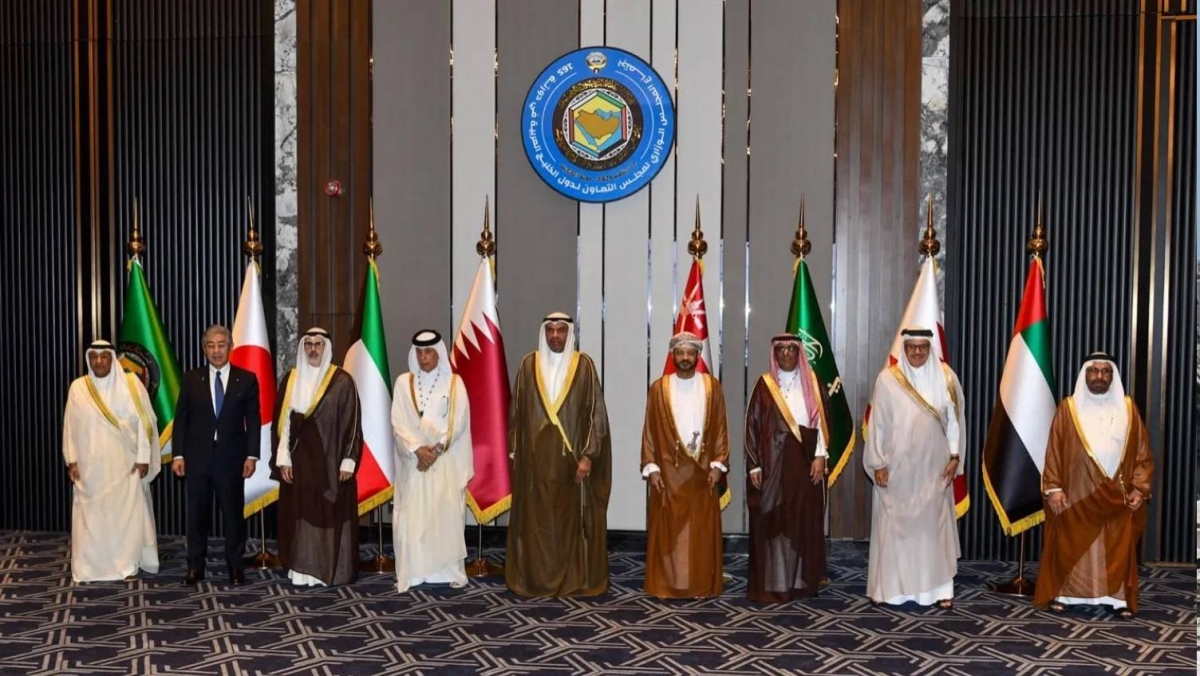
وزراء خارجية مجلس التعاون الخليجي


تابع قناة عكاظ على الواتساب
«عكاظ» (جدة) okaz_onine@
The Gulf Cooperation Council (GCC) Ministerial Council condemned the genocide being perpetrated by Israeli occupation forces against the residents of the Gaza Strip, the deliberate policy of blockade that has led to famine in the Gaza Strip, and the policies of ethnic cleansing and collective punishment.
During the ministerial meeting of the council in its 165th session in Kuwait, chaired by the Kuwaiti Foreign Minister and current chair of the ministerial council, Abdullah Ali Abdullah Al-Yahya, and with the participation of the foreign ministers of the GCC countries and the Secretary-General of the Gulf Cooperation Council, today (Monday), it emphasized the importance of maintaining maritime security and waterways and confronting activities that threaten the security and stability of the region and the world.
The council noted the outcomes of the joint ministerial meeting with the Japanese Foreign Minister, which was held on September 1, 2025, in the State of Kuwait, and directed the council to intensify efforts to implement the joint action plan agreed upon within the framework of the strategic partnership between the two sides.
The council welcomed the adoption by the United Nations General Assembly of the resolution on cooperation between the United Nations and the Gulf Cooperation Council, which reflects the high status of the GCC as an effective regional partner in supporting international peace and security. The ministerial council reviewed the report of the General Secretariat on joint Gulf action and the efforts of member states, reaffirming the decisions of the Gulf Cooperation Council in this regard.
The council discussed developments in regional and international issues, reaffirming the firm positions and previous decisions of the Gulf Cooperation Council regarding these issues..
The situation in Gaza
The council affirmed the UN General Assembly resolution issued on June 12, 2025, regarding the immediate, permanent, and unconditional ceasefire in the Gaza Strip, enabling the civilian population in the sector to access essential services and humanitarian assistance without obstacles, and the necessity of complying with international law and international humanitarian law, protecting civilians, and rejecting their displacement or expulsion from the sector.
The ministerial council emphasized the need to reach an immediate and comprehensive agreement for a ceasefire in the Gaza Strip, the release of hostages and detainees, the protection of civilians, and the urgent and uninterrupted facilitation of humanitarian assistance, praising the mediation efforts being undertaken by the State of Qatar, the Arab Republic of Egypt, and the United States of America, calling for the full implementation of Security Council Resolution 2735 in June 2024.
The ministerial council condemned in the strongest terms the genocide being committed by Israeli occupation forces against the residents of the Gaza Strip, the deliberate policy of blockade that has led to famine in the Gaza Strip, the policies of ethnic cleansing and collective punishment, the killing of civilians and journalists, torture, field executions, enforced disappearances, forced displacement, looting, and the continued destruction of residential neighborhoods, hospitals, schools, universities, mosques, churches, and infrastructure, aimed at displacing the residents of the sector and resettling it. The council called on the international community to take immediate action to stop these crimes being committed by the Israeli occupation government and to take serious steps to prevent them and hold their perpetrators accountable.
The council stressed what was stated in the statement of the ministerial committee tasked by the extraordinary Arab-Islamic summit regarding developments in the Gaza Strip, issued on August 9, 2025, which firmly rejected Israel's attempts to annex lands from the sector or impose military rule on it, emphasizing the importance of unifying the Gaza Strip and the West Bank under the umbrella of the Palestinian Authority.
The council affirmed what was stated in the statement issued by the extraordinary session of the Council of Foreign Ministers of the member states of the Organization of Islamic Cooperation on August 25, 2025, regarding the necessity for the international community to fulfill its responsibilities concerning what was mentioned in the Integrated Food Security Phase Classification (IPC) report, adopted by the United Nations, regarding famine in the Gaza Strip, which held the Israeli occupation fully responsible for this crime and its repercussions.
The council condemned Israel's targeting of humanitarian and international organizations, and the ongoing assaults on humanitarian aid convoys, reaffirming the responsibility of Israeli occupation forces to deliver essential humanitarian aid and not to obstruct the work of international organizations, emphasizing Security Council Resolution 2730 regarding the protection of humanitarian workers and ensuring the unobstructed delivery of aid, welcoming the statement issued on August 12, 2025, by the European Union and several friendly countries, which emphasized the necessity of delivering humanitarian aid to the Gaza Strip. The council also welcomed the statement issued on July 21, 2025, by 26 international partners, calling for an immediate end to the war on the Gaza Strip and lifting all restrictions on humanitarian aid and ensuring its safe delivery to the residents of the sector.
The council renewed its support for the efforts being made by the State of Qatar in coordination with its mediation partners, Egypt and the USA, to achieve a ceasefire in the Gaza Strip, secure the release of hostages and detainees, and facilitate the delivery of all assistance to civilians.
The council noted Germany's decision to suspend military equipment deliveries to the Israeli occupation and called on the international community, especially the countries that still support Israel, to halt military support for it, in accordance with international law and international humanitarian law.
The Palestinian Cause
The ministerial council reaffirmed its firm positions and previous decisions regarding the centrality of the Palestinian cause, the necessity of ending the Israeli occupation, and the establishment of an independent Palestinian state on the 1967 borders, with East Jerusalem as its capital, in accordance with the Arab Peace Initiative and international legitimacy resolutions.
The council praised the success of the high-level international conference on resolving the Palestinian issue through peaceful solutions and implementing the two-state solution, co-chaired by the Kingdom of Saudi Arabia and the French Republic, which was held from July 28 to 30, 2025, at the United Nations headquarters, which affirmed support for all efforts aimed at ending the war in the Gaza Strip and achieving a just and sustainable resolution to the Palestinian cause through the implementation of the two-state solution, unifying the Gaza Strip and the West Bank under the umbrella of the Palestinian Authority, and ensuring stability and security for all countries in the region, reaffirming support for the efforts of the international coalition to implement the two-state solution, and supporting the efforts of the Kingdom of Saudi Arabia and the participating countries in the conference to set a timeline for realizing the independent Palestinian state and ending the Israeli occupation, calling on all countries wishing for peace to join this initiative.
The council praised the measures initiated by France, the United Kingdom, Portugal, Malta, Canada, Australia, New Zealand, and others to recognize the State of Palestine, confirming the international community's consensus on the right of the Palestinian people to establish their independent state. The council called on all countries to expedite recognition of the State of Palestine, to contribute to ending the Israeli occupation and to meet the legitimate rights of the Palestinian people.
The council condemned the Israeli occupation's plan to transfer the management and supervision of the Ibrahimi Mosque from the Palestinian Ministry of Awqaf and Religious Affairs and the Hebron Municipality to the Jewish Religious Council, in a move that represents a serious violation of the historical and legal status quo at the Ibrahimi Mosque. The council also condemned Israel's settlement plans in the "E1" area, in a dangerous escalation aimed at dividing the West Bank and undermining the two-state solution, as well as the Israeli Knesset's call to impose Israeli sovereignty over the occupied West Bank and the statements of Israeli officials in this regard.
The council affirmed the joint statement issued on August 15, 2025, by the foreign ministers of 31 Arab and Islamic countries and the secretaries-general of the Arab League, the Organization of Islamic Cooperation, and the Gulf Cooperation Council, which condemned the statements of the Israeli occupation Prime Minister regarding what is called "Greater Israel," in a serious violation of the United Nations Charter and international law, the foundations of stable international relations, and a threat to Arab national security and to security and stability in the region and the world.
The council condemned the continued acts of violence perpetrated by settlers under the protection of occupation forces against civilians, the burning of their cities, villages, and farms, and condemned all provocative practices aimed at displacing Palestinians, which escalate tensions in the region and hinder efforts to achieve peace and stability, affirming that a just, comprehensive, and lasting solution to the Palestinian cause can only be achieved through direct negotiations and diplomatic dialogue among all parties to reach a sustainable resolution to the Palestinian issue.
The council affirmed its support for the Jordanian Ministry of Awqaf and the Affairs of the Blessed Al-Aqsa Mosque, as the exclusive legitimate authority responsible for managing the Blessed Al-Aqsa Mosque, within the framework of the historical Hashemite guardianship over Islamic and Christian holy sites in Jerusalem, and supported the efforts of the Jerusalem Committee chaired by His Majesty King Mohammed VI of the Kingdom of Morocco.
The Iranian occupation of the three islands belonging to the United Arab Emirates
The ministerial council reaffirmed its firm positions and previous decisions condemning Iran's continued occupation of the three islands (Greater Tunb, Lesser Tunb, and Abu Musa) belonging to the United Arab Emirates.
The council reiterated its support for the United Arab Emirates' sovereignty over its three islands, its territorial waters, airspace, continental shelf, and exclusive economic zone of the three islands as an integral part of the territory of the United Arab Emirates, considering any decisions, practices, or actions taken by Iran regarding the three islands as null and void and not changing any of the historical and legal facts that affirm the United Arab Emirates' sovereignty over its three islands. The council called on Iran to respond to the United Arab Emirates' efforts to resolve the issue through direct negotiations or by resorting to the International Court of Justice.
Respect for Iraq's sovereignty over Kuwait
The ministerial council reaffirmed its firm positions and previous decisions regarding the importance of organizing navigation in Khor Abdullah, respecting Iraq's sovereignty over the State of Kuwait and its territorial integrity, including its islands and heights, and all its maritime areas, and adhering to bilateral and international commitments and all relevant United Nations resolutions, particularly Security Council Resolution 833 (1993) regarding the demarcation of the Kuwait-Iraq land and maritime borders. The council called for the completion of the maritime border demarcation between the two countries beyond maritime marker 162, in accordance with the rules and principles of international law and the United Nations Convention on the Law of the Sea of 1982, emphasizing the importance of making positive progress in this regard, and affirming the necessity of the full commitment of the joint technical and legal committee for maritime border demarcation beyond marker 162 as included in all its minutes.
The council called on Iraq to adhere to the maritime navigation regulation agreement in Khor Abdullah signed between the State of Kuwait and Iraq on April 29, 2012, and the security exchange protocol signed in 2008 and its approved map in the joint plan to ensure the safety of navigation in Khor Abdullah signed on December 28, 2014, both of which included a clear and specific mechanism for amendment and cancellation.
The council affirmed its support for Security Council Resolution 2732 (2024), and the importance of ensuring the continued monitoring by the Security Council of developments and updates related to the humanitarian file of prisoners and missing persons and the file of Kuwaiti property, including the national archive, based on relevant Security Council resolutions, especially Resolutions 686 (1991), 687 (1991), 1284 (1999), and the necessity of continuing under the umbrella of the Security Council as stated in Resolution 2107 (2013), which defined the framework for reporting relevant files of the State of Kuwait to the Security Council only and not to other UN bodies, and emphasizing that the fair and appropriate alternative after the completion of the work of the United Nations Assistance Mission for Iraq (UNAMI) lies in appointing the Secretary-General as a high-level coordinator to follow up on Kuwait's humanitarian and national files, as it is a mechanism that has been previously tested and proven successful, and it ensures UN oversight of Kuwait's national files, giving them the appropriate attention and emphasizing the importance of setting a suitable timeframe for the Security Council to review the work of the high-level coordinator mechanism, and ensuring the continuation of the periodic reporting mechanism related to the same issue, which contributes to achieving tangible progress in this regard, and calling on the Government of Iraq to cooperate to achieve progress in this regard and to make every effort to reach a final solution to these files.
The Durra Field
The ministerial council reaffirmed its firm positions and previous decisions regarding the ownership of the Durra Field, confirming that the Durra Field is entirely located in the maritime areas of the State of Kuwait, and that the ownership of natural resources in the divided submerged area adjacent to the Saudi-Kuwaiti divided area, including the entire Durra Field, is a shared ownership between the Kingdom of Saudi Arabia and the State of Kuwait only, and they alone have full rights to exploit the natural resources in that area, in accordance with international law and based on the agreements concluded and in force between them, and it firmly rejected any claims of rights by any other party in this field or the submerged area adjacent to the divided area within its designated borders between the Kingdom of Saudi Arabia and the State of Kuwait.
Enhancing the principles of tolerance, peaceful coexistence, and combating terrorism and extremism
The ministerial council condemned the attack that targeted the United Nations Multidimensional Integrated Stabilization Mission in the Central African Republic (MINUSCA) on June 27, 2025, which resulted in several casualties, affirming the solidarity of the Gulf Cooperation Council with the United Nations and its humanitarian missions and the countries participating in international efforts aimed at achieving peace and stability in the region and the world.
The council also condemned the terrorist attack in the Islamic Republic of Pakistan, which targeted a military convoy in Khyber Pakhtunkhwa Province on June 30, 2025, resulting in the deaths and injuries of many victims, expressing its sincere condolences to the government and people of the Islamic Republic of Pakistan and to the families of the victims, and wishing a speedy recovery to the injured.
Support for Syria
The ministerial council welcomed the agreement reached to end the crisis in the Sweida Governorate, emphasizing the necessity of its implementation to protect Syria, its unity, and its citizens, praising the commitment of Syrian President Ahmad Al-Shara to hold accountable all those responsible for violations against Syrian citizens in the Sweida Governorate, and supporting all efforts to establish security and the sovereignty of the state and the law in all Syrian territories and to reject violence, sectarianism, and attempts to incite strife and hatred.
The council condemned the terrorist attack that targeted St. Elias Church in Damascus on June 22, 2025, which resulted in casualties and injuries, expressing its sincere condolences to the government and people of the Syrian Arab Republic and to the families of the victims, and wishing a speedy recovery to the injured. The council called on all components of the Syrian people to prioritize dialogue and solidarity to build a unified Syrian state, and renewed its call to the international community to support Syria and confront the ongoing Israeli violations.
The council also condemned the repeated Israeli attacks and violations against the sisterly Syrian Arab Republic, and its blatant assaults on its sovereignty and stability, which undermine its security and the unity and integrity of its territories and citizens, and undermine the efforts of the Syrian government to build a new Syria, reaffirming its full support for the measures taken by the Syrian government to maintain security and stability, and rejecting any separatist calls aimed at dividing Syria.
The council affirmed what was stated in Security Council Resolution 2782 on June 30, 2025, regarding the necessity for all parties to adhere to the 1974 disengagement agreement, reaffirming that the Golan Heights is Syrian Arab land, and condemned the Israeli occupation's decisions to expand settlements in the occupied Golan and its occupation of the buffer zone on the Syrian border, in a serious violation of the United Nations Charter, international law principles, and relevant Security Council resolutions, calling on the Security Council and the international community to assume their legal and moral responsibilities to stop these aggressions against Syrian territory and to ensure Israel's complete withdrawal from all occupied Syrian territories.
The ministerial council reviewed the outcomes of the meetings held to enhance economic cooperation between the GCC countries and the sisterly Syrian Republic, welcoming the results of the Saudi-Syrian investment forum held on July 24, 2025, in Damascus, aimed at encouraging investors and exploring investment opportunities in Syria, and contributing to its strategic projects in several vital sectors, praising the efforts of the State of Qatar and its announcement of the opening of the natural gas pipeline between Turkey and Syria, highlighting the efforts of all GCC countries striving to support Syria's recovery and stability.
Support for the Lebanese decision
The ministerial council welcomed the announcement by the Lebanese Prime Minister, Nawaf Salam, regarding the Cabinet's decision to ensure that the possession of arms is restricted to the state throughout Lebanon, based on the Taif Agreement and relevant international resolutions.
The council condemned the continued Israeli assaults on Lebanon, emphasizing the necessity of implementing Security Council resolutions regarding Lebanon, particularly Resolution 1701. It praised the mediation efforts being undertaken by the United States in this regard, expressing its rejection of external statements and interventions in the internal affairs of the sisterly Lebanon.
The council welcomed the decision of the Lebanese government to restrict the possession of arms throughout Lebanon, based on the Taif Agreement and relevant international resolutions, and also welcomed Security Council Resolution 2790 regarding the extension of the mandate of the United Nations Interim Force in Lebanon (UNIFIL) until December 31, 2026, emphasizing the importance of the existing cooperation between the Lebanese government and the United Nations to ensure the implementation of the resolution according to the specified timeline, and in a manner that preserves security and peace.
The Houthi threat to international navigation
The ministerial council stressed the importance of maintaining maritime security and waterways, and confronting activities that threaten the security and stability of the region and the world, including targeting commercial vessels and threatening maritime navigation lines and international trade, affirming the necessity of respecting the right to maritime navigation therein, in accordance with international law and the United Nations Convention on the Law of the Sea of 1982. The council condemned the Houthi group's sinking of the cargo ships "Magic Seas" and "Eternity Sea," resulting in the death and disappearance of several crew members, and the leakage of approximately 17,000 metric tons of ammonium nitrate into the Red Sea, threatening its marine life.
The council praised the announcement by the National Resistance Forces affiliated with the Yemeni government of their successful seizure of a strategic weapons shipment in the Red Sea, weighing 750 tons, which was en route to the Houthi group from Iran, condemning the continued foreign interventions in Yemen's internal affairs, supporting terrorist groups, and smuggling military experts and weapons to the Houthi group, in clear violation of Security Council Resolutions 2216, 2231, and 2624.
The ministerial council reviewed the preparations for the international conference on food security in Yemen, scheduled to be held at the General Secretariat of the Gulf Cooperation Council on October 27-28, 2025, calling on all countries and international organizations to actively participate in this conference, and also calling on donor countries to provide humanitarian and developmental support to the sisterly Yemen, enabling Yemen to meet its commitments, achieve economic stability, and enhance the role of the Central Bank, which is based in the temporary capital, Aden, to support the national currency as the only legitimate monetary authority in Yemen.
Negotiations with Iran
The ministerial council emphasized the importance of continuing constructive negotiations to reach a comprehensive solution to the Iranian nuclear file, and that these negotiations should encompass all security issues and concerns of the GCC countries, expressing the readiness of the GCC countries to cooperate and engage effectively with this file, and the necessity of their participation in all negotiations, discussions, and regional and international meetings related to it, contributing to achieving common goals and interests within the framework of respecting state sovereignty, principles of good neighborliness, and adherence to UN resolutions and international legitimacy to ensure the enhancement of regional and international security and stability. The council praised the positive role played by the Sultanate of Oman in facilitating dialogue between the concerned parties.
The council stressed the importance of constructive cooperation between Iran and the International Atomic Energy Agency, and the necessity of enhancing diplomatic efforts to ensure the commitment of all parties to relevant international agreements, contributing to building trust and enhancing regional and international security and stability.
During the ministerial meeting of the council in its 165th session in Kuwait, chaired by the Kuwaiti Foreign Minister and current chair of the ministerial council, Abdullah Ali Abdullah Al-Yahya, and with the participation of the foreign ministers of the GCC countries and the Secretary-General of the Gulf Cooperation Council, today (Monday), it emphasized the importance of maintaining maritime security and waterways and confronting activities that threaten the security and stability of the region and the world.
The council noted the outcomes of the joint ministerial meeting with the Japanese Foreign Minister, which was held on September 1, 2025, in the State of Kuwait, and directed the council to intensify efforts to implement the joint action plan agreed upon within the framework of the strategic partnership between the two sides.
The council welcomed the adoption by the United Nations General Assembly of the resolution on cooperation between the United Nations and the Gulf Cooperation Council, which reflects the high status of the GCC as an effective regional partner in supporting international peace and security. The ministerial council reviewed the report of the General Secretariat on joint Gulf action and the efforts of member states, reaffirming the decisions of the Gulf Cooperation Council in this regard.
The council discussed developments in regional and international issues, reaffirming the firm positions and previous decisions of the Gulf Cooperation Council regarding these issues..
The situation in Gaza
The council affirmed the UN General Assembly resolution issued on June 12, 2025, regarding the immediate, permanent, and unconditional ceasefire in the Gaza Strip, enabling the civilian population in the sector to access essential services and humanitarian assistance without obstacles, and the necessity of complying with international law and international humanitarian law, protecting civilians, and rejecting their displacement or expulsion from the sector.
The ministerial council emphasized the need to reach an immediate and comprehensive agreement for a ceasefire in the Gaza Strip, the release of hostages and detainees, the protection of civilians, and the urgent and uninterrupted facilitation of humanitarian assistance, praising the mediation efforts being undertaken by the State of Qatar, the Arab Republic of Egypt, and the United States of America, calling for the full implementation of Security Council Resolution 2735 in June 2024.
The ministerial council condemned in the strongest terms the genocide being committed by Israeli occupation forces against the residents of the Gaza Strip, the deliberate policy of blockade that has led to famine in the Gaza Strip, the policies of ethnic cleansing and collective punishment, the killing of civilians and journalists, torture, field executions, enforced disappearances, forced displacement, looting, and the continued destruction of residential neighborhoods, hospitals, schools, universities, mosques, churches, and infrastructure, aimed at displacing the residents of the sector and resettling it. The council called on the international community to take immediate action to stop these crimes being committed by the Israeli occupation government and to take serious steps to prevent them and hold their perpetrators accountable.
The council stressed what was stated in the statement of the ministerial committee tasked by the extraordinary Arab-Islamic summit regarding developments in the Gaza Strip, issued on August 9, 2025, which firmly rejected Israel's attempts to annex lands from the sector or impose military rule on it, emphasizing the importance of unifying the Gaza Strip and the West Bank under the umbrella of the Palestinian Authority.
The council affirmed what was stated in the statement issued by the extraordinary session of the Council of Foreign Ministers of the member states of the Organization of Islamic Cooperation on August 25, 2025, regarding the necessity for the international community to fulfill its responsibilities concerning what was mentioned in the Integrated Food Security Phase Classification (IPC) report, adopted by the United Nations, regarding famine in the Gaza Strip, which held the Israeli occupation fully responsible for this crime and its repercussions.
The council condemned Israel's targeting of humanitarian and international organizations, and the ongoing assaults on humanitarian aid convoys, reaffirming the responsibility of Israeli occupation forces to deliver essential humanitarian aid and not to obstruct the work of international organizations, emphasizing Security Council Resolution 2730 regarding the protection of humanitarian workers and ensuring the unobstructed delivery of aid, welcoming the statement issued on August 12, 2025, by the European Union and several friendly countries, which emphasized the necessity of delivering humanitarian aid to the Gaza Strip. The council also welcomed the statement issued on July 21, 2025, by 26 international partners, calling for an immediate end to the war on the Gaza Strip and lifting all restrictions on humanitarian aid and ensuring its safe delivery to the residents of the sector.
The council renewed its support for the efforts being made by the State of Qatar in coordination with its mediation partners, Egypt and the USA, to achieve a ceasefire in the Gaza Strip, secure the release of hostages and detainees, and facilitate the delivery of all assistance to civilians.
The council noted Germany's decision to suspend military equipment deliveries to the Israeli occupation and called on the international community, especially the countries that still support Israel, to halt military support for it, in accordance with international law and international humanitarian law.
The Palestinian Cause
The ministerial council reaffirmed its firm positions and previous decisions regarding the centrality of the Palestinian cause, the necessity of ending the Israeli occupation, and the establishment of an independent Palestinian state on the 1967 borders, with East Jerusalem as its capital, in accordance with the Arab Peace Initiative and international legitimacy resolutions.
The council praised the success of the high-level international conference on resolving the Palestinian issue through peaceful solutions and implementing the two-state solution, co-chaired by the Kingdom of Saudi Arabia and the French Republic, which was held from July 28 to 30, 2025, at the United Nations headquarters, which affirmed support for all efforts aimed at ending the war in the Gaza Strip and achieving a just and sustainable resolution to the Palestinian cause through the implementation of the two-state solution, unifying the Gaza Strip and the West Bank under the umbrella of the Palestinian Authority, and ensuring stability and security for all countries in the region, reaffirming support for the efforts of the international coalition to implement the two-state solution, and supporting the efforts of the Kingdom of Saudi Arabia and the participating countries in the conference to set a timeline for realizing the independent Palestinian state and ending the Israeli occupation, calling on all countries wishing for peace to join this initiative.
The council praised the measures initiated by France, the United Kingdom, Portugal, Malta, Canada, Australia, New Zealand, and others to recognize the State of Palestine, confirming the international community's consensus on the right of the Palestinian people to establish their independent state. The council called on all countries to expedite recognition of the State of Palestine, to contribute to ending the Israeli occupation and to meet the legitimate rights of the Palestinian people.
The council condemned the Israeli occupation's plan to transfer the management and supervision of the Ibrahimi Mosque from the Palestinian Ministry of Awqaf and Religious Affairs and the Hebron Municipality to the Jewish Religious Council, in a move that represents a serious violation of the historical and legal status quo at the Ibrahimi Mosque. The council also condemned Israel's settlement plans in the "E1" area, in a dangerous escalation aimed at dividing the West Bank and undermining the two-state solution, as well as the Israeli Knesset's call to impose Israeli sovereignty over the occupied West Bank and the statements of Israeli officials in this regard.
The council affirmed the joint statement issued on August 15, 2025, by the foreign ministers of 31 Arab and Islamic countries and the secretaries-general of the Arab League, the Organization of Islamic Cooperation, and the Gulf Cooperation Council, which condemned the statements of the Israeli occupation Prime Minister regarding what is called "Greater Israel," in a serious violation of the United Nations Charter and international law, the foundations of stable international relations, and a threat to Arab national security and to security and stability in the region and the world.
The council condemned the continued acts of violence perpetrated by settlers under the protection of occupation forces against civilians, the burning of their cities, villages, and farms, and condemned all provocative practices aimed at displacing Palestinians, which escalate tensions in the region and hinder efforts to achieve peace and stability, affirming that a just, comprehensive, and lasting solution to the Palestinian cause can only be achieved through direct negotiations and diplomatic dialogue among all parties to reach a sustainable resolution to the Palestinian issue.
The council affirmed its support for the Jordanian Ministry of Awqaf and the Affairs of the Blessed Al-Aqsa Mosque, as the exclusive legitimate authority responsible for managing the Blessed Al-Aqsa Mosque, within the framework of the historical Hashemite guardianship over Islamic and Christian holy sites in Jerusalem, and supported the efforts of the Jerusalem Committee chaired by His Majesty King Mohammed VI of the Kingdom of Morocco.
The Iranian occupation of the three islands belonging to the United Arab Emirates
The ministerial council reaffirmed its firm positions and previous decisions condemning Iran's continued occupation of the three islands (Greater Tunb, Lesser Tunb, and Abu Musa) belonging to the United Arab Emirates.
The council reiterated its support for the United Arab Emirates' sovereignty over its three islands, its territorial waters, airspace, continental shelf, and exclusive economic zone of the three islands as an integral part of the territory of the United Arab Emirates, considering any decisions, practices, or actions taken by Iran regarding the three islands as null and void and not changing any of the historical and legal facts that affirm the United Arab Emirates' sovereignty over its three islands. The council called on Iran to respond to the United Arab Emirates' efforts to resolve the issue through direct negotiations or by resorting to the International Court of Justice.
Respect for Iraq's sovereignty over Kuwait
The ministerial council reaffirmed its firm positions and previous decisions regarding the importance of organizing navigation in Khor Abdullah, respecting Iraq's sovereignty over the State of Kuwait and its territorial integrity, including its islands and heights, and all its maritime areas, and adhering to bilateral and international commitments and all relevant United Nations resolutions, particularly Security Council Resolution 833 (1993) regarding the demarcation of the Kuwait-Iraq land and maritime borders. The council called for the completion of the maritime border demarcation between the two countries beyond maritime marker 162, in accordance with the rules and principles of international law and the United Nations Convention on the Law of the Sea of 1982, emphasizing the importance of making positive progress in this regard, and affirming the necessity of the full commitment of the joint technical and legal committee for maritime border demarcation beyond marker 162 as included in all its minutes.
The council called on Iraq to adhere to the maritime navigation regulation agreement in Khor Abdullah signed between the State of Kuwait and Iraq on April 29, 2012, and the security exchange protocol signed in 2008 and its approved map in the joint plan to ensure the safety of navigation in Khor Abdullah signed on December 28, 2014, both of which included a clear and specific mechanism for amendment and cancellation.
The council affirmed its support for Security Council Resolution 2732 (2024), and the importance of ensuring the continued monitoring by the Security Council of developments and updates related to the humanitarian file of prisoners and missing persons and the file of Kuwaiti property, including the national archive, based on relevant Security Council resolutions, especially Resolutions 686 (1991), 687 (1991), 1284 (1999), and the necessity of continuing under the umbrella of the Security Council as stated in Resolution 2107 (2013), which defined the framework for reporting relevant files of the State of Kuwait to the Security Council only and not to other UN bodies, and emphasizing that the fair and appropriate alternative after the completion of the work of the United Nations Assistance Mission for Iraq (UNAMI) lies in appointing the Secretary-General as a high-level coordinator to follow up on Kuwait's humanitarian and national files, as it is a mechanism that has been previously tested and proven successful, and it ensures UN oversight of Kuwait's national files, giving them the appropriate attention and emphasizing the importance of setting a suitable timeframe for the Security Council to review the work of the high-level coordinator mechanism, and ensuring the continuation of the periodic reporting mechanism related to the same issue, which contributes to achieving tangible progress in this regard, and calling on the Government of Iraq to cooperate to achieve progress in this regard and to make every effort to reach a final solution to these files.
The Durra Field
The ministerial council reaffirmed its firm positions and previous decisions regarding the ownership of the Durra Field, confirming that the Durra Field is entirely located in the maritime areas of the State of Kuwait, and that the ownership of natural resources in the divided submerged area adjacent to the Saudi-Kuwaiti divided area, including the entire Durra Field, is a shared ownership between the Kingdom of Saudi Arabia and the State of Kuwait only, and they alone have full rights to exploit the natural resources in that area, in accordance with international law and based on the agreements concluded and in force between them, and it firmly rejected any claims of rights by any other party in this field or the submerged area adjacent to the divided area within its designated borders between the Kingdom of Saudi Arabia and the State of Kuwait.
Enhancing the principles of tolerance, peaceful coexistence, and combating terrorism and extremism
The ministerial council condemned the attack that targeted the United Nations Multidimensional Integrated Stabilization Mission in the Central African Republic (MINUSCA) on June 27, 2025, which resulted in several casualties, affirming the solidarity of the Gulf Cooperation Council with the United Nations and its humanitarian missions and the countries participating in international efforts aimed at achieving peace and stability in the region and the world.
The council also condemned the terrorist attack in the Islamic Republic of Pakistan, which targeted a military convoy in Khyber Pakhtunkhwa Province on June 30, 2025, resulting in the deaths and injuries of many victims, expressing its sincere condolences to the government and people of the Islamic Republic of Pakistan and to the families of the victims, and wishing a speedy recovery to the injured.
Support for Syria
The ministerial council welcomed the agreement reached to end the crisis in the Sweida Governorate, emphasizing the necessity of its implementation to protect Syria, its unity, and its citizens, praising the commitment of Syrian President Ahmad Al-Shara to hold accountable all those responsible for violations against Syrian citizens in the Sweida Governorate, and supporting all efforts to establish security and the sovereignty of the state and the law in all Syrian territories and to reject violence, sectarianism, and attempts to incite strife and hatred.
The council condemned the terrorist attack that targeted St. Elias Church in Damascus on June 22, 2025, which resulted in casualties and injuries, expressing its sincere condolences to the government and people of the Syrian Arab Republic and to the families of the victims, and wishing a speedy recovery to the injured. The council called on all components of the Syrian people to prioritize dialogue and solidarity to build a unified Syrian state, and renewed its call to the international community to support Syria and confront the ongoing Israeli violations.
The council also condemned the repeated Israeli attacks and violations against the sisterly Syrian Arab Republic, and its blatant assaults on its sovereignty and stability, which undermine its security and the unity and integrity of its territories and citizens, and undermine the efforts of the Syrian government to build a new Syria, reaffirming its full support for the measures taken by the Syrian government to maintain security and stability, and rejecting any separatist calls aimed at dividing Syria.
The council affirmed what was stated in Security Council Resolution 2782 on June 30, 2025, regarding the necessity for all parties to adhere to the 1974 disengagement agreement, reaffirming that the Golan Heights is Syrian Arab land, and condemned the Israeli occupation's decisions to expand settlements in the occupied Golan and its occupation of the buffer zone on the Syrian border, in a serious violation of the United Nations Charter, international law principles, and relevant Security Council resolutions, calling on the Security Council and the international community to assume their legal and moral responsibilities to stop these aggressions against Syrian territory and to ensure Israel's complete withdrawal from all occupied Syrian territories.
The ministerial council reviewed the outcomes of the meetings held to enhance economic cooperation between the GCC countries and the sisterly Syrian Republic, welcoming the results of the Saudi-Syrian investment forum held on July 24, 2025, in Damascus, aimed at encouraging investors and exploring investment opportunities in Syria, and contributing to its strategic projects in several vital sectors, praising the efforts of the State of Qatar and its announcement of the opening of the natural gas pipeline between Turkey and Syria, highlighting the efforts of all GCC countries striving to support Syria's recovery and stability.
Support for the Lebanese decision
The ministerial council welcomed the announcement by the Lebanese Prime Minister, Nawaf Salam, regarding the Cabinet's decision to ensure that the possession of arms is restricted to the state throughout Lebanon, based on the Taif Agreement and relevant international resolutions.
The council condemned the continued Israeli assaults on Lebanon, emphasizing the necessity of implementing Security Council resolutions regarding Lebanon, particularly Resolution 1701. It praised the mediation efforts being undertaken by the United States in this regard, expressing its rejection of external statements and interventions in the internal affairs of the sisterly Lebanon.
The council welcomed the decision of the Lebanese government to restrict the possession of arms throughout Lebanon, based on the Taif Agreement and relevant international resolutions, and also welcomed Security Council Resolution 2790 regarding the extension of the mandate of the United Nations Interim Force in Lebanon (UNIFIL) until December 31, 2026, emphasizing the importance of the existing cooperation between the Lebanese government and the United Nations to ensure the implementation of the resolution according to the specified timeline, and in a manner that preserves security and peace.
The Houthi threat to international navigation
The ministerial council stressed the importance of maintaining maritime security and waterways, and confronting activities that threaten the security and stability of the region and the world, including targeting commercial vessels and threatening maritime navigation lines and international trade, affirming the necessity of respecting the right to maritime navigation therein, in accordance with international law and the United Nations Convention on the Law of the Sea of 1982. The council condemned the Houthi group's sinking of the cargo ships "Magic Seas" and "Eternity Sea," resulting in the death and disappearance of several crew members, and the leakage of approximately 17,000 metric tons of ammonium nitrate into the Red Sea, threatening its marine life.
The council praised the announcement by the National Resistance Forces affiliated with the Yemeni government of their successful seizure of a strategic weapons shipment in the Red Sea, weighing 750 tons, which was en route to the Houthi group from Iran, condemning the continued foreign interventions in Yemen's internal affairs, supporting terrorist groups, and smuggling military experts and weapons to the Houthi group, in clear violation of Security Council Resolutions 2216, 2231, and 2624.
The ministerial council reviewed the preparations for the international conference on food security in Yemen, scheduled to be held at the General Secretariat of the Gulf Cooperation Council on October 27-28, 2025, calling on all countries and international organizations to actively participate in this conference, and also calling on donor countries to provide humanitarian and developmental support to the sisterly Yemen, enabling Yemen to meet its commitments, achieve economic stability, and enhance the role of the Central Bank, which is based in the temporary capital, Aden, to support the national currency as the only legitimate monetary authority in Yemen.
Negotiations with Iran
The ministerial council emphasized the importance of continuing constructive negotiations to reach a comprehensive solution to the Iranian nuclear file, and that these negotiations should encompass all security issues and concerns of the GCC countries, expressing the readiness of the GCC countries to cooperate and engage effectively with this file, and the necessity of their participation in all negotiations, discussions, and regional and international meetings related to it, contributing to achieving common goals and interests within the framework of respecting state sovereignty, principles of good neighborliness, and adherence to UN resolutions and international legitimacy to ensure the enhancement of regional and international security and stability. The council praised the positive role played by the Sultanate of Oman in facilitating dialogue between the concerned parties.
The council stressed the importance of constructive cooperation between Iran and the International Atomic Energy Agency, and the necessity of enhancing diplomatic efforts to ensure the commitment of all parties to relevant international agreements, contributing to building trust and enhancing regional and international security and stability.


