


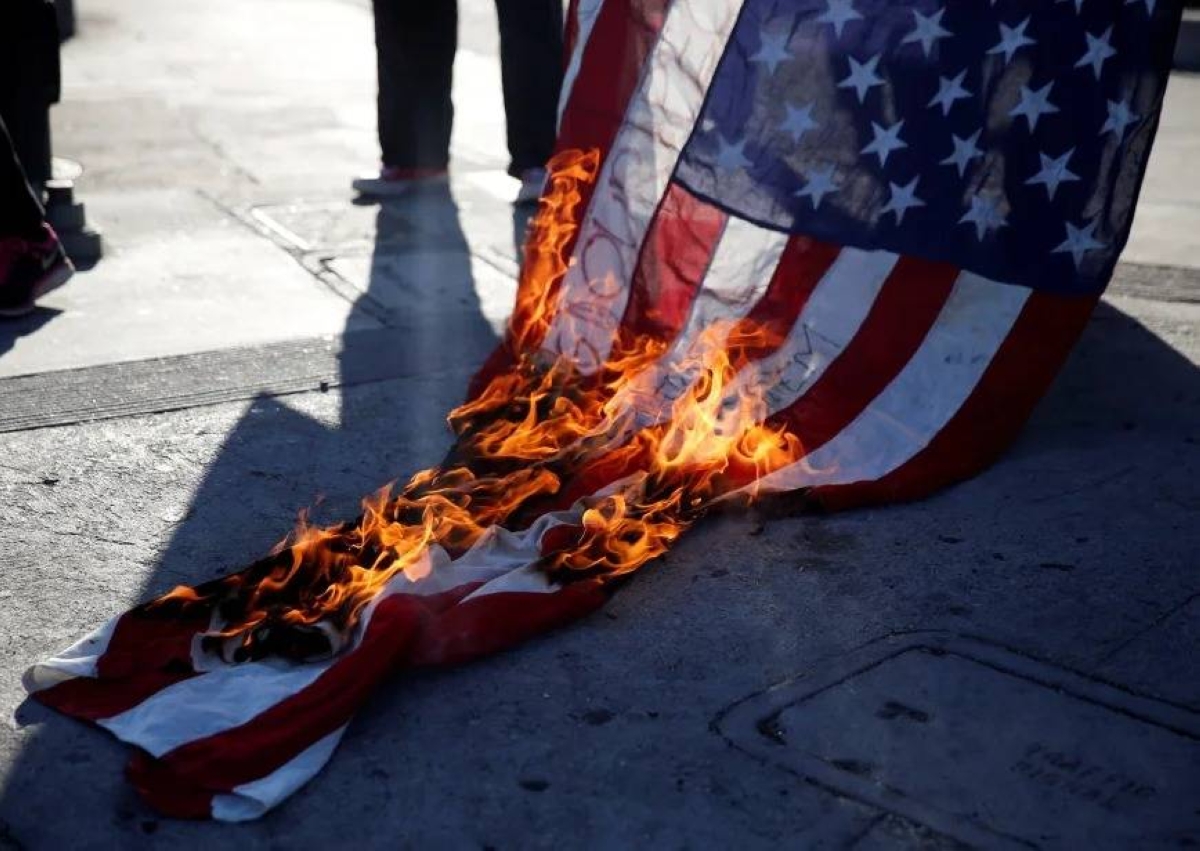
بعد ساعات من توقيع الرئيس دونالد ترمب أمراً تنفيذياً يهدف إلى فرض عقوبات صارمة على «تدنيس العلم الأمريكي»، أقدم مواطن على إشعال النار في علم الولايات المتحدة بالقرب من البيت الأبيض.
وأثارت الحادثة، التي وقعت في واشنطن العاصمة، جدلاً واسعاً حول حرية التعبير والحدود القانونية للاحتجاج السياسي. ووفقاً للسلطات المحلية، تم اعتقال الرجل الذي لم يُكشف عن هويته بعد، بتهمة «الإخلال بالنظام العام» و«إتلاف ممتلكات عامة».
وأظهرت مقاطع فيديو متداولة الرجل وهو يشعل النار في العلم أمام حشد صغير من المارة، مردداً شعارات تدعو إلى الحرية الفردية، وتدخلت الشرطة بسرعة لإخماد النيران واعتقال المشتبه به.
ويأتي الأمر التنفيذي الذي وقّعه ترمب في إطار جهوده لتعزيز ما يصفه بـ«الوطنية الأمريكية»، إذ يدعو إلى تشديد العقوبات على أي أفعال تُعتبر «تدنيساً» للعلم الوطني، بما في ذلك الحرق أو التمزيق.
ويرى منتقدو الأمر أنه يتعارض مع قرارات المحكمة العليا الأمريكية، التي أكدت في عام 1989 (قضية تكساس ضد جونسون) أن حرق العلم محمي بموجب التعديل الأول للدستور كشكل من أشكال التعبير السياسي.
وأثار قرار المحكمة العليا وقتها نقاشات حامية، اعتبرت أن حرق العلم يندرج تحت حرية التعبير، ما جعل أي محاولة لتجريمه تواجه تحديات قانونية كبيرة، في حين يعكس الأمر التنفيذي الذي وقّعه ترمب نهجاً متكرراً في خطابه السياسي الذي يركز على تعزيز الرموز الوطنية كجزء من حملته لجذب قاعدته الشعبية.
وكان حرق العلم الأمريكي على مر العقود، رمزاً مثيراً للجدل للاحتجاج السياسي في الولايات المتحدة، إذ استخدمه النشطاء للتعبير عن معارضتهم لسياسات الحكومة، سواء في احتجاجات ضد الحروب أو العنصرية أو القرارات السياسية المثيرة للجدل.
بعد أمر ترمب بمنع تدنيسه.. أمريكي يحرق علم بلاده
26 أغسطس 2025 - 15:59
|
آخر تحديث 26 أغسطس 2025 - 15:59


تابع قناة عكاظ على الواتساب
محمد الصاحي (القاهرة) okaz_online@
After hours of President Donald Trump's signing of an executive order aimed at imposing strict penalties for "desecrating the American flag," a citizen set fire to the United States flag near the White House.
The incident, which occurred in Washington, D.C., sparked widespread debate about freedom of expression and the legal boundaries of political protest. According to local authorities, the man, whose identity has not yet been revealed, was arrested on charges of "disturbing the peace" and "damaging public property."
Videos circulating showed the man setting the flag on fire in front of a small crowd of passersby, chanting slogans calling for individual freedom, and the police quickly intervened to extinguish the flames and arrest the suspect.
The executive order signed by Trump is part of his efforts to promote what he describes as "American nationalism," as it calls for stricter penalties for any acts deemed "desecration" of the national flag, including burning or tearing it.
Critics of the order argue that it contradicts decisions made by the U.S. Supreme Court, which affirmed in 1989 (Texas v. Johnson) that flag burning is protected under the First Amendment as a form of political expression.
The Supreme Court's decision at the time sparked heated discussions, considering that flag burning falls under freedom of expression, making any attempt to criminalize it face significant legal challenges, while the executive order signed by Trump reflects a recurring approach in his political rhetoric that focuses on promoting national symbols as part of his campaign to rally his base.
Flag burning has been a controversial symbol of political protest in the United States over the decades, as activists have used it to express their opposition to government policies, whether in protests against wars, racism, or controversial political decisions.
The incident, which occurred in Washington, D.C., sparked widespread debate about freedom of expression and the legal boundaries of political protest. According to local authorities, the man, whose identity has not yet been revealed, was arrested on charges of "disturbing the peace" and "damaging public property."
Videos circulating showed the man setting the flag on fire in front of a small crowd of passersby, chanting slogans calling for individual freedom, and the police quickly intervened to extinguish the flames and arrest the suspect.
The executive order signed by Trump is part of his efforts to promote what he describes as "American nationalism," as it calls for stricter penalties for any acts deemed "desecration" of the national flag, including burning or tearing it.
Critics of the order argue that it contradicts decisions made by the U.S. Supreme Court, which affirmed in 1989 (Texas v. Johnson) that flag burning is protected under the First Amendment as a form of political expression.
The Supreme Court's decision at the time sparked heated discussions, considering that flag burning falls under freedom of expression, making any attempt to criminalize it face significant legal challenges, while the executive order signed by Trump reflects a recurring approach in his political rhetoric that focuses on promoting national symbols as part of his campaign to rally his base.
Flag burning has been a controversial symbol of political protest in the United States over the decades, as activists have used it to express their opposition to government policies, whether in protests against wars, racism, or controversial political decisions.


