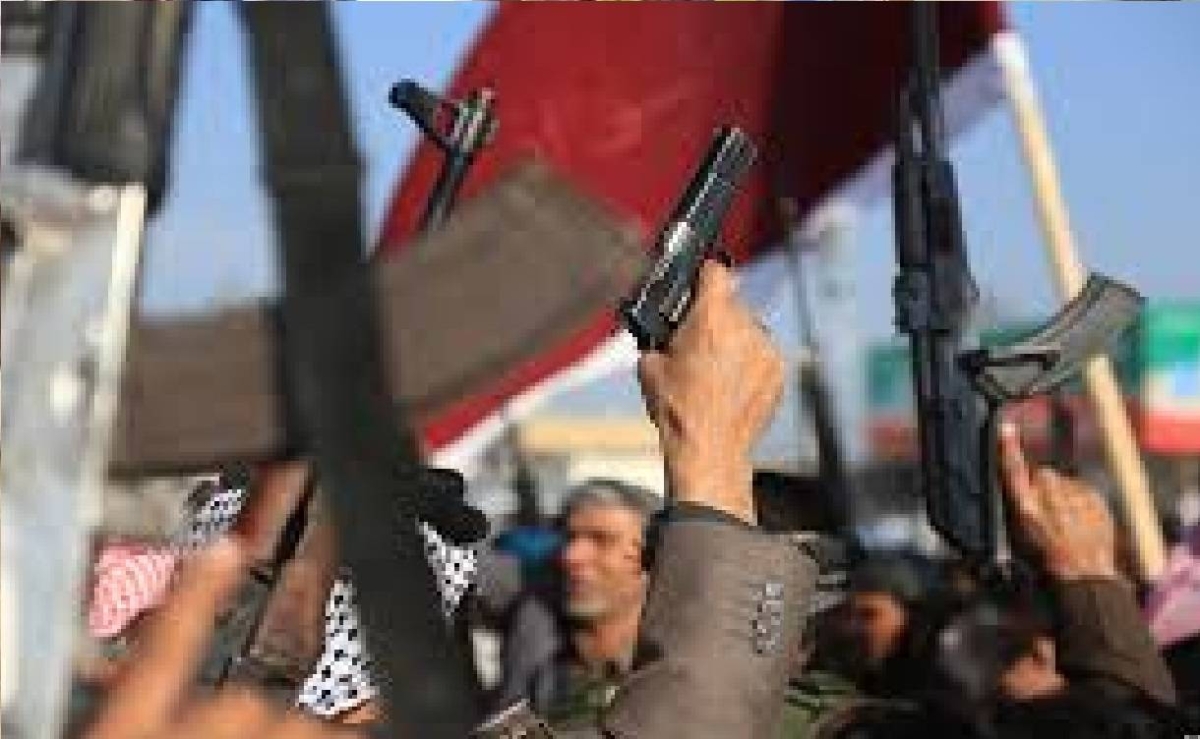
تحرك رئيس الوزراء العراقي محمد شياع السوداني باتجاه العشائر للحصول على دعمها وتأييدها لقرار حصر السلاح بيد الدولة، فيما اعتبرت بأنها محاولة لعزل «تحالف الإطار التنسيقي» الذي ترفض أغلبيته تسليم السلاح للدولة. ويعتقد مراقبون أن قوة العشائر في دعم التوجه الحكومي ستكون حاسمة في ملف حصرية السلاح.
وجاء تحرك السوداني بعد الرفض المطلق للفصائل العراقية المسلحة تسليم أسلحتها للدولة.
واستغل السوداني المؤتمر العشائري الذي انطلق، اليوم (السبت)، في مضارب عشيرة الضاري، بحضور شيوخ ووجهاء العشائر، وشارك بكلمة له شدد فيها على أهمية حصر السلاح بيد الدولة، وفرض سلطة القانون، وعدم التهاون في تطبيقه، مشيراً إلى أنها لا تعني استهداف جهة أو فرد.
وأكد السوداني أنه في ظل الوضع المستقر، لا مبرر لوجود أي سلاح خارج المؤسسات، وعلى العشائر دعم سلطة القانون والقضاء، مضيفاً أن دور العشائر يتنامى في كل المجالات الاجتماعية، والتصدي للنزاعات العشائرية والمظاهر الخطيرة مثل المخدرات.
ولفت إلى أن العراق يمر بتحديات داخلية وخارجية، وهناك جملة مبادئ ننطلق منها، وتبنت الحكومة مسار وشعار الخدمات، الذي تحول إلى سلوك عملي في كل ملف أو محافظة.
وذكر السوداني أن الحكومة التزمت في برنامجها بإنهاء وجود التحالف الدولي لمحاربة «داعش»، بعد انتفاء الحاجة له، مضيفاً: لا نريد للعراق أن تكون له قطيعة مع دول المنطقة والعالم، ولا يمكن وضع العراق في عزلة.
The Iraqi Prime Minister, Mohammed Shia' al-Sudani, moved towards the tribes to gain their support and endorsement for the decision to restrict weapons to the state, considering it an attempt to isolate the "Coordination Framework Alliance," whose majority refuses to hand over weapons to the state. Observers believe that the strength of the tribes in supporting the government's direction will be crucial in the issue of weapon exclusivity.
This move by al-Sudani came after the absolute rejection of the Iraqi armed factions to hand over their weapons to the state.
Al-Sudani took advantage of the tribal conference that started today (Saturday) in the tents of the Al-Dhari tribe, attended by sheikhs and dignitaries of the tribes, and participated with a speech in which he emphasized the importance of restricting weapons to the state, enforcing the rule of law, and not being lenient in its application, pointing out that this does not mean targeting any entity or individual.
Al-Sudani confirmed that in light of the stable situation, there is no justification for the existence of any weapons outside institutions, and that the tribes should support the authority of law and justice, adding that the role of the tribes is growing in all social fields, and in addressing tribal disputes and dangerous phenomena such as drugs.
He pointed out that Iraq is facing internal and external challenges, and there are a set of principles from which we start, and the government has adopted a path and slogan of services, which has turned into practical behavior in every file or province.
Al-Sudani mentioned that the government has committed in its program to end the presence of the international coalition to fight "ISIS," after the need for it has diminished, adding: We do not want Iraq to have a break with the countries of the region and the world, and Iraq cannot be placed in isolation.