


شرع المصريون خارج البلاد، اليوم(الجمعة)، في انتخاب أعضاء مجلس الشيوخ المصري. وأفادت وسائل إعلام محلية، بأن هناك توافدا على مراكز الاقتراع، وسط توقعات بزيادة الإقبال. وتجري العملية الانتخابية بالخارج في 137 سفارة وقنصلية في121 دولة حول العالم.
وينطلق تصويت المصريين في الخارج من الساعة التاسعة صباحاً، وحتى الساعة التاسعة مساءً وفقاً لتوقيت الدولة التي يجري فيها الاقتراع، وفق الهيئة الوطنية للانتخابات.
وحددت الهيئة يومي الجمعة والسبت 1 و2 أغسطس موعدا لإجراء هذه الانتخابات خارج البلاد، على أن يبدأ الاقتراع داخل البلاد يومي 4 و5 أغسطس، فيما تُعلن نتيجة الانتخابات وتُنشر في الجريدة الرسمية يوم 12 أغسطس.
وتبدأ انتخابات الإعادة يومي 25 و26 في الخارج ويومي 27 و28 أغسطس في الداخل، وتعلن النتيجة النهائية للانتخابات وتنشر في الجريدة الرسمية يوم 4 سبتمبر القادم.
ويتكوّن مجلس الشيوخ من 300 عضو، ثلثهم يجري تعيينهم عبر رئيس الجمهورية، في حين يُنتخب الثلثان وفق نظام مختلط يجمع «الفردي» و«القائمة المغلقة المطلقة».
وضَمن 100 عضو مرشح الفوز وفق نظام «القائمة المطلقة»، إذ لم تتقدم سوى قائمة واحدة لخوض الانتخابات، وهي «القائمة الوطنية الموحدة».
وتضم «القائمة الوطنية الموحدة»، 13 حزباً، غالبيتها داعمة للحكومة بزعامة «مستقبل وطن» (صاحب الأغلبية البرلمانية)، و«حماة وطن» و«الجبهة الوطنية»، بالإضافة إلى تمثيل محدود لأحزاب معارضة، مثل «المصري الديمقراطي»، و«الإصلاح والتنمية».
ووفق المادة (249) من الدستور فإن مجلس الشيوخ يؤخذ رأيه في الاقتراحات الخاصة بتعديل مادة أو أكثر من مواد الدستور، مشروع الخطة العامة للتنمية الاجتماعية والاقتصادية، معاهدات الصلح والتحالف وجميع المعاهدات التي تتعلق بحقوق السيادة، ومشروعات القوانين، ومشروعات القوانين المكملة للدستور التي تحال إليه من رئيس الجمهورية أو مجلس النواب، وما يحيله رئيس الجمهورية إلى المجلس من موضوعات، تتصل بالسياسة العامة للدولة أو بسياستها في الشؤون العربية أو الخارجية، ويبلغ المجلس رأيه في هذه الأمور إلى رئيس الجمهورية ومجلس النواب.
المصريون في الخارج يختارون أعضاء مجلس الشيوخ
1 أغسطس 2025 - 15:03
|
آخر تحديث 1 أغسطس 2025 - 15:03
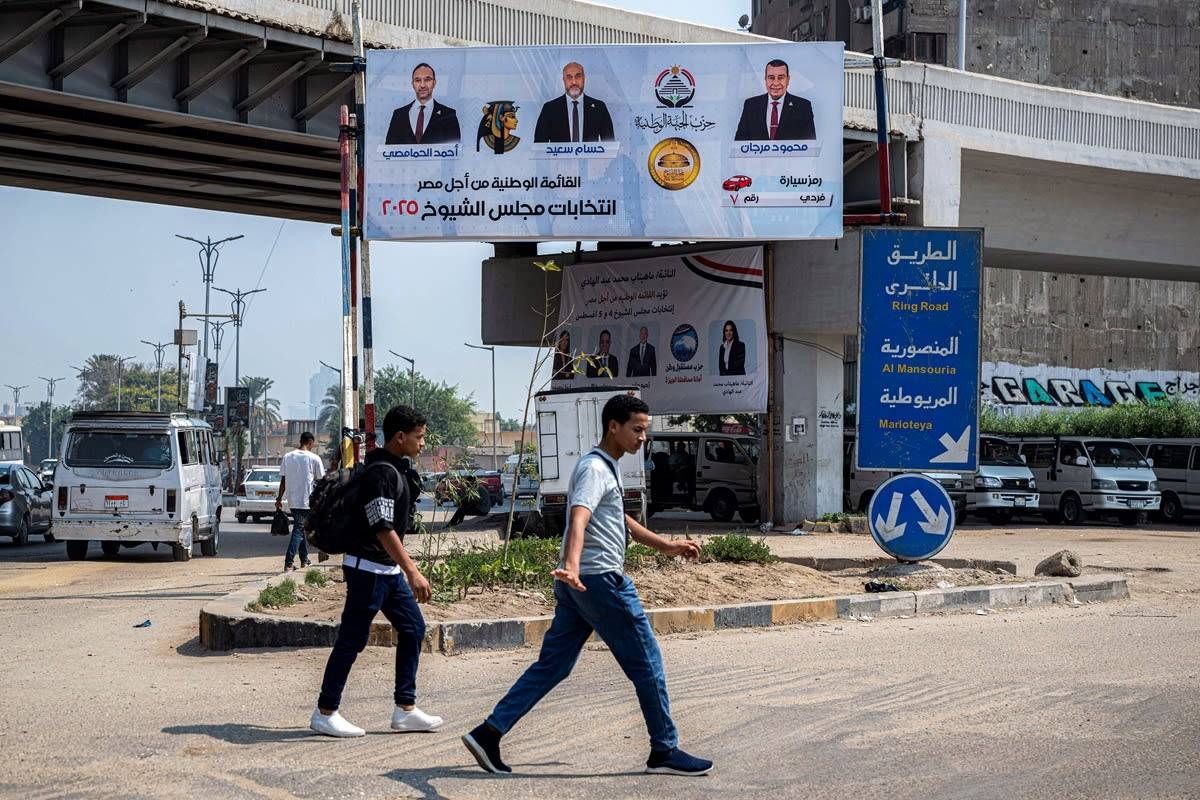
يتكوّن مجلس الشيوخ من 300 عضو، ثلثهم يجري تعيينهم عبر رئيس الجمهورية،


تابع قناة عكاظ على الواتساب
«عكاظ» (القاهرة، جدة)okaz_online@
Egyptians abroad began voting today (Friday) for members of the Egyptian Senate. Local media reported that there is a turnout at polling stations, with expectations of increased participation. The electoral process abroad is taking place in 137 embassies and consulates in 121 countries around the world.
Voting for Egyptians abroad starts at 9 AM and continues until 9 PM according to the time zone of the country where the voting is taking place, according to the National Election Authority.
The Authority has set Friday and Saturday, August 1 and 2, as the dates for conducting these elections abroad, with voting inside the country scheduled for August 4 and 5. The election results will be announced and published in the official gazette on August 12.
The runoff elections will take place abroad on August 25 and 26, and inside the country on August 27 and 28, with the final election results announced and published in the official gazette on September 4.
The Senate consists of 300 members, one-third of whom are appointed by the President of the Republic, while the remaining two-thirds are elected through a mixed system that combines "individual" and "closed absolute list" voting.
Among the 100 members, the winning candidates are determined through the "absolute list" system, as only one list has submitted to participate in the elections, which is the "Unified National List."
The "Unified National List" includes 13 parties, most of which support the government led by "Mostaqbal Watan" (the parliamentary majority holder), "Humat Watan," and "Al-Jabha Al-Wataniya," along with limited representation from opposition parties such as "Al-Masri Al-Democrati" and "Al-Islah Wal-Tanmiya."
According to Article (249) of the Constitution, the Senate is consulted on proposals to amend one or more articles of the Constitution, the general plan for social and economic development, treaties of peace and alliance, and all treaties related to sovereignty rights, as well as draft laws and complementary constitutional laws referred to it by the President of the Republic or the House of Representatives, and any topics referred to the Council by the President of the Republic related to the general policy of the state or its policy in Arab or foreign affairs. The Council communicates its opinion on these matters to the President of the Republic and the House of Representatives.
Voting for Egyptians abroad starts at 9 AM and continues until 9 PM according to the time zone of the country where the voting is taking place, according to the National Election Authority.
The Authority has set Friday and Saturday, August 1 and 2, as the dates for conducting these elections abroad, with voting inside the country scheduled for August 4 and 5. The election results will be announced and published in the official gazette on August 12.
The runoff elections will take place abroad on August 25 and 26, and inside the country on August 27 and 28, with the final election results announced and published in the official gazette on September 4.
The Senate consists of 300 members, one-third of whom are appointed by the President of the Republic, while the remaining two-thirds are elected through a mixed system that combines "individual" and "closed absolute list" voting.
Among the 100 members, the winning candidates are determined through the "absolute list" system, as only one list has submitted to participate in the elections, which is the "Unified National List."
The "Unified National List" includes 13 parties, most of which support the government led by "Mostaqbal Watan" (the parliamentary majority holder), "Humat Watan," and "Al-Jabha Al-Wataniya," along with limited representation from opposition parties such as "Al-Masri Al-Democrati" and "Al-Islah Wal-Tanmiya."
According to Article (249) of the Constitution, the Senate is consulted on proposals to amend one or more articles of the Constitution, the general plan for social and economic development, treaties of peace and alliance, and all treaties related to sovereignty rights, as well as draft laws and complementary constitutional laws referred to it by the President of the Republic or the House of Representatives, and any topics referred to the Council by the President of the Republic related to the general policy of the state or its policy in Arab or foreign affairs. The Council communicates its opinion on these matters to the President of the Republic and the House of Representatives.


