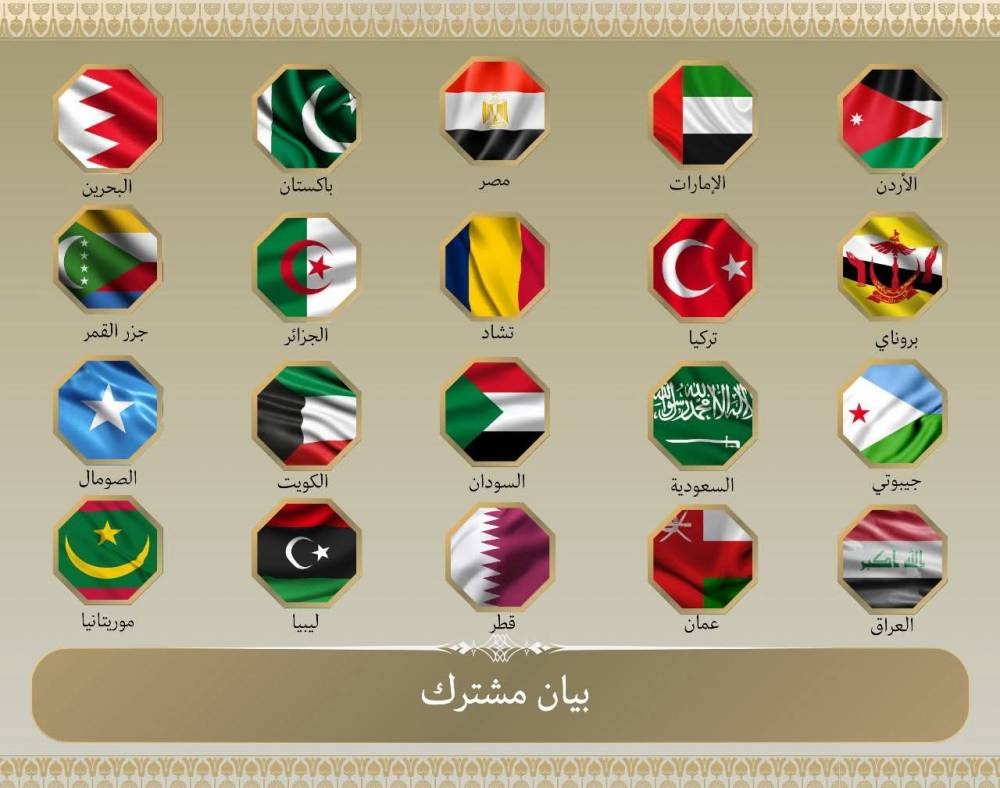
في ظل التوترات الإقليمية المتفاقمة وغير المسبوقة في الشرق الأوسط، الناتجة عن العدوان الإسرائيلي على الجمهورية الإسلامية الإيرانية، أصدر وزراء خارجية 20 دولة عربية وإسلامية بياناً مشتركاً.
وضمت الدول، المملكة العربية السعودية، جمهورية مصر العربية، المملكة الأردنية الهاشمية، دولة الإمارات العربية المتحدة، جمهورية باكستان الإسلامية، مملكة البحرين، بروناي دار السلام، جمهورية تركيا، جمهورية تشاد، الجمهورية الجزائرية الديمقراطية الشعبية، جمهورية القمر المتحدة، جمهورية جيبوتي، جمهورية السودان، جمهورية الصومال الفيدرالية، جمهورية العراق، سلطنة عمان، دولة قطر، دولة الكويت، دولة ليبيا، الجمهورية الإسلامية الموريتانية.
وشدد البيان المشترك على إدانة ورفض الهجمات الإسرائيلية على إيران منذ فجر 13 يونيو 2025، وكل الممارسات التي تنتهك القانون الدولي ومبادئ ميثاق الأمم المتحدة، مع التأكيد على ضرورة احترام سيادة الدول ووحدة أراضيها، ومبادئ حسن الجوار، وحل النزاعات بالوسائل السلمية.
كما عبر البيان عن القلق العميق إزاء التصعيد الخطير الذي يهدد أمن واستقرار المنطقة، مع المطالبة بوقف الأعمال العدائية الإسرائيلية ضد إيران في ظل التوترات المتزايدة، والعمل على خفض التصعيد للوصول إلى وقف إطلاق نار وتهدئة شاملة.
وتم التأكيد على أهمية جعل الشرق الأوسط منطقة خالية من الأسلحة النووية وأسلحة الدمار الشامل وفق القرارات الدولية، مع حث جميع دول المنطقة على الانضمام لمعاهدة عدم انتشار الأسلحة النووية دون انتقائية.
ورفضت الدول الموقعة على البيان، استهداف المنشآت النووية الخاضعة لضمانات الوكالة الدولية للطاقة الذرية، لما يشكله ذلك من انتهاك صارخ للقانون الدولي والإنساني وفق ميثاق جنيف لعام 1949.
ودعا وزراء خارجية الدول إلى استئناف المفاوضات بأسرع وقت ممكن كسبيل وحيد للتوصل إلى اتفاق مستدام بشأن البرنامج النووي الإيراني.
كما تم التأكيد على احترام حرية الملاحة في الممرات المائية الدولية وفق القانون الدولي، ومنع أي تهديد لأمن الملاحة.
وشددت الدول الـ20 على أن الحل الدبلوماسي والحوار هما السبيل الوحيد لحل الأزمات الإقليمية، مع الالتزام بمبادئ حسن الجوار وميثاق الأمم المتحدة، مؤكدين أن الحلول العسكرية لن تساهم في تسوية الأزمة.
In light of the escalating and unprecedented regional tensions in the Middle East, resulting from the Israeli aggression against the Islamic Republic of Iran, the foreign ministers of 20 Arab and Islamic countries issued a joint statement.
The countries included the Kingdom of Saudi Arabia, the Arab Republic of Egypt, the Hashemite Kingdom of Jordan, the United Arab Emirates, the Islamic Republic of Pakistan, the Kingdom of Bahrain, Brunei Darussalam, the Republic of Turkey, the Republic of Chad, the People's Democratic Republic of Algeria, the United Comoros, the Republic of Djibouti, the Republic of Sudan, the Federal Republic of Somalia, the Republic of Iraq, the Sultanate of Oman, the State of Qatar, the State of Kuwait, the State of Libya, and the Islamic Republic of Mauritania.
The joint statement emphasized the condemnation and rejection of the Israeli attacks on Iran since the dawn of June 13, 2025, and all practices that violate international law and the principles of the United Nations Charter, while affirming the necessity of respecting the sovereignty of states and the integrity of their territories, the principles of good neighborliness, and resolving disputes by peaceful means.
The statement also expressed deep concern over the serious escalation threatening the security and stability of the region, calling for an end to Israeli hostilities against Iran amid increasing tensions, and working to de-escalate towards a ceasefire and comprehensive calm.
It was emphasized the importance of making the Middle East a zone free of nuclear weapons and weapons of mass destruction in accordance with international resolutions, urging all countries in the region to join the Treaty on the Non-Proliferation of Nuclear Weapons without selectivity.
The signatory countries rejected targeting nuclear facilities under the safeguards of the International Atomic Energy Agency, as this constitutes a blatant violation of international and humanitarian law according to the Geneva Convention of 1949.
The foreign ministers called for the resumption of negotiations as soon as possible as the only way to reach a sustainable agreement regarding the Iranian nuclear program.
They also affirmed the respect for freedom of navigation in international waterways in accordance with international law, and the prevention of any threat to navigation security.
The 20 countries stressed that diplomatic solutions and dialogue are the only means to resolve regional crises, with a commitment to the principles of good neighborliness and the United Nations Charter, asserting that military solutions will not contribute to resolving the crisis.