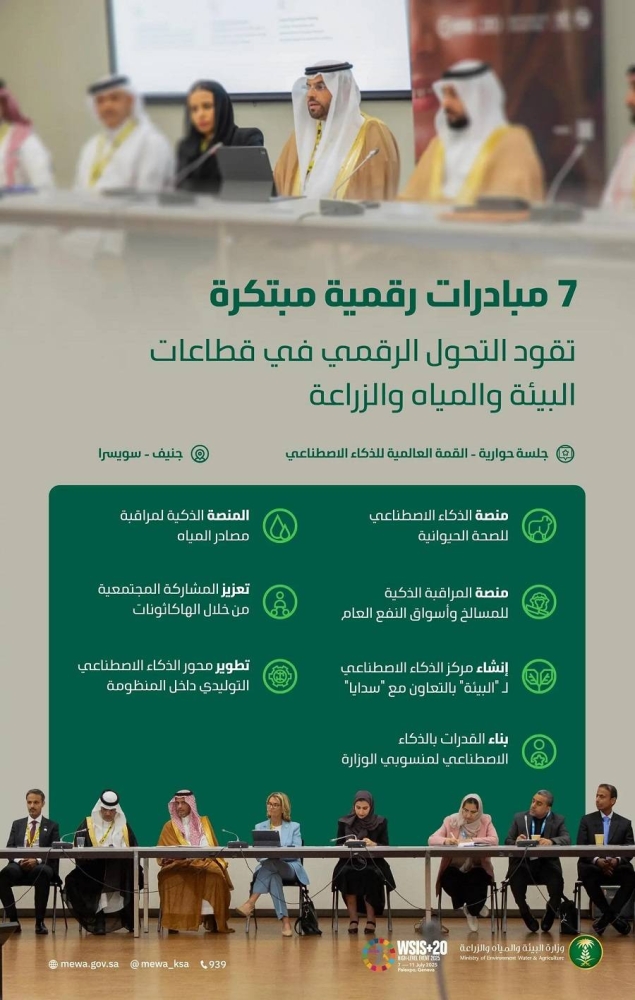
استعرضت وزارة البيئة والمياه والزراعة أبرز المبادرات المبتكرة في التقنيات الناشئة والذكاء الاصطناعي، وقدمت 7 مبادرات نوعية أسهمت في تعزيز التحول الرقمي داخل منظومة البيئة والمياه والزراعة، ما يعكس التزام الوزارة بتوظيف أحدث الحلول التقنية لتحقيق استدامة الموارد وتحسين الخدمات البيئية والزراعية.
جاء ذلك خلال مشاركة الوزارة في الجلسة الحوارية «تعزيز الابتكار الرقمي المستدام: نهج المملكة العربية السعودية نحو مستقبل رقمي مبتكر»، ضمن فعاليات الحدث رفيع المستوى WSIS+20, المنعقد في جنيف خلال الفترة من 7 إلى 11 يوليو 2025، بتنظيم من الاتحاد الدولي للاتصالات والاتحاد السويسري، وبمشاركة اليونسكو وبرنامج الأمم المتحدة الإنمائي والأونكتاد، بصفته أكبر تجمع سنوي لمجتمع تكنولوجيا المعلومات والاتصالات من أجل التنمية حول العالم.
وخلال الجلسة، قدّم المشرف العام على وكالة تقنية المعلومات والتحول الرقمي بالوزارة الدكتور عبدالحميد بن عبدالله العليوي، بحضور الأمين العام للاتحاد الدولي للاتصالات Doreen Bogdan-Martin، وخبراء من الأمم المتحدة والمملكة، عرضاً بعنوان «أبرز المبادرات المبتكرة في التقنيات الناشئة والذكاء الاصطناعي لمنظومة البيئة والمياه والزراعة»، استعرض فيه 7 مبادرات نوعية تبنتها الوزارة لتعزيز التحول الرقمي وتوظيف الذكاء الاصطناعي في قطاعات الوزارة.
وبدأ الدكتور العليوي العرض بالتعريف بمنصة الذكاء الاصطناعي للصحة الحيوانية، وتم استعراض المشروع الفائز بشهادة التميز في جائزة القمة العالمية لمجتمع المعلومات WSIS 2025، مع التركيز على كيفية استخدام الذكاء الاصطناعي لتحسين الصحة الحيوانية، والمنصة الذكية لمراقبة مصادر المياه. وتم استعراض جهود الوزارة في تطوير المنصة، وأهدافها في مراقبة حفر الآبار الجوفية والحفارات، وأثر ذلك على استدامة الموارد المائية.
وتضمن العرض التعريف بمنصة المراقبة الذكية للمسالخ وأسواق النفع العام واستعراض كيفية استخدام المنصة لضمان سلامة الغذاء وتحسين إدارة المسالخ والأسواق، مع إبراز التقنيات المستخدمة، إضافة إلى الخرائط الجيومكانية والاستشعار عن بعد.
واشتمل العرض على أطر التعاون مع الهيئة السعودية للبيانات والذكاء الاصطناعي (سدايا) واستُعرضت جهود الوزارة مع الهيئة في إنشاء مركز الذكاء الاصطناعي للبيئة والمياه والزراعة، وأهمية المركز في دعم الابتكار الرقمي ومحور الذكاء الاصطناعي التوليدي الذي تم خلاله استعراض جهود الوزارة في تطوير الذكاء الاصطناعي التوليدي داخل المنظومة، وكيف أسهم في تحسين العمليات واتخاذ القرارات، وكذلك بناء القدرات لمنسوبي الوزارة حيث استُعرضت جهود الوزارة في التدريب والتطوير لتمكين منسوبيها من استخدام الذكاء الاصطناعي وتوظيفه في الأعمال اليومية.
وأكّدت الوزارة أن الابتكار الرقمي ليس خياراً، بل ضرورة لمواجهة تحديات الحاضر وضمان مستقبل مستدام، ونعمل على بناء منظومة متكاملة توظف التقنيات الناشئة لخدمة الإنسان والبيئة، وأن المملكة تمضي بخطى ثابتة نحو تحقيق ريادة رقمية عالمية، عبر حلول تقنية تضع الإنسان والبيئة في قلب التنمية.
The Ministry of Environment, Water, and Agriculture showcased the most prominent innovative initiatives in emerging technologies and artificial intelligence, presenting 7 qualitative initiatives that contributed to enhancing digital transformation within the environment, water, and agriculture system. This reflects the ministry's commitment to employing the latest technological solutions to achieve resource sustainability and improve environmental and agricultural services.
This came during the ministry's participation in the dialogue session "Enhancing Sustainable Digital Innovation: The Kingdom of Saudi Arabia's Approach to an Innovative Digital Future," as part of the high-level WSIS+20 event, held in Geneva from July 7 to 11, 2025, organized by the International Telecommunication Union and the Swiss government, with participation from UNESCO, the United Nations Development Programme, and UNCTAD, as the largest annual gathering of the information and communication technology community for development worldwide.
During the session, Dr. Abdulhamid bin Abdullah Al-Olwi, the General Supervisor of the Information Technology and Digital Transformation Agency at the ministry, presented a presentation titled "Prominent Innovative Initiatives in Emerging Technologies and Artificial Intelligence for the Environment, Water, and Agriculture System," in the presence of Doreen Bogdan-Martin, the Secretary-General of the International Telecommunication Union, and experts from the United Nations and the Kingdom. The presentation highlighted 7 qualitative initiatives adopted by the ministry to enhance digital transformation and employ artificial intelligence in the ministry's sectors.
Dr. Al-Olwi began the presentation by introducing the artificial intelligence platform for animal health, showcasing the project that won a certificate of excellence at the WSIS 2025 Global Summit on the Information Society, focusing on how artificial intelligence is used to improve animal health and the smart platform for monitoring water sources. The ministry's efforts in developing the platform were highlighted, along with its objectives in monitoring groundwater wells and drilling rigs, and the impact of this on the sustainability of water resources.
The presentation included an introduction to the smart monitoring platform for slaughterhouses and public markets, demonstrating how the platform is used to ensure food safety and improve the management of slaughterhouses and markets, while highlighting the technologies used, in addition to geospatial maps and remote sensing.
The presentation also covered frameworks for cooperation with the Saudi Data and Artificial Intelligence Authority (SDAIA), showcasing the ministry's efforts with the authority in establishing the Artificial Intelligence Center for Environment, Water, and Agriculture, and the importance of the center in supporting digital innovation and the generative artificial intelligence axis. The ministry's efforts in developing generative artificial intelligence within the system were presented, along with how it contributed to improving processes and decision-making, as well as building capacities for the ministry's employees, where the ministry's training and development efforts were showcased to empower its staff to use and employ artificial intelligence in daily operations.
The ministry emphasized that digital innovation is not an option but a necessity to face present challenges and ensure a sustainable future. We are working on building an integrated system that employs emerging technologies to serve humanity and the environment, and the Kingdom is making steady strides towards achieving global digital leadership through technological solutions that place humanity and the environment at the heart of development.