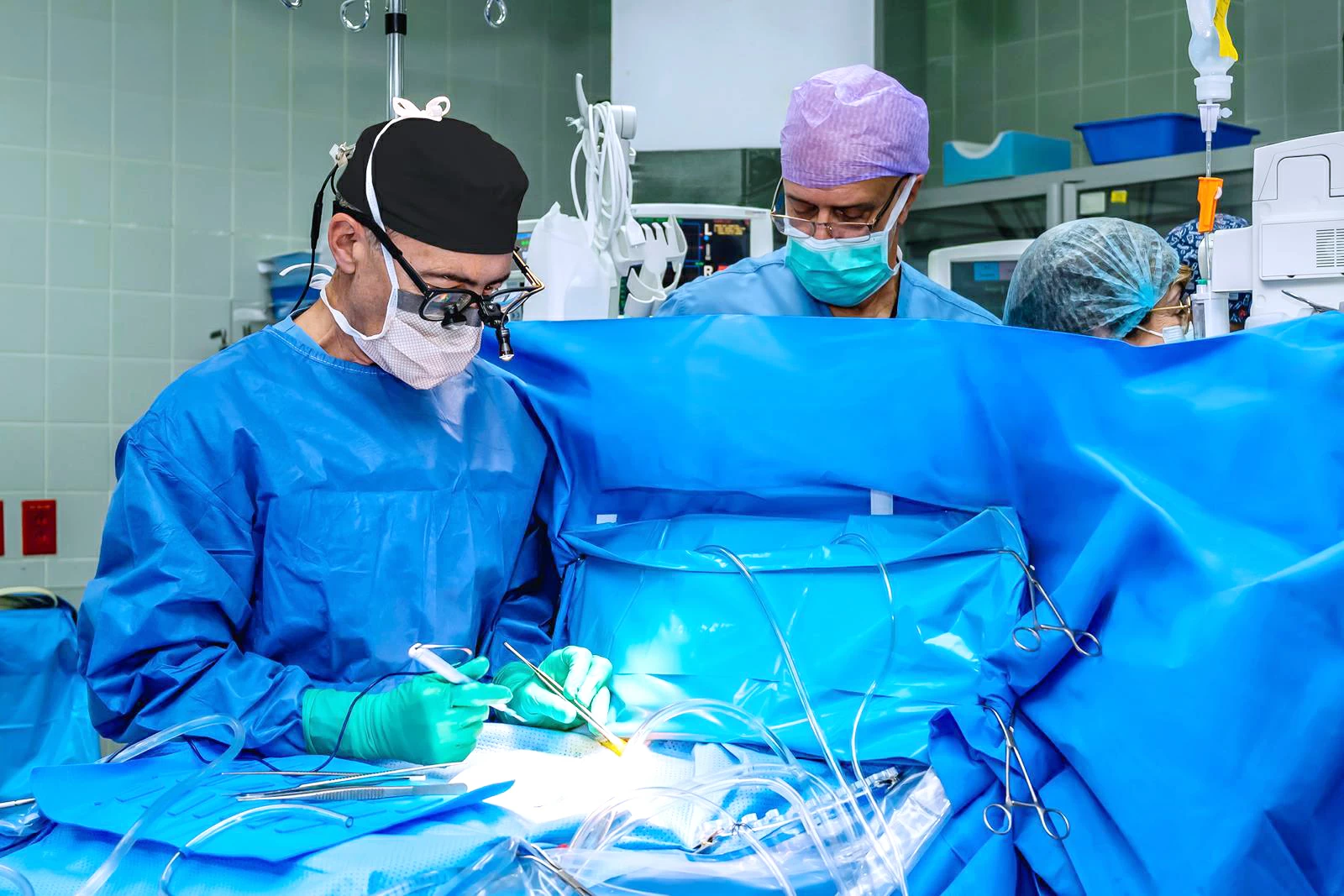
عبر إجراء طبي نادر يُعرف بزراعة القلب بطريقة «الدومينو» (Domino Heart Transplantation)، ويقوم على الاستفادة من الأنسجة السليمة المتبقية في قلب المريض بعد استئصاله وزراعتها لمريض آخر.
نجح مستشفى الملك فيصل التخصصي ومركز الأبحاث في علاج طفلين بقلب متبرع واحد، ضمن أول عملية زراعة قلب متتابعة للأطفال من نوعها في الشرق الأوسط وأوروبا.
زُرع قلب المتبرع لطفل يبلغ 12 عاماً، كان يعاني اعتلالاً في عضلة القلب أدى إلى فشل قلبي في مرحلته النهائية، وأمضى نحو ستة أسابيع في المستشفى على أدوية داعمة للقلب بانتظار الزراعة. ورغم حاجته إلى استبدال قلبه كاملاً، ظل الصمام الرئوي وجذره سليمين وصالحين للزراعة.
وبالتزامن مع زراعة القلب، خضع طفل ثانٍ، يبلغ 9 أعوام، لعملية «روس» بعد معاناته تضيقاً وقصوراً حادين في الصمام الأورطي وخضوعه سابقاً لعمليتين لإصلاحه. ونُقل خلال العملية صمامه الرئوي السليم ليحل محل الصمام الأورطي المتضرر، ثم أعاد الفريق بناء موضع الصمام الرئوي باستخدام الصمام الرئوي وجذره المأخوذين من قلب الطفل الأول.
وبذلك، أصبح الطفل الأول متلقياً لقلب المتبرع، ومصدراً لأنسجة قلبية أسهمت في علاج الطفل الثاني، ليمتد أثر قلب المتبرع الواحد إلى طفلين ضمن سلسلة علاجية متتابعة. ويتميز الصمام المزروع بكونه نسيجاً حياً قابلاً للنمو مع الطفل، ما قد يقلل الحاجة إلى عمليات متكررة لاستبداله، مقارنةً بالصمامات الاصطناعية ثابتة الحجم.
وقال المدير التنفيذي لمركز التميز للقلب، الدكتور هاني السرجاني، إن الإجراء من أندر عمليات زراعة القلب الجزئية لدى الأطفال، وتطلب نجاح العملية تنسيق عمليتين معقدتين بالتزامن، وتكامل فرق زراعة القلب وجراحة قلب الأطفال وأمراض القلب وفشل القلب والتصوير القلبي والتخدير والعناية الحرجة، إلى جانب التروية والتمريض وتنسيق الزراعة، مع تقييم الأنسجة القلبية والمحافظة عليها وتجهيزها للزراعة.
Through a rare medical procedure known as "Domino Heart Transplantation," which utilizes the healthy tissues remaining in a patient's heart after it has been removed and transplants them to another patient.
The King Faisal Specialist Hospital and Research Centre successfully treated two children with one donor heart, as part of the first consecutive heart transplant operation for children of its kind in the Middle East and Europe.
The donor heart was transplanted to a 12-year-old boy who suffered from cardiomyopathy that led to end-stage heart failure, spending about six weeks in the hospital on heart-supporting medications while awaiting the transplant. Despite needing a complete heart replacement, his pulmonary valve and root remained intact and suitable for transplantation.
Simultaneously with the heart transplant, a second child, aged 9, underwent a "Ross" procedure after experiencing severe narrowing and insufficiency of the aortic valve and having previously undergone two surgeries to repair it. During the operation, his healthy pulmonary valve was transferred to replace the damaged aortic valve, and then the team reconstructed the location of the pulmonary valve using the pulmonary valve and root taken from the first child's heart.
Thus, the first child became the recipient of the donor heart and a source of cardiac tissues that contributed to the treatment of the second child, extending the impact of a single donor heart to two children within a consecutive treatment series. The transplanted valve is characterized as living tissue that can grow with the child, potentially reducing the need for repeated replacement surgeries compared to fixed-size artificial valves.
The Executive Director of the Heart Excellence Center, Dr. Hani Al-Sarjani, stated that the procedure is one of the rarest partial heart transplant operations in children, and the success of the operation required the coordination of two complex procedures simultaneously, along with the integration of heart transplant teams, pediatric cardiac surgery, cardiology, heart failure, cardiac imaging, anesthesia, and critical care, in addition to perfusion, nursing, and transplant coordination, along with the evaluation, preservation, and preparation of cardiac tissues for transplantation.