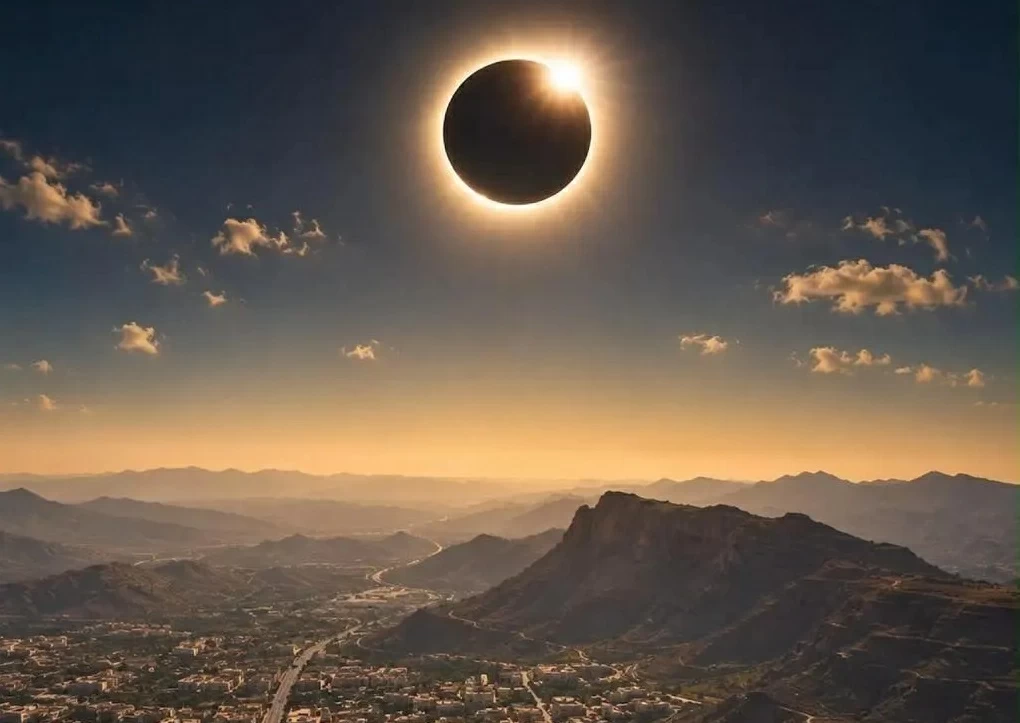
تترقب الكرة الأرضية في الثاني من أغسطس لعام 2027م، حدثًا فلكيًا استثنائيًا ومميزًا يُعد من الأبرز في القرن الواحد والعشرين؛ وهو حدث تاريخي نادر لم تشهده المملكة العربية السعودية منذ أكثر من 75 عامًا.
وتشهد الأرض إحدى أطول حالات الكسوف الشمسي الكُلّي خلال القرن الحالي، في مشهد فلكي نادر يحوّل ضوء النهار إلى ظلام مؤقت في المناطق التي يمر بها.
ويتقاطع مسار الكسوف الكلي مع أجزاء واسعة من غرب وجنوب المملكة العربية السعودية، مما يمنحها ميزة وموقعًا إستراتيجيًا متميزًا على خارطة الرصد الفلكي العالمي لمتابعة وتوثيق هذه الظاهرة، في حين يُتوقع أن تُسجَّل أقصى مدة زمنية للكسوف الكلي فوق الأراضي المصرية المجاورة.
وأوضحت وكالة الفضاء السعودية أن سكان وزوار مناطق غرب وجنوب المملكة سيكونون على موعد مع رؤية الكسوف بشكل كلي، حيث ستصل مدة حجب ضوء الشمس والظلام التام إلى نحو ست دقائق تقريبًا في بعض المناطق الجنوبية مثل مدينة أبها، بينما تُسجّل محافظة جدة ومناطق من الساحل الغربي مدة حجب تصل إلى خمس دقائق و50 ثانية تقريبًا؛ وهي مدد زمنية طويلة نسبيًا تمنح الباحثين وهواة الفلك فرصة ذهبية لدراسة الإكليل الشمسي.
وفي هذا الإطار، بيّن المختصون أن بقية مناطق المملكة (الوسطى، والشرقية، والشمالية) لن تكون بمعزل عن هذا الحدث، حيث ستشهد كسوفًا جزئيًا لقرص الشمس بنسب متفاوتة، وتصل نسبة الحجب في بعض تلك المناطق إلى نحو 80%، حيث تختلف مدة الكسوف ونسبة الحجب وتوقيت بدايته ونهايته بشكل دقيق بحسب الإحداثيات الجغرافية والموقع لكل منطقة ومحافظة.
وتؤكد وكالة الفضاء السعودية الأهمية القصوى لاتباع إرشادات الأمن والسلامة أثناء رصد الظاهرة، مشددةً على ضرورة تجنب النظر المباشر للشمس دون استخدام النظارات والمناظير المزودة بالمرشحات الخاصة، حرصًا على سلامة الجميع وضمان تجربة رصد آمنة.
وفي سياق متصل، أوضح رئيس الجمعية الفلكية بجدة المهندس ماجد أبو زاهرة أن مسار الكسوف الكلي يبدأ من ساحل البحر الأحمر، ويمتد عبر عدد كبير من المدن والمحافظات في غرب وجنوب غرب المملكة؛ من أبرزها: مكة المكرمة، وجدة، وثول، وذهبان، وخليص، وعسفان، والجموم، وبحرة، والطائف، والهدا، والشفا، والليث، وأضم، والمندق، والباحة، وبلجرشي، والمجاردة، والقنفذة، وسبت العلايا، والنماص، وتنومة، وبارق، وخميس مشيط، وأحد رفيدة، وبيش، وصبيا، وجازان، ونجران، وظهران الجنوب، وسراة عبيدة، وحرض، وغران، وغميقة.
وأبان أن مرحلة الكسوف الكلي ستشهد تحول ضوء النهار إلى ما يشبه الشفق، مع انخفاض ملحوظ في شدة الإضاءة ودرجات الحرارة، وستظهر الهالة الشمسية المحيطة بالشمس، ويمكن رصد بعض النجوم والكواكب اللامعة، وهي مشاهد لا تُرى إلا أثناء الكسوف الكلي.
وأشار المهندس أبو زاهرة إلى أن كسوف 2 أغسطس 2027 يمثل فرصة علمية وتوعوية استثنائية لتعزيز الاهتمام بعلم الفلك ونشر ثقافة الرصد الآمن، لافتًا إلى أن كسوفًا كليًا بهذه المدة لن يتكرر فوق معظم أنحاء المنطقة إلا بعد فترات زمنية طويلة.
The Earth is anticipating an exceptional and unique astronomical event on August 2, 2027, which is considered one of the most prominent events of the twenty-first century; it is a rare historical event that has not been witnessed in the Kingdom of Saudi Arabia for over 75 years.
The Earth will experience one of the longest total solar eclipses of the current century, in a rare astronomical scene that turns daylight into temporary darkness in the areas it passes through.
The path of the total eclipse intersects with large parts of the west and south of the Kingdom of Saudi Arabia, giving it a distinctive advantage and strategic location on the global astronomical observation map to follow and document this phenomenon, while it is expected that the longest duration of totality will be recorded over the neighboring Egyptian lands.
The Saudi Space Agency clarified that residents and visitors in the western and southern regions of the Kingdom will have the opportunity to witness the eclipse in its totality, where the duration of sunlight blockage and complete darkness will reach about six minutes in some southern areas like the city of Abha, while the governorate of Jeddah and parts of the western coast will record a blockage duration of about five minutes and 50 seconds; these relatively long durations provide researchers and astronomy enthusiasts with a golden opportunity to study the solar corona.
In this context, specialists indicated that the rest of the Kingdom's regions (central, eastern, and northern) will not be isolated from this event, as they will witness a partial eclipse of the sun's disk at varying rates, with some of those areas experiencing a blockage of up to about 80%, where the duration of the eclipse, the percentage of blockage, and the timing of its beginning and end will vary precisely according to the geographical coordinates and location of each area and governorate.
The Saudi Space Agency emphasizes the utmost importance of following safety and security guidelines while observing the phenomenon, stressing the need to avoid direct viewing of the sun without using glasses and telescopes equipped with special filters, to ensure everyone's safety and guarantee a safe observation experience.
In a related context, the head of the Astronomical Society in Jeddah, Engineer Majid Abu Zahra, explained that the path of the total eclipse begins from the Red Sea coast and extends through a large number of cities and governorates in the west and southwest of the Kingdom; among the most notable are: Mecca, Jeddah, Thuwal, Dhahban, Khulais, Asfan, Al-Jamoum, Bahra, Taif, Al-Hada, Al-Shifa, Al-Lith, Ahdam, Al-Mundaq, Al-Baha, Baljurashi, Al-Majardah, Al-Qunfudhah, Sabt Al-Alaya, Al-Namas, Tanumah, Barq, Khamis Mushait, Ahad Rufaida, Bish, Sabya, Jazan, Najran, Dhahran Al-Janub, Sarawat Abidah, Haradh, Ghran, and Ghamika.
He pointed out that the total eclipse phase will witness a transformation of daylight into something resembling twilight, with a noticeable decrease in light intensity and temperatures, and the solar halo surrounding the sun will become visible, allowing for the observation of some bright stars and planets, which are sights that can only be seen during a total eclipse.
Engineer Abu Zahra noted that the eclipse on August 2, 2027, represents an exceptional scientific and educational opportunity to enhance interest in astronomy and promote a culture of safe observation, pointing out that a total eclipse of this duration will not recur over most parts of the region for a long time.