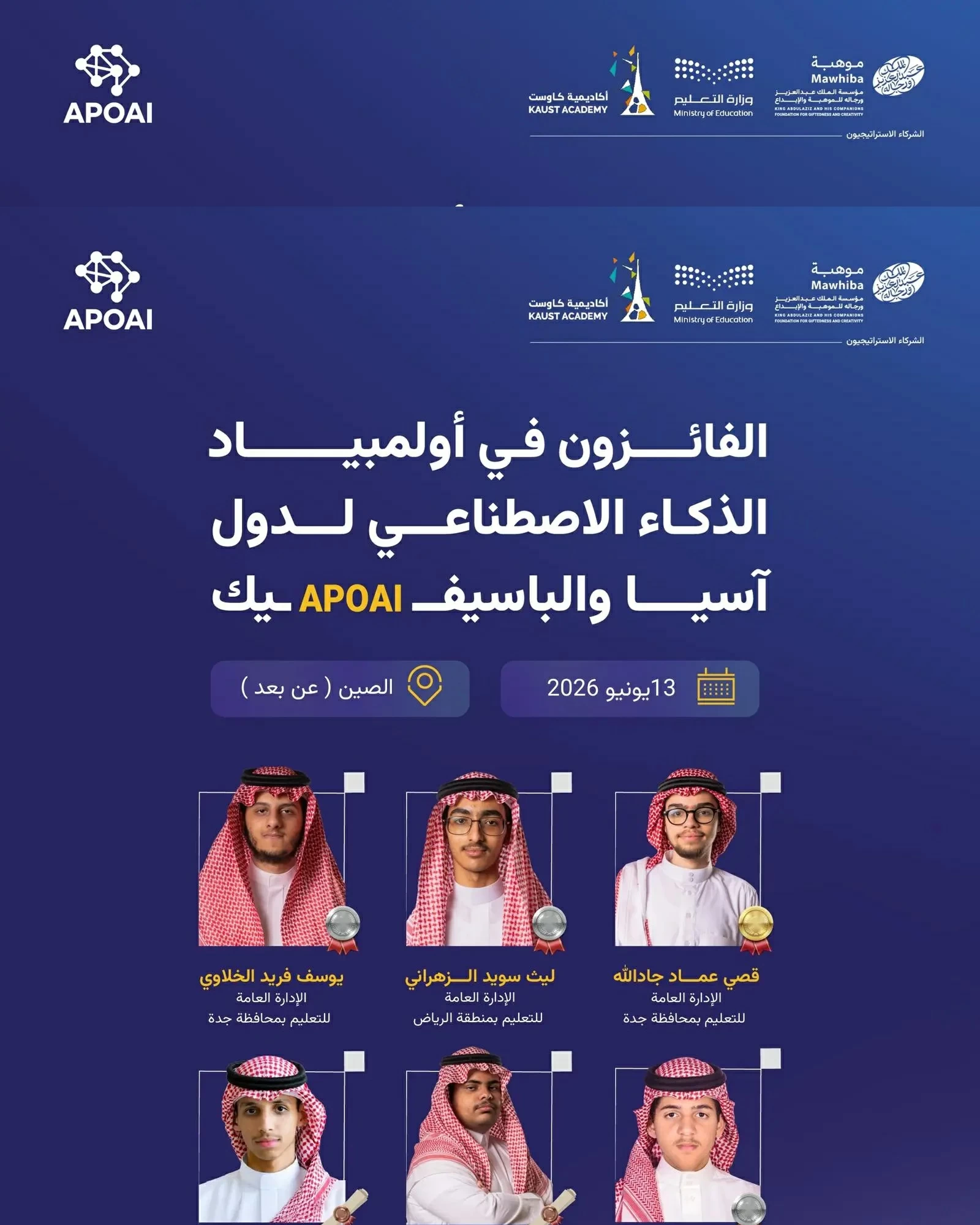
حقق المنتخب السعودي للذكاء الاصطناعي ست جوائز دولية في أولمبياد الذكاء الاصطناعي لدول آسيا والباسيفيك APOAI 2026، الذي نظمته الصين -عن بُعد- في نسخته الأولى، بمشاركة 129 طالبًا يمثلون 18 دولة، وذلك في أول مشاركة للمملكة في هذه المسابقة الدولية الناشئة.
وجاءت جوائز المملكة بواقع ميدالية ذهبية، وثلاث ميداليات فضية، وشهادتي تقدير؛ إذ نال الطالب قصي عماد جادالله من إدارة تعليم جدة الميدالية الذهبية، فيما حقق الطالب ليث سويد الزهراني من إدارة تعليم الرياض الميدالية الفضية، والطالب يوسف فريد الخلاوي من إدارة تعليم جدة الميدالية الفضية، والطالب علي أيمن الخباز من إدارة تعليم الشرقية الميدالية الفضية، وحصل الطالب رائد حسن طيب من إدارة تعليم الشرقية على شهادة تقدير، والطالب حمد محمد الكلباني من إدارة تعليم الرياض على شهادة تقدير.
وتأتي مشاركة المملكة؛ ممثلةً في مؤسسة الملك عبدالعزيز ورجاله للموهبة والإبداع (موهبة)، بالشراكة مع وزارة التعليم وأكاديمية كاوست، تأكيداً لحضور الطلبة السعوديين في مجالات التقنية المتقدمة، وتعزيزاً للاستثمار في الكفاءات الوطنية الشابة في الذكاء الاصطناعي وتقنيات المستقبل.
وتُعد أولمبياد الذكاء الاصطناعي لدول آسيا والباسيفيك مبادرة تعليمية دولية تستهدف طلبة المرحلة الثانوية في منطقة آسيا والمحيط الهادئ، وتهدف إلى تعزيز مهاراتهم في الذكاء الاصطناعي، وتنمية قدراتهم في التفكير المنطقي، وحل المشكلات، والتعامل مع التحديات التقنية الحديثة، وفق إطار يحاكي معايير أولمبياد الذكاء الاصطناعي الدولي.
وخضع الطلبة المشاركون لرحلة تأهيلية متكاملة في أكاديمية كاوست شملت مراحل تقييمية، ومعسكرات تدريبية متخصصة، واختبارات ترشيحية؛ بهدف تطوير مهاراتهم في مجالات الذكاء الاصطناعي، والتعلم الآلي، والتفكير التحليلي، ورفع جاهزيتهم للمنافسة الدولية.
وتعكس هذه المشاركة جهود «موهبة» وشراكتها مع وزارة التعليم في اكتشاف ورعاية وتمكين الطلبة الموهوبين، وتهيئتهم للمنافسة عالميًا في المجالات العلمية والتقنية ذات الأولوية، بما يسهم في إعداد جيل وطني قادر على مواكبة التحولات المتسارعة في الذكاء الاصطناعي والابتكار.
The Saudi artificial intelligence team achieved six international awards at the Asia-Pacific Artificial Intelligence Olympiad (APOAI) 2026, which was organized by China - remotely - in its first edition, with the participation of 129 students representing 18 countries, marking the Kingdom's first participation in this emerging international competition.
The Kingdom's awards included one gold medal, three silver medals, and two certificates of appreciation; the gold medal was awarded to student Qusai Imad Jadallah from the Jeddah Education Administration, while student Laith Suwaid Al-Zahrani from the Riyadh Education Administration won a silver medal, student Yusuf Farid Al-Khalawi from the Jeddah Education Administration also received a silver medal, and student Ali Ayman Al-Khabaz from the Eastern Province Education Administration earned a silver medal. Additionally, student Raed Hassan Tayeb from the Eastern Province Education Administration received a certificate of appreciation, as did student Hamad Mohammed Al-Kalbani from the Riyadh Education Administration.
The Kingdom's participation, represented by the King Abdulaziz and His Companions Foundation for Giftedness and Creativity (Mawhiba), in partnership with the Ministry of Education and KAUST Academy, confirms the presence of Saudi students in advanced technology fields and enhances investment in young national talents in artificial intelligence and future technologies.
The Asia-Pacific Artificial Intelligence Olympiad is an international educational initiative targeting high school students in the Asia-Pacific region, aiming to enhance their skills in artificial intelligence, develop their logical thinking abilities, problem-solving skills, and deal with modern technical challenges, within a framework that simulates the standards of the International Artificial Intelligence Olympiad.
The participating students underwent a comprehensive training journey at KAUST Academy, which included evaluative phases, specialized training camps, and qualifying tests, aimed at developing their skills in artificial intelligence, machine learning, analytical thinking, and preparing them for international competition.
This participation reflects the efforts of "Mawhiba" and its partnership with the Ministry of Education in discovering, nurturing, and empowering gifted students, preparing them to compete globally in priority scientific and technical fields, contributing to the preparation of a national generation capable of keeping pace with the rapid transformations in artificial intelligence and innovation.