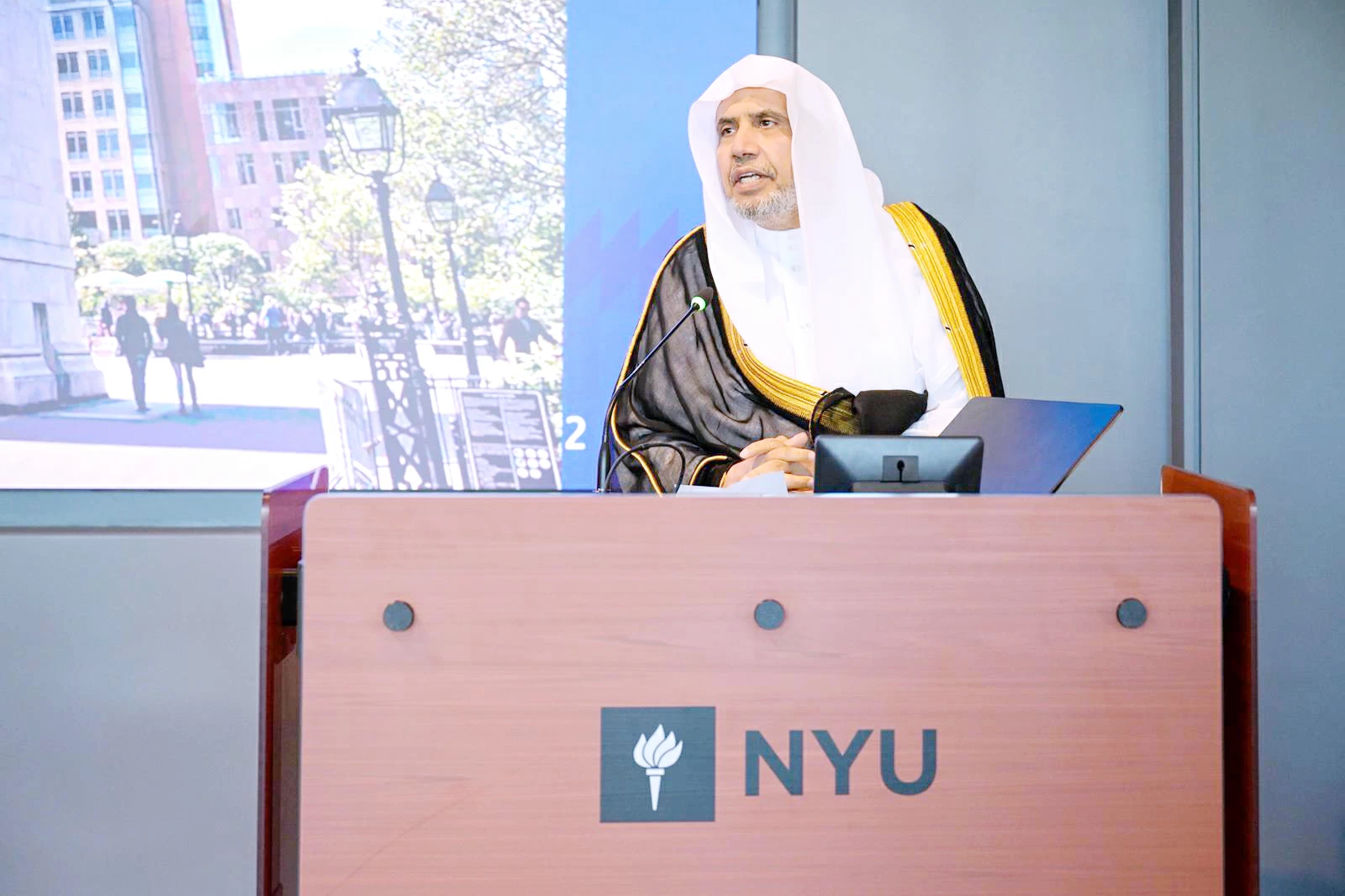
استضافت جامعة نيويورك الأمين العام لرابطة العالم الإسلامي رئيس هيئة علماء المسلمين الشيخ الدكتور محمد عبدالكريم العيسى، لإلقاء محاضرة أعقبها حوار موسّع مع نخبة من أكاديميّي الجامعة والمدعوين.
وتناول اللقاء عدداً من المحاور المرتبطة بتنامي دور الذكاء الاصطناعي في تعزيز خطاب الكراهية عبر منصات التواصل الاجتماعي، مع تسليط الضوء على مسؤولية مؤسسات المجتمع في مواجهته، لاسيما الدور الديني في تحليل أسبابه وتقديم المعالجات المناسبة. واستعرض العيسى نماذج من تلك الأسباب، إلى جانب مقترحات عملية للعلاج، مستنداً إلى دراسات واستطلاعات شاملة.
كما ناقشت المحاضرة أبرز التحديات والفرص والتجارب ذات الصلة بالموضوع، متطرقةً إلى قضايا توليد المحتوى تلقائياً باستخدام تقنيات الذكاء الاصطناعي، وما قد ينتج عنه من نصوص أو صور أو مقاطع مرئية تحمل مضامين تمييزية أو تحريضية. وتناول العيسى، كذلك آليات الاستهداف الخوارزمي المبني على تحليل سلوك المستخدمين واهتماماتهم، وما يترتب عليه من توجيه محتوى مثير للانقسام إلى فئات محددة بهدف رفع معدلات التفاعل.
وتطرقت المحاضرة أيضاً إلى ظاهرة التضخيم الرقمي للمحتوى عبر الحسابات الآلية والمنسقة (Bots & Coordinated Networks)، ودورها في توسيع انتشار خطاب الكراهية والمعلومات المضللة، إضافة إلى مخاطر التلاعب بالمحتوى السمعي والبصري باستخدام تقنيات «التزييف العميق» (Deepfake)، وما قد تسببه من تشويه للأفراد أو الجماعات وإثارة العداء ضدهم. كما تناولت تأثير خوارزميات التوصية في تعزيز المحتوى المتطرف أو الاستفزازي نتيجة ارتفاع معدلات التفاعل معه.
وفي تعليقه، أكد العيسى، أن «توظيف الذكاء الاصطناعي في تعزيز خطاب الكراهية يفرض تحليلاً قانونياً دقيقاً يقوم على تحقيق التوازن بين ضمان حرية التعبير ضمن نطاقها المشروع، وحماية المجتمع من المحتوى التحريضي، مع تحديد المسؤولية القانونية للفاعلين الرقميين والمنصات التقنية».
New York University hosted the Secretary-General of the Muslim World League, Chairman of the Association of Muslim Scholars, Sheikh Dr. Mohammed Abdulkarim Al-Issa, to deliver a lecture followed by an extensive dialogue with a select group of university academics and invited guests.
The meeting addressed several topics related to the growing role of artificial intelligence in promoting hate speech across social media platforms, highlighting the responsibility of community institutions in confronting it, particularly the religious role in analyzing its causes and providing appropriate remedies. Al-Issa presented examples of those causes, along with practical suggestions for treatment, based on comprehensive studies and surveys.
The lecture also discussed the main challenges, opportunities, and relevant experiences related to the topic, touching on issues of automatically generated content using artificial intelligence technologies, and the potential outcomes of texts, images, or videos that carry discriminatory or inciting messages. Al-Issa also addressed algorithmic targeting mechanisms based on analyzing user behavior and interests, and the resulting direction of divisive content to specific groups to increase interaction rates.
The lecture also addressed the phenomenon of digital amplification of content through automated and coordinated accounts (Bots & Coordinated Networks), and their role in expanding the spread of hate speech and misinformation, in addition to the risks of manipulating audio and visual content using "deepfake" technologies, which may lead to the distortion of individuals or groups and incite hostility against them. It also discussed the impact of recommendation algorithms in promoting extremist or provocative content due to the increased interaction rates with it.
In his remarks, Al-Issa emphasized that "the use of artificial intelligence to promote hate speech necessitates a precise legal analysis that aims to achieve a balance between ensuring freedom of expression within its legitimate scope and protecting society from inciting content, while defining the legal responsibility of digital actors and technology platforms."