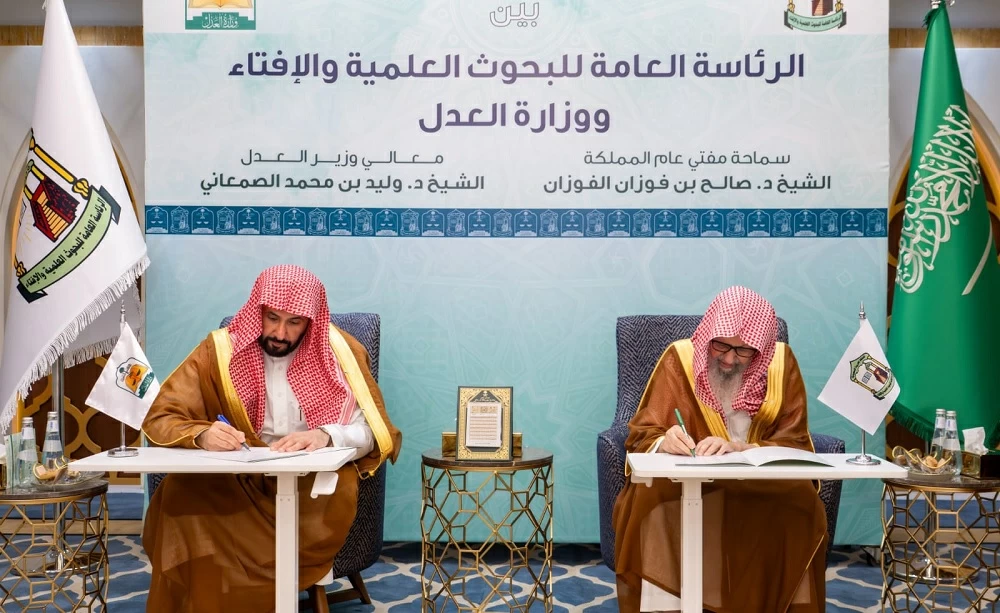
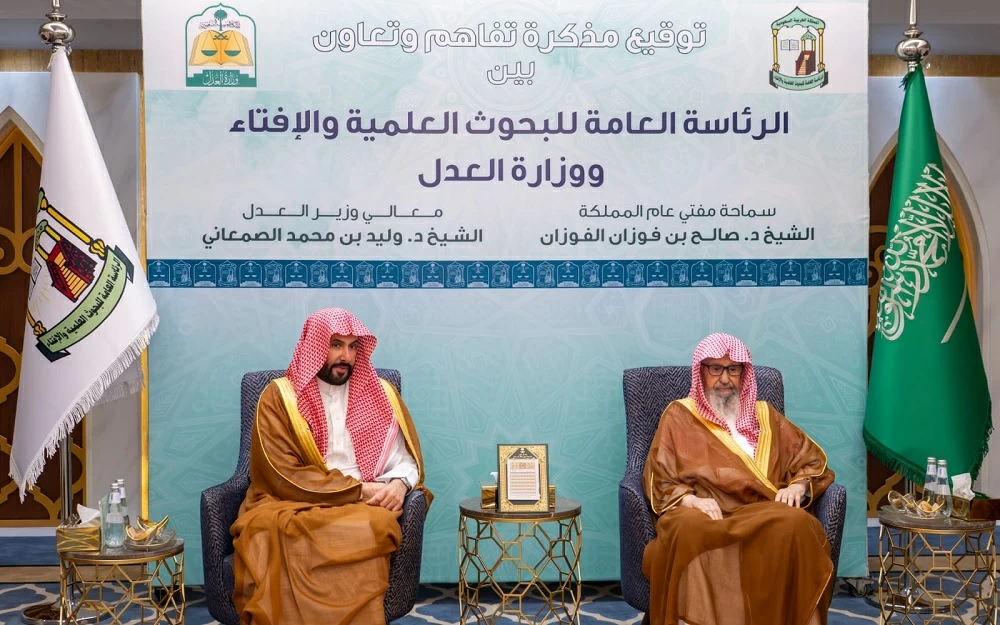
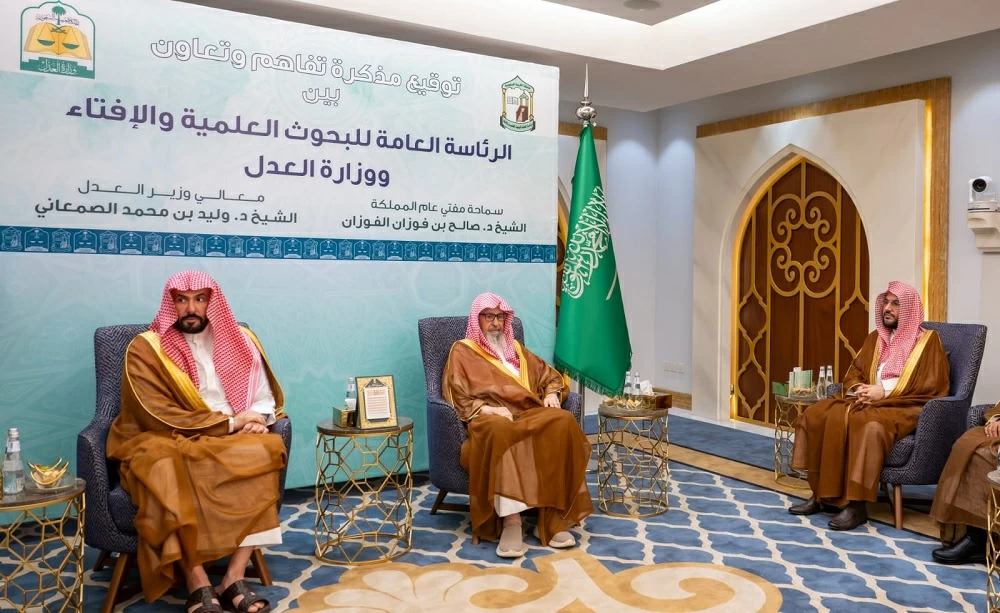
وقّعت وزارة العدل مع الرئاسة العامة للبحوث العلمية والإفتاء مذكرة تفاهم لدراسة آلية التعامل مع وقائع الطلاق ومعالجتها وتوثيقها، بما يعزز التكامل بين الجهتين، ويطوّر كفاءة الإجراءات المرتبطة بالقضايا الأسرية.
وتأتي المذكرة استناداً إلى التشريعات المتخصصة، وفي مقدمتها نظام الأحوال الشخصية، الذي أرسى أحكاماً واضحة وشاملة لتنظيم القضايا الأسرية، بما يسهم في توحيد إجراءات المعالجة والتوثيق، وتيسير رحلة المستفيد، وتقليص المدد الزمنية، مع ضمان الدقة والضبط في الإجراءات ذات الأثر على استقرار الأسرة والمجتمع.
وقال المفتي العام للمملكة الشيخ صالح الفوزان إن الشريعة الإسلامية جاءت لتحقيق مصالح العباد وحفظ حقوقهم، وإن ما نشهده اليوم من تنظيم وتنسيق بين الرئاسة العامة للبحوث العلمية والإفتاء ووزارة العدل ثمرة للتعاون الذي يسعى إلى ضبط وقائع الطلاق وحماية كيان الأسرة، في ظل وجود أنظمة محكمة مثل نظام الأحوال الشخصية، وهو إجراء يسهم في طمأنينة المستفتي وضمان توثيق حقوق الزوج والزوجة بما يتماشى مع مقاصد الشريعة في رعاية الحقوق وإقامة العدل.
من جانبه، أكد وزير العدل الدكتور وليد الصمعاني أن المذكرة تمثل خطوة نحو تعزيز التكامل في معالجة وتوثيق وقائع الطلاق، بما يضمن وضوح الإجراءات وتكاملها، ويرتقي بجودة الخدمات المقدمة، ويسهم في تحسين رحلة المستفيد، وتحقيق العدالة الناجزة، وتعزيز استقرار المراكز القانونية للأسرة.
وتضمنت المذكرة تشكيل لجنة مشتركة تتولى دراسة آلية التعامل مع وقائع الطلاق والإجراءات النظامية لمعالجتها وتوثيقها، ومتابعة الحالات القائمة خلال المرحلة الانتقالية، ومعالجة التحديات الإجرائية أو التقنية التي قد تبرز، بما يضمن استمرارية جودة الخدمة المقدمة.
ويأتي التعاون في إطار تعزيز التكامل بين الجهات المعنية، بما يدعم تطوير الإجراءات المرتبطة بالقضايا الأسرية، ويرفع كفاءة مخرجاتها، ويسهم في تحسين تجربة المستفيدين، وتحقيق مستهدفات رؤية المملكة 2030.
The Ministry of Justice has signed a memorandum of understanding with the General Presidency for Scientific Research and Ifta to study the mechanism for dealing with divorce cases, addressing them, and documenting them, which enhances the integration between the two parties and develops the efficiency of procedures related to family cases.
The memorandum comes based on specialized legislations, foremost among them the Personal Status Law, which has established clear and comprehensive provisions for organizing family cases, contributing to the unification of processing and documentation procedures, facilitating the beneficiary's journey, and reducing timeframes, while ensuring accuracy and control in procedures that impact the stability of the family and society.
The Grand Mufti of the Kingdom, Sheikh Saleh Al-Fawzan, stated that Islamic law aims to achieve the interests of people and preserve their rights, and that what we are witnessing today in terms of organization and coordination between the General Presidency for Scientific Research and Ifta and the Ministry of Justice is a result of cooperation that seeks to regulate divorce cases and protect the family unit, in light of the existence of well-structured systems like the Personal Status Law. This procedure contributes to the reassurance of the inquirer and ensures the documentation of the rights of both husband and wife in accordance with the objectives of Sharia in safeguarding rights and establishing justice.
For his part, Minister of Justice Dr. Walid Al-Samaani confirmed that the memorandum represents a step towards enhancing integration in addressing and documenting divorce cases, ensuring clarity and completeness of procedures, improving the quality of services provided, and contributing to enhancing the beneficiary's journey, achieving swift justice, and strengthening the legal status of the family.
The memorandum included the formation of a joint committee tasked with studying the mechanism for dealing with divorce cases and the legal procedures for addressing and documenting them, following up on existing cases during the transitional phase, and addressing any procedural or technical challenges that may arise, ensuring the continuity of the quality of service provided.
The cooperation comes within the framework of enhancing integration between the concerned parties, supporting the development of procedures related to family cases, improving the efficiency of their outputs, and contributing to enhancing the experience of beneficiaries, and achieving the targets of the Kingdom's Vision 2030.