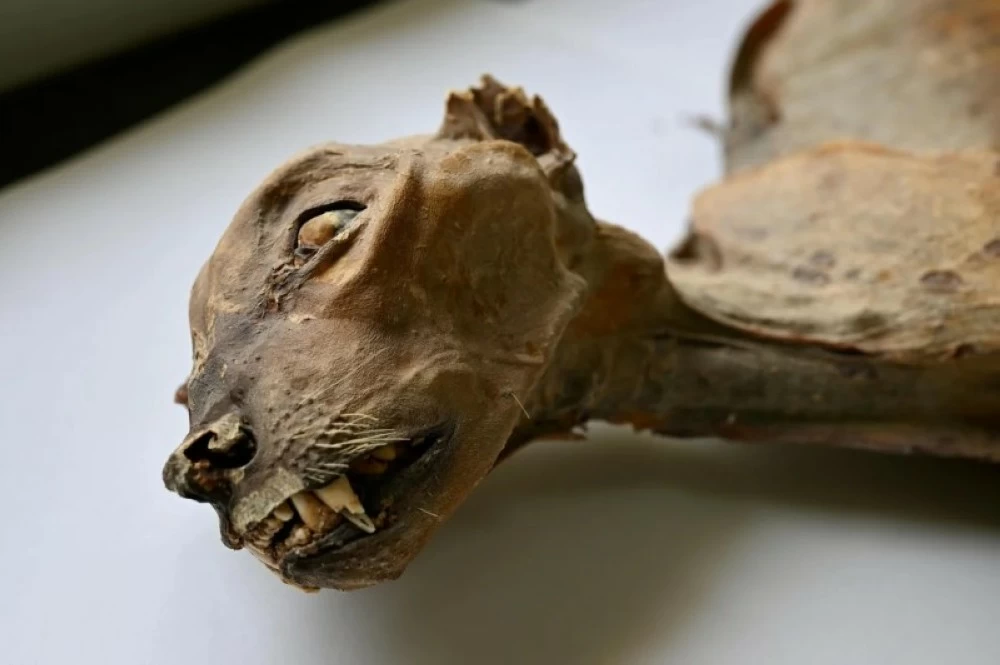
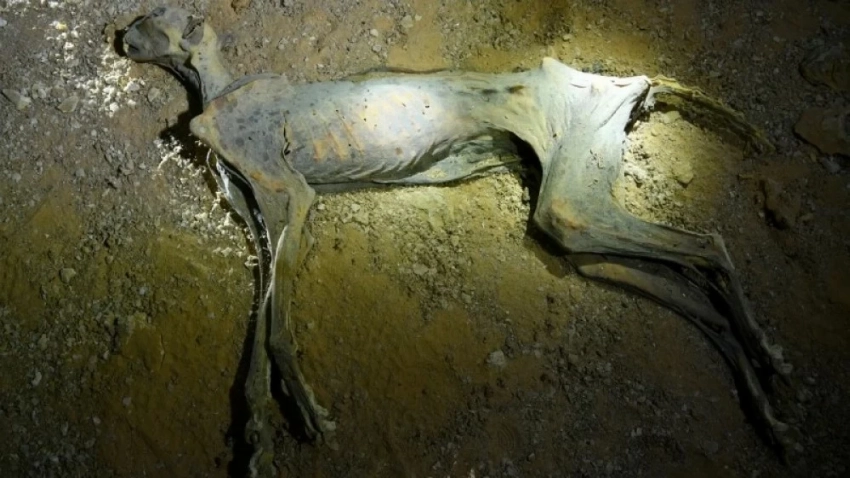
بعد يوم من إعلان هيئة التراث السعودية وشركة تطوير السودة بمنطقة عسير العثور على رسومات على صخور جبال السودة لا يقل عمرها عن 5 آلاف سنة؛ أعلن علماء آثار إيطاليون الكشف عن بقايا فهود محنطة في كهوف قرب مدينة عرعر يراوح بقاؤها من 130 سنة إلى أكثر من 1800 سنة.
وتمكن العلماء الأثريون من استخراج بقايا 7 من تلك الفهود، وبقايا عظام 54 فهداً آخر. وقال العلماء إن تحنيط الجثث معروف في مصر القديمة. غير أن بقايا الفهود في السعودية يؤكد أن التحنيط يمكن أن يتم بشكل طبيعي في المناطق المتجمدة، والرمال الصحراوية، والمناطق الطينية. وقال عالم الآثار بجامعة فلورنس الإيطالية مادوريل مالابيرا لشبكة «سي بي اس نيوز» التلفزيونية الأمريكية: لم أر شيئاً مثل هذا من قبل.
وأشارت مجلة «كومينيكيشن إيرث آند إنفايرونمنت»، التي نشرت الاكتشاف الخميس إلى أن هذا الكشف يسلط أضواء غير مسبوقة على التطور التاريخي وانقراض الفهود في المملكة العربية السعودية. ورجحوا أن درجة الحرارة المستقرة في الكهوف، والوضع الجاف للكهوف قد يكون سبب بقاء تلك البقايا الحيوانية محنطة عبر قرون. وقالوا إنهم لا يعرفون سبب وجود ذلك العدد الكبير من الفهود في تلك الكهوف. لكنهم لا يستبعدون أنها ربما كانت عريناً تتناسل فيه تلك الحيوانات، وتربي صغارها فيه.
One day after the Saudi Heritage Authority and the Development Company of Al-Soudah in the Asir region announced the discovery of rock paintings in the Soudah mountains that are at least 5,000 years old; Italian archaeologists announced the discovery of remains of mummified leopards in caves near the city of Arar, dating from 130 years to over 1,800 years.
The archaeologists managed to extract the remains of 7 of those leopards, along with the bones of 54 others. The scientists stated that mummification is known in ancient Egypt. However, the remains of the leopards in Saudi Arabia confirm that mummification can occur naturally in frozen areas, desert sands, and muddy regions. Archaeologist Maduirel Malapira from the University of Florence told CBS News: I have never seen anything like this before.
The journal "Communication Earth and Environment," which published the discovery on Thursday, noted that this finding sheds unprecedented light on the historical evolution and extinction of leopards in the Kingdom of Saudi Arabia. They speculated that the stable temperature in the caves and the dry conditions may be the reason these animal remains have remained mummified over the centuries. They stated that they do not know why such a large number of leopards were found in those caves. However, they do not rule out that it may have been a den where these animals bred and raised their young.