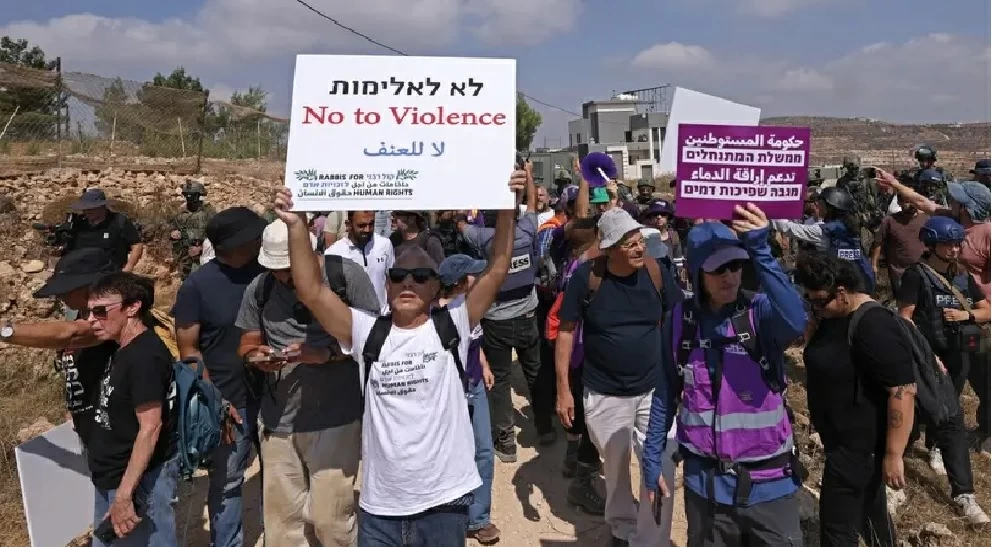
لليوم العاشر على التوالي، يواصل الجيش الإسرائيلي إغلاق منطقة رأس العين في بلدة قصرة جنوب شرقي نابلس في الضفة الغربية المحتلة، وسط تصاعد التوتر بين السكان والمستوطنين.
عرقلة حركة الأهالي
وأكد سكان محليون أن القيود المفروضة على المنطقة لا تزال تعرقل حركة الأهالي والوصول إلى عدد من المنازل، واشتكى السكان من منع متضامنين ووفود من الوصول إليهم، مقابل استمرار حركة المستوطنين في محيط المنازل.
وتحولت الأزمة في «قصرة» خلال الأيام الماضية إلى قضية تحظى باهتمام دولي، مع وجود عائلة فلسطينية أمريكية ضمن المتضررين. وذكرت وكالة «أسوشييتد برس»، اليوم (الثلاثاء)، أن فلسطينياً يحمل الجنسية الأمريكية عاد من ولاية أوهايو إلى «قصرة» للانضمام إلى عائلته التي ظل منزلها تحت حصار المستوطنين لأكثر من أسبوع.
منطقة عسكرية مغلقة
وبدأت الأزمة بمحاصرة مستوطنين ثلاثة منازل فلسطينية وقطع المياه والكهرباء عنها وتقييد حركة قاطنيها، قبل أن يعلن جيش الاحتلال المنطقة «منطقة عسكرية مغلقة». وأرسل تعزيزات إلى المنطقة، وفكك بؤرتين استيطانيتين غير قانونيتين قرب «قصرة» و«جالود».
وفجر تعامل جيش الاحتلال مع المستوطنين انتقادات واسعة، خصوصاً بعدما أظهرت مشاهد جنوداً يتعاملون معهم دون إبعادهم بشكل حاسم، بينما فرضت قيود على حركة الفلسطينيين. وأكدت «أسوشييتد برس» استمرار انتشار القوات وإغلاق المنطقة، مع بقاء التوتر حول المنازل.
ودخلت واشنطن على خط الأزمة. ووجه السفير الأمريكي لدى إسرائيل مايك هاكابي انتقاداً حاداً للمستوطنين المشاركين في حصار المنازل، في موقف أمريكي لافت تجاه الأحداث في «قصرة».
بؤرة توتر منذ أشهر
ولا تعد أحداث أغسطس أول مواجهة تشهدها منطقة رأس العين. ففي فبراير الماضي، أقام مستوطنون بؤرة رعوية جديدة على مقربة تراوح بين 300 و500 متر من منازل فلسطينية في المنطقة، وسط شكاوى من اعتداءات وقيود على وصول السكان إلى أراضيهم.
وفي 26 يوليو، تعرض مسجد في «قصرة» للحرق، وكتبت على جدرانه عبارات بالعبرية، فيما قال الجيش الإسرائيلي حينها إن المشتبه بهم فروا قبل وصول قواته، وأعلن فتح تحقيق في الواقعة.
وتتزامن أزمة «قصرة» مع تصاعد أوسع لعنف المستوطنين في الضفة الغربية.
وبحسب بيانات أممية أوردتها الوكالة الأمريكية، سجلت «قصرة» خلال 2026 عدداً من هجمات المستوطنين يفوق أي تجمع فلسطيني آخر في الضفة، ما جعل البلدة واحدة من أبرز بؤر التوتر خلال الأشهر الأخيرة.
For the tenth consecutive day, the Israeli army continues to close the area of Ras Al-Ain in the town of Qusra, southeast of Nablus in the occupied West Bank, amid rising tensions between residents and settlers.
Disruption of Residents' Movement
Local residents confirmed that the restrictions imposed on the area continue to disrupt the movement of residents and access to several homes. Residents complained about the prevention of solidarity activists and delegations from reaching them, while the movement of settlers around the homes continues.
The crisis in "Qusra" has turned in recent days into a matter of international concern, with an American Palestinian family among those affected. The Associated Press reported today (Tuesday) that a Palestinian holding American citizenship returned from Ohio to "Qusra" to join his family, whose home has been under siege by settlers for more than a week.
Closed Military Zone
The crisis began with settlers besieging three Palestinian homes, cutting off water and electricity, and restricting the movement of their occupants, before the occupation army declared the area a "closed military zone." They sent reinforcements to the area and dismantled two illegal settlement outposts near "Qusra" and "Jaloud."
The way the occupation army dealt with the settlers sparked widespread criticism, especially after footage showed soldiers interacting with them without decisively removing them, while restrictions were imposed on the movement of Palestinians. The Associated Press confirmed the continued presence of forces and the closure of the area, with tensions remaining around the homes.
Washington has intervened in the crisis. The U.S. ambassador to Israel, Mike Huckabee, sharply criticized the settlers involved in the siege of the homes, marking a notable American stance regarding the events in "Qusra."
Hotspot of Tension for Months
The events of August are not the first confrontation in the Ras Al-Ain area. Last February, settlers established a new pastoral outpost located between 300 and 500 meters from Palestinian homes in the area, amid complaints of assaults and restrictions on residents' access to their lands.
On July 26, a mosque in "Qusra" was burned, and Hebrew phrases were written on its walls, while the Israeli army stated at the time that the suspects fled before its forces arrived and announced the opening of an investigation into the incident.
The crisis in "Qusra" coincides with a broader escalation of settler violence in the West Bank.
According to UN data reported by the American agency, "Qusra" recorded a number of settler attacks in 2026 that exceeded any other Palestinian gathering in the West Bank, making the town one of the most prominent hotspots of tension in recent months.