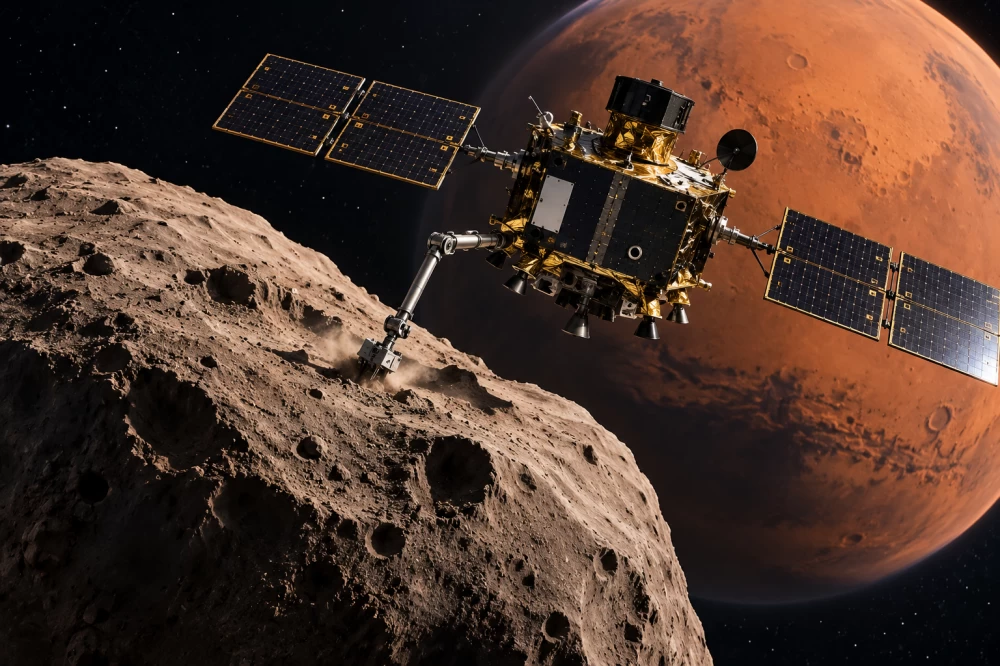
أطلقت اليابان اليوم (الثلاثاء) مركبة فضائية غير مأهولة في مهمة علمية غير مسبوقة لجمع عينات من سطح «فوبوس»، أحد قمري كوكب المريخ، وإعادتها إلى الأرض بحلول عام 2031، في خطوة تهدف إلى كشف أسرار نشأة القمرين وفهم المراحل الأولى لتشكل النظام الشمسي.
وأعلنت وكالة استكشاف الفضاء اليابانية (JAXA) نجاح إطلاق المركبة «MMX»، اختصاراً لمهمة استكشاف قمري المريخ، على متن الصاروخ الياباني «H3»، من مركز تانيغاشيما الفضائي جنوب غربي اليابان.
وأكدت الوكالة أن الصاروخ سار وفق الخطة المحددة، وأن المركبة انفصلت بنجاح عن مرحلته العليا بعد نحو ساعة و11 دقيقة من الإطلاق، لتبدأ رحلتها باتجاه المريخ.
رحلة تستغرق 5 سنوات
ومن المقرر أن تصل المركبة إلى محيط المريخ في أغسطس 2027، حيث ستبدأ دراسة قمريه «فوبوس» و«ديموس»، قبل محاولة الهبوط على سطح فوبوس لجمع ما لا يقل عن 10 غرامات من التربة والصخور خلال أواخر عام 2028 أو عام 2029.
وتتضمن المهمة إنزال مركبة روبوتية صغيرة تحمل اسم «إيديفيكس»، طورتها وكالتا الفضاء الألمانية والفرنسية، لاستكشاف سطح فوبوس على مدى نحو 100 يوم، وجمع معلومات تساعد على اختيار موقعاً آمناً لهبوط المركبة الرئيسية.
وبعد جمع العينات، ستغادر المركبة منطقة المريخ خلال عام 2030، تمهيداً لإعادة كبسولة تحتوي على المواد المجمعة إلى الأرض في عام 2031، ومن المتوقع أن تهبط في أستراليا.
البحث عن أصل قمري المريخ
وتسعى المهمة إلى الإجابة عن أحد الأسئلة العلمية المتعلقة بالمريخ، وهو كيفية تشكل قمريه «فوبوس» و«ديموس»، إذ يفترض العلماء احتمال أن يكونا كويكبين قديمين أسرتهما جاذبية الكوكب، أو أن يكونا قد تشكلا من حطام اصطدام هائل تعرض له المريخ في الماضي.
ويأمل الباحثون أن يساعد تحليل التركيب الكيميائي والجيولوجي للعينات في تحديد السيناريو الأقرب إلى الواقع، فضلاً عن تقديم معلومات جديدة عن تاريخ المريخ والمواد التي أسهمت في تشكل الكواكب والأقمار خلال المراحل المبكرة للنظام الشمسي.
ويتميز فوبوس بشكله غير المنتظم، إذ تبلغ أبعاده نحو 27 كيلومتراً طولاً و22 كيلومتراً عرضاً و18 كيلومتراً ارتفاعاً، ويدور حول المريخ ثلاث مرات تقريباً كل يوم، على ارتفاع يقارب 6 آلاف كيلومتر فوق سطحه.
تعاون دولي وتقنيات متقدمة
وتبلغ تكلفة المهمة نحو 578 مليون دولار، وتشارك في تنفيذها وكالات فضاء دولية، بينها وكالة الفضاء الأمريكية «ناسا» وشركاء أوروبيون.
وتسهم ناسا بأجهزة علمية لتحليل التركيب العنصري لسطح فوبوس باستخدام أشعة غاما والنيوترونات، إضافة إلى تقنية لجمع العينات بواسطة دفعات من غاز النيتروجين المضغوط، فضلاً عن دعم الاتصالات والملاحة الفضائية.
ويمثل الإطلاق أيضاً إنجازاً لبرنامج الصواريخ الياباني «H3»، إذ تعد هذه أول مهمة بين كوكبية ينفذها الصاروخ، الذي واجه إخفاقاً في رحلته الأولى عام 2023 قبل تحقيق سلسلة من عمليات الإطلاق الناجحة.
وفي حال نجاح المهمة بجميع مراحلها، ستكون اليابان أول دولة تعيد عينات مباشرة من أحد قمري المريخ إلى الأرض، بعد نجاحها سابقاً في إعادة عينات من كويكبات بواسطة مهمتي «هايابوسا» و«هايابوسا 2».
Japan launched an uncrewed spacecraft today (Tuesday) on an unprecedented scientific mission to collect samples from the surface of "Phobos," one of Mars' moons, and return them to Earth by 2031, in a step aimed at uncovering the secrets of the moons' origins and understanding the early stages of the solar system's formation.
The Japan Aerospace Exploration Agency (JAXA) announced the successful launch of the "MMX" spacecraft, short for Martian Moons Exploration, aboard the Japanese "H3" rocket from the Tanegashima Space Center in southwestern Japan.
The agency confirmed that the rocket proceeded according to the planned schedule, and that the spacecraft successfully separated from its upper stage about an hour and 11 minutes after launch, beginning its journey toward Mars.
A 5-Year Journey
The spacecraft is scheduled to reach the Martian orbit in August 2027, where it will begin studying the moons "Phobos" and "Deimos," before attempting to land on the surface of Phobos to collect at least 10 grams of soil and rock by late 2028 or 2029.
The mission includes deploying a small robotic vehicle named "Idefix," developed by the German and French space agencies, to explore the surface of Phobos for about 100 days and gather information to help select a safe landing site for the main spacecraft.
After collecting the samples, the spacecraft will leave the Martian area in 2030, preparing to return a capsule containing the collected materials to Earth in 2031, with an expected landing in Australia.
Searching for the Origin of Mars' Moons
The mission aims to answer one of the scientific questions related to Mars, which is how its moons "Phobos" and "Deimos" formed. Scientists hypothesize that they could be ancient asteroids captured by the planet's gravity, or that they may have formed from debris from a massive impact Mars experienced in the past.
Researchers hope that analyzing the chemical and geological composition of the samples will help determine the most likely scenario, as well as provide new information about Mars' history and the materials that contributed to the formation of planets and moons during the early stages of the solar system.
Phobos is characterized by its irregular shape, measuring about 27 kilometers in length, 22 kilometers in width, and 18 kilometers in height, and it orbits Mars approximately three times each day at an altitude of about 6,000 kilometers above its surface.
International Cooperation and Advanced Technologies
The mission costs approximately $578 million and involves international space agencies, including the American space agency NASA and European partners.
NASA is contributing scientific instruments to analyze the elemental composition of Phobos' surface using gamma rays and neutrons, in addition to a technique for collecting samples using bursts of compressed nitrogen gas, as well as supporting communications and space navigation.
The launch also represents an achievement for Japan's "H3" rocket program, as this is the first interplanetary mission carried out by the rocket, which faced a failure in its first flight in 2023 before achieving a series of successful launches.
If the mission succeeds in all its stages, Japan will be the first country to return direct samples from one of Mars' moons to Earth, having previously succeeded in returning samples from asteroids through the "Hayabusa" and "Hayabusa 2" missions.