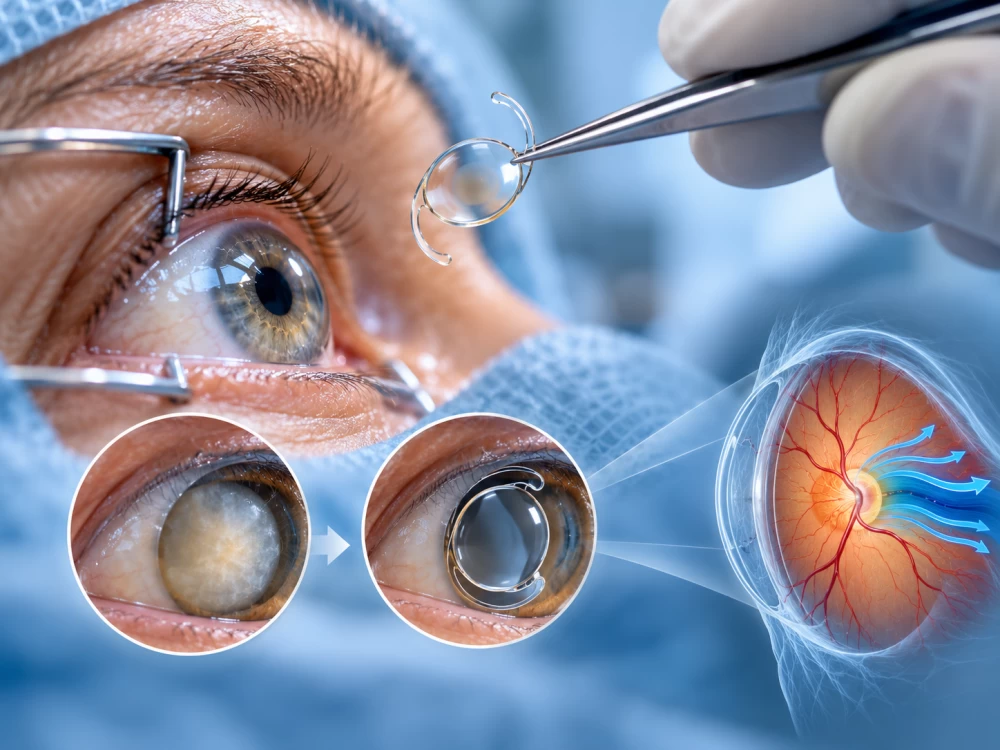
طوّر علماء من جامعة فاندربيلت الأمريكية عدسة اصطناعية مبتكرة تتيح علاج المياه البيضاء (إعتام عدسة العين) والمياه الزرقاء (الغلوكوما) في وقت واحد، من خلال تقنية تعتمد على إطلاق دواء تدريجياً لخفض ضغط العين، ما قد يغني المرضى عن استخدام القطرات اليومية.
وكشف الباحثون، خلال المؤتمر السنوي للأكاديمية الأمريكية لطب العيون، أن العدسة الجديدة تحتوي على دواء «بيماتوبروست»، الذي يُفرز تدريجياً للمساعدة في خفض ضغط العين، الذي قد يؤدي ارتفاعه إلى تلف العصب البصري وفقدان البصر.
وشملت التجربة 106 مرضى يعانون المياه الزرقاء أو ارتفاع ضغط العين، وكانوا مرشحين لإجراء جراحة المياه البيضاء، إذ زُرعت لمعظم المشاركين العدسات الجديدة المحتوية على الدواء، فيما حصل الآخرون على عدسات تقليدية مع الاستمرار في استخدام قطرات العين.
وأظهرت النتائج، بعد مرور عام على الجراحة، أن مستويات ضغط العين لدى المرضى الذين حصلوا على العدسات المبتكرة كانت مماثلة تقريباً لمستوياتها لدى المرضى الذين واصلوا استخدام القطرات اليومية.
كما كشفت التجربة أن أكثر من 95% من المرضى الذين زُرعت لهم العدسات الجديدة لم يحتاجوا إلى أدوية إضافية لعلاج المياه الزرقاء بعد عام من الجراحة.
وتكمن أهمية هذه التقنية في قدرتها على الجمع بين جراحة المياه البيضاء وإطلاق دواء يساعد على التحكم في ضغط العين، ما يقلل الحاجة إلى استخدام القطرات اليومية.
ويرى الباحثون أن هذا الابتكار يمثل تطوراً واعداً في علاج أمراض العيون، إذ يتيح التعامل مع مشكلتين صحيتين خلال عملية جراحية واحدة، إلى جانب تبسيط علاج المياه الزرقاء وتقليل الاعتماد على الأدوية اليومية.
Scientists from Vanderbilt University in the United States have developed an innovative artificial lens that allows for the treatment of cataracts (clouding of the lens) and glaucoma (increased eye pressure) simultaneously, through a technique that relies on the gradual release of a medication to lower eye pressure, which may spare patients from the need for daily eye drops.
Researchers revealed, during the annual conference of the American Academy of Ophthalmology, that the new lens contains the drug "Bimatoprost," which is gradually released to help reduce eye pressure, which, if elevated, can lead to optic nerve damage and vision loss.
The trial included 106 patients suffering from glaucoma or elevated eye pressure, who were candidates for cataract surgery. Most participants received the new drug-containing lenses, while others received traditional lenses and continued using eye drops.
The results showed that, one year after surgery, the eye pressure levels in patients who received the innovative lenses were almost identical to those in patients who continued using daily drops.
The trial also revealed that more than 95% of patients who received the new lenses did not require additional medication to treat glaucoma one year post-surgery.
The significance of this technique lies in its ability to combine cataract surgery with the release of a medication that helps control eye pressure, thereby reducing the need for daily eye drops.
Researchers believe that this innovation represents a promising advancement in the treatment of eye diseases, as it allows for addressing two health issues during a single surgical procedure, in addition to simplifying glaucoma treatment and reducing reliance on daily medications.