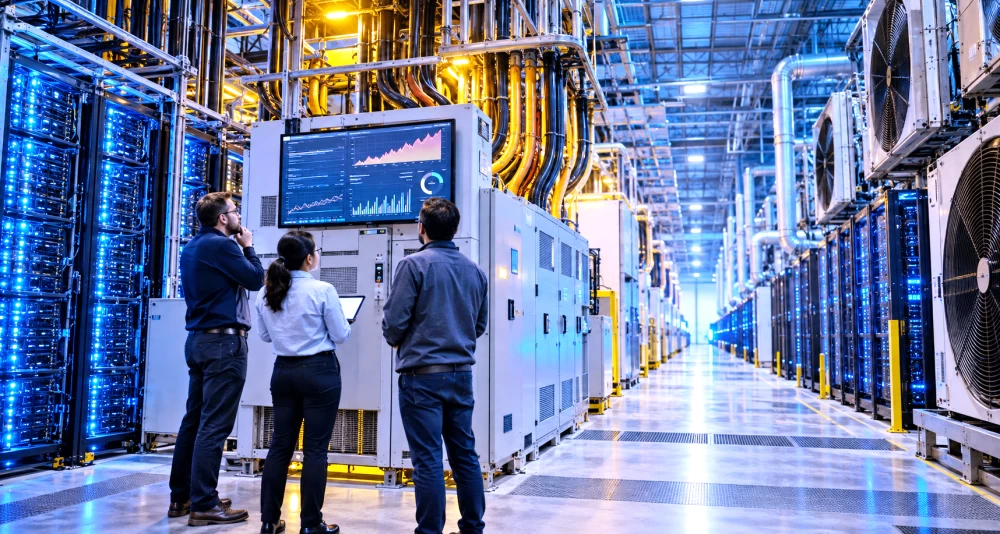
تواجه صناعة الذكاء الاصطناعي معضلة تتجاوز القدرة على إنتاج الرقائق المتقدمة إلى توفير الكهرباء اللازمة لتشغيلها؛ إذ بدأت اختناقات الطاقة في مراكز البيانات تمتد إلى سلاسل توريد أشباه الموصلات، مهددةً بتأخير المشاريع ورفع كلفتها.
وكشفت قراءة لـ«مورغان ستانلي»، أن الضغوط قد تصيب الشركات بدرجات متفاوتة، مع تمتع «إنفيديا» و«برودكوم» بحماية نسبية بفضل قوتهما السوقية وقدرتهما على تأمين الطلبات والعقود، بينما يواجه الموردون الأصغر مخاطر أكبر مرتبطة بتأخر المنشآت أو تعذر تشغيل قدراتها الحاسوبية كاملة.
وتكشف الأزمة فجوة بين عدد الرقائق المباعة والطاقة القابلة للاستخدام فعلياً. فامتلاك آلاف المعالجات لا يضمن تشغيلها إذا تأخرت توصيلات الشبكة الكهربائية أو تعذر توفير التبريد والبنية المساندة. وتزداد المشكلة مع استهلاك نماذج الذكاء التوليدي كميات ضخمة من الكهرباء، سواء أثناء التدريب أو عند خدمة ملايين المستخدمين.
ويمثل ذلك تحولاً في سباق الذكاء الاصطناعي؛ فبعدما انصب الاهتمام على ندرة الرقائق، أصبحت القدرة الكهربائية والمياه والأراضي القريبة من شبكات النقل، عوامل تحدد موقع مراكز البيانات وجدول تشغيلها.
The artificial intelligence industry is facing a dilemma that goes beyond the ability to produce advanced chips to providing the electricity necessary to operate them; as energy bottlenecks in data centers begin to extend to semiconductor supply chains, threatening to delay projects and increase their costs.
A reading from "Morgan Stanley" revealed that the pressures may affect companies to varying degrees, with "NVIDIA" and "Broadcom" enjoying relative protection due to their market strength and ability to secure orders and contracts, while smaller suppliers face greater risks associated with delays in facilities or the inability to fully utilize their computing capacities.
The crisis reveals a gap between the number of chips sold and the energy that can actually be used. Owning thousands of processors does not guarantee their operation if electrical grid deliveries are delayed or if cooling and supporting infrastructure cannot be provided. The problem is exacerbated by generative AI models consuming massive amounts of electricity, whether during training or when serving millions of users.
This represents a shift in the AI race; after the focus was on the scarcity of chips, electrical capacity, water, and land near transmission networks have become factors that determine the location and operating schedule of data centers.