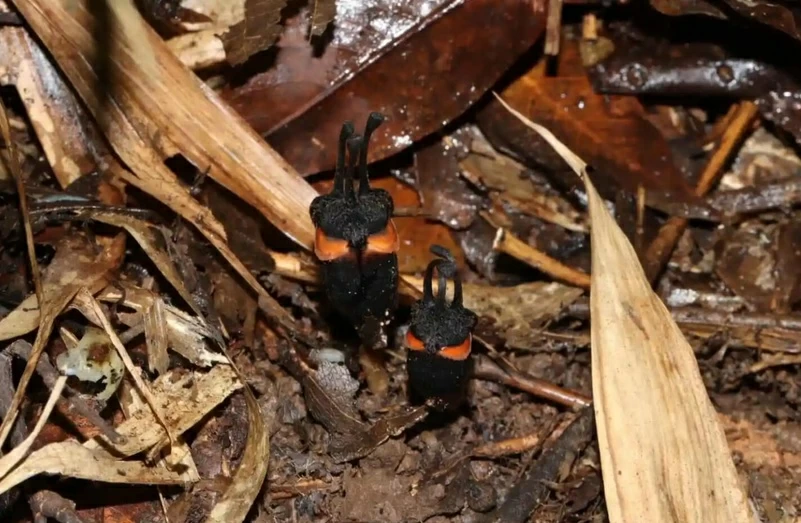
في أعماق غابات تايلاند، اكتشف علماء نبات نوعاً غريباً من الأزهار يكاد يبدو كأنه مشهد من فيلم رعب؛ زهرة داكنة تبرز بين الأوراق المتساقطة، وتحيط بها بقع برتقالية مائلة إلى الحمرة تشبه العيون المتوهجة، فيما تتدلى من أعلاها ثلاثة زوائد طويلة تشبه القرون. وأطلق الباحثون عليها اسم «تاسميا ديمونا» (Thismia daemona)، أو «زهرة الشيطان».
لكن غرابة النبات لا تتوقف عند شكله، إذ إنه يعيش من دون ضوء الشمس، ويفتقر تماماً إلى الكلوروفيل، ما يعني أنه لا يستطيع إجراء البناء الضوئي كمعظم النباتات.
وبحسب موقع «ساينس أليرت»، اكتشف الباحثون من جامعتي «شولالونغكورن» و«أمير سونغكلا» التايلانديتين النبات، ونشرت تفاصيل الاكتشاف في مجلة «فيتاكيز» (PhytoKeys). وبدلاً من الاعتماد على الشمس لإنتاج غذائه، يتبع النبات إستراتيجية تعرف بـ«التغذية الفطرية غير الذاتية» (Mycoheterotrophy)، إذ يعيش معظم الوقت مختبئاً تحت طبقات الأوراق، ويمتد بجذور شاحبة تشبه الشعاب المرجانية للحصول على الكربون والمغذيات من الفطريات الموجودة في التربة.
ولا يظهر النبات فوق سطح الأرض إلا لفترة قصيرة عندما يزهر وينتج ثماره.
وعُثر على «زهرة الشيطان» في مايو 2025 داخل متنزه «ثونغ فا بهوم» على ارتفاع يقارب ألف متر فوق سطح البحر، في بيئة جبلية موسمية تختلف عن الموائل المعتادة لأقاربها من جنس «فوانيس الجنيات» التي تنتشر غالباً في الغابات المطيرة المنخفضة.
وأظهرت التحليلات الجينية للحمض النووي أن هذه المجموعة النباتية تمتد شمالاً إلى تايلاند، ليرتفع عدد أنواعها المسجلة في البلاد إلى 16 نوعاً.
ورغم أهمية الاكتشاف، فإن العلماء يواجهون مخاوف بشأن مستقبل هذا النوع، إذ لم يُرصد سوى مجتمع واحد منه يضم نحو 50 نباتاً، في مساحة لا تتجاوز 0.05 كيلومتر مربع.
وتزيد هشاشة موطنه من مخاطر بقائه؛ فمرور السياح قد يؤدي إلى سحق الأزهار أو الإضرار بشبكة الفطريات الدقيقة التي يعتمد عليها النبات للحصول على غذائه. وبناءً على ذلك، صنف الباحثون «زهرة الشيطان» مبدئياً ضمن الأنواع المهددة بالانقراض بدرجة قصوى.
ويكشف هذا الاكتشاف جانباً آخر من تنوع الطبيعة، إذ لا تزال غابات العالم تخفي أنواعاً نباتية غير مألوفة، قد تكون موجودة في أماكن تبدو للوهلة الأولى معروفة ومكتشفة بالكامل.
In the depths of Thailand's forests, botanists discovered a strange type of flower that seems almost like a scene from a horror movie; a dark flower stands out among the fallen leaves, surrounded by orange-red spots resembling glowing eyes, while three long appendages resembling horns dangle from its top. The researchers named it "Thismia daemona," or "the Devil's Flower."
But the strangeness of the plant does not stop at its appearance, as it lives without sunlight and completely lacks chlorophyll, meaning it cannot perform photosynthesis like most plants.
According to the website "Science Alert," researchers from Thailand's "Chulalongkorn" and "Prince of Songkla" universities discovered the plant, and details of the discovery were published in the journal "PhytoKeys." Instead of relying on the sun to produce its food, the plant follows a strategy known as "mycoheterotrophy," as it spends most of its time hidden beneath layers of leaves, extending pale roots that resemble coral to obtain carbon and nutrients from the fungi present in the soil.
The plant only appears above ground for a short period when it flowers and produces its fruits.
The "Devil's Flower" was found in May 2025 within "Thung Fa Phum" National Park at an altitude of nearly one thousand meters above sea level, in a seasonal mountainous environment that differs from the usual habitats of its relatives from the "fairy lantern" genus, which are often found in lowland rainforests.
Genetic analyses of the DNA revealed that this plant group extends northward into Thailand, raising the number of its recorded species in the country to 16 species.
Despite the significance of the discovery, scientists face concerns about the future of this species, as only one community of about 50 plants has been observed, in an area not exceeding 0.05 square kilometers.
The fragility of its habitat increases the risks of its survival; the passage of tourists may lead to the crushing of flowers or damage to the network of mycorrhizal fungi that the plant relies on for its nutrition. Consequently, researchers have initially classified the "Devil's Flower" as critically endangered.
This discovery reveals another aspect of nature's diversity, as the world's forests still hide unfamiliar plant species that may exist in places that at first glance seem known and fully explored.