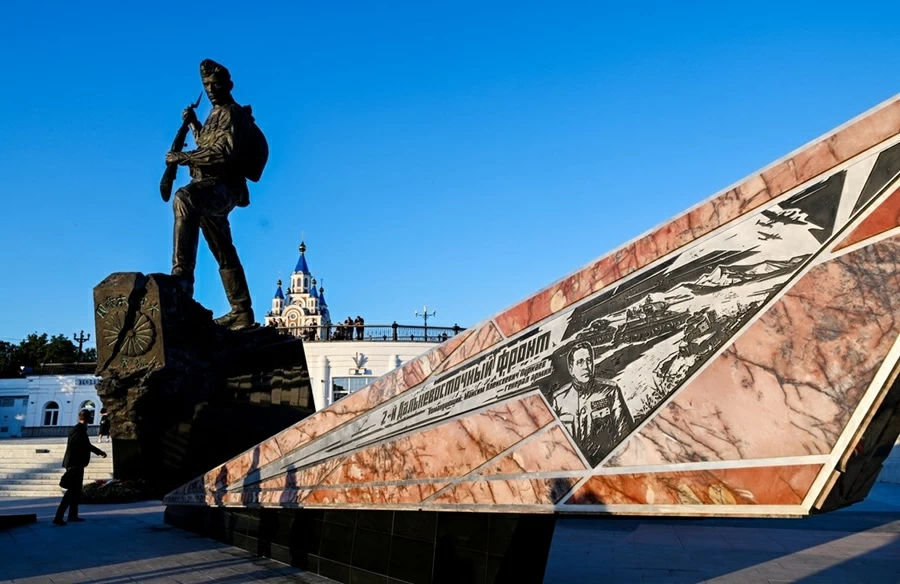
علّقت الناطقة باسم وزارة الخارجية الروسية ماريا زاخاروفا على مطالبة اليابان بإزالة مجمع النصر التذكاري في مدينة خاباروفسك، معتبرة أن الطلب غير واقعي إلى حد يشبه -على حد وصفها- «كمطالبة الشمس ألا تشرق».
وقالت زاخاروفا في تصريح لوكالة (نوفوستي): إن الموقف الياباني يتجاهل الحقائق التاريخية الراسخة، مضيفة: «لم يبقَ لهم سوى مطالبة الريح ألا تهبّ والشمس ألا تشرق»، مؤكدة أن الأرض الروسية محمية بإرث الأسلاف، وأن الذاكرة التاريخية محفورة في النصب التذكارية.
وكانت رئيسة الوزراء اليابانية ساناي تاكايشي قد دعت موسكو إلى تفكيك النصب التذكاري الذي يخلّد الانتصار السوفييتي على اليابان في الحرب العالمية الثانية، معتبرةً أن وجود شعار الأقحوان (رمز اليابان) على العلامة الحدودية المكسورة في تصميم النصب أمر غير مقبول.
ويبلغ ارتفاع النصب التذكاري نحو 15 مترًا، ويظهر فيه جندي سوفييتي يحطم علامة حدودية تحمل الأقحوان بعقب بندقيته، في إشارة إلى نهاية الحرب وانتصار الجيش الأحمر. وقد أثار تدشين المجمع في خاباروفسك جدلًا سياسيًا بين البلدين، وسط تبادل تصريحات حادة حول دلالاته التاريخية.
The spokesperson for the Russian Ministry of Foreign Affairs, Maria Zakharova, commented on Japan's demand to remove the Victory Memorial complex in Khabarovsk, considering the request to be unrealistic to the extent that it resembles - in her words - "like asking the sun not to rise."
Zakharova stated in a statement to the (Novosti) agency that the Japanese position ignores established historical facts, adding: "They have nothing left but to ask the wind not to blow and the sun not to rise," emphasizing that Russian land is protected by the legacy of ancestors and that historical memory is engraved in the memorials.
Japanese Prime Minister Sanae Takahichi had called on Moscow to dismantle the memorial that commemorates the Soviet victory over Japan in World War II, considering that the presence of the chrysanthemum emblem (a symbol of Japan) on the broken border marker in the design of the memorial is unacceptable.
The memorial stands about 15 meters tall, depicting a Soviet soldier smashing a border marker bearing the chrysanthemum with the butt of his rifle, symbolizing the end of the war and the victory of the Red Army. The inauguration of the complex in Khabarovsk has sparked political controversy between the two countries, amid sharp exchanges of statements regarding its historical significance.