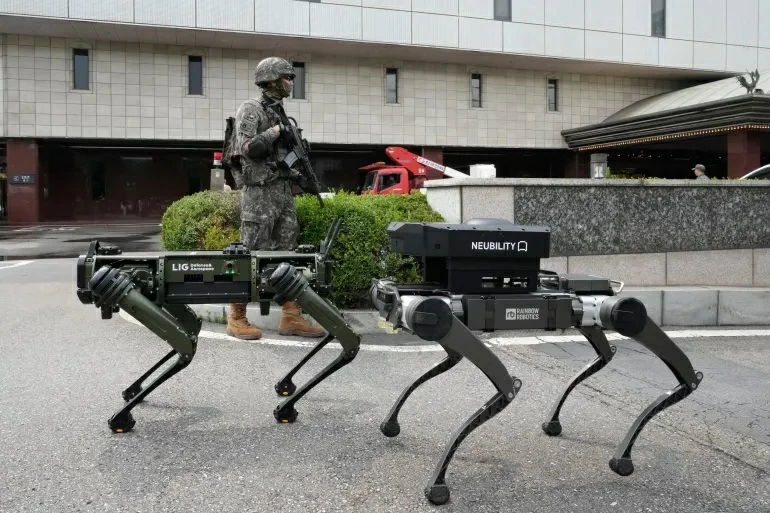
في كواليس دراماتيكية شهدتها العاصمة السويسرية جنيف، انتهت مفاوضات شاقة استمرت لأكثر من 10 سنوات بين 128 دولة بالتوصل إلى أول اتفاق دولي ينظم الأسلحة ذاتية التشغيل المدعومة بالذكاء الاصطناعي، والمشهورة بـ«الروبوتات القاتلة».
ورغم الإعلان عن الاتفاق كـ«اختراق دبلوماسي» يمهد لمعاهدة دولية، إلا أن تسريبات الكواليس والتحذيرات الحقوقية المتصاعدة كشفت عن وجه آخر مرعب، حيث أدى هذا التوافق المفرغ من مضمونه إلى منح هذه الآلات القاتلة غطاءً يشرعن وجودها ويخرجها فعلياً عن السيطرة البشرية!
وشهدت الساعات الأخيرة من المحادثات ضغوطاً هائلة قادتها قوى عظمى في مقدمتها الولايات المتحدة وروسيا، لإضعاف بنود الاتفاق ومنع صياغة قواعد دولية صارمة ومُلزمة قانوناً. وكشفت نيكول فان روين المديرة التنفيذية لمنظمة «أوقفوا الروبوتات القاتلة»، عن كابوس التنازلات الذي وقع في جنيف، حيث تم:
- تخفيف تعريف الأسلحة الفتاكة: لتقليص نطاق الأنظمة المشمولة بالحظر.
- تجريد الوثيقة من إلزاميتها: الاكتفاء بـ«مبادئ توجيهية مرنة» بدلاً من إجبار الدول على تدابير تحمي المدنيين.
وتأتي هذه التحركات وسط قلق عالمي من اتساع الاعتماد على هذه التقنيات المرعبة في صراعات ساخنة مثل أوكرانيا.
وتحذر اللجنة الدولية للصليب الأحمر من أن هذه الأسلحة تعمل بواسطة برامج وأجهزة استشعار تُحلل البيانات و«تختار الهدف وتوجه القوة القاتلة تلقائياً»، مما يعني نقل قرار «الحياة أو الموت» من عقل الإنسان إلى خوارزمية صماء لا ترحم.
In a dramatic backdrop witnessed in the Swiss capital Geneva, arduous negotiations lasting over 10 years between 128 countries culminated in the first international agreement regulating autonomous weapons powered by artificial intelligence, famously known as "killer robots."
Despite the announcement of the agreement as a "diplomatic breakthrough" paving the way for an international treaty, leaks from behind the scenes and rising human rights warnings revealed a terrifying other side, as this hollow consensus granted these lethal machines a cover that legitimizes their existence and effectively removes them from human control!
The final hours of the talks saw immense pressure led by major powers, primarily the United States and Russia, to weaken the terms of the agreement and prevent the formulation of strict and legally binding international rules. Nicole van Rooyen, the executive director of the organization "Stop Killer Robots," revealed the nightmare of concessions that took place in Geneva, where:
- The definition of lethal weapons was softened: to narrow the scope of systems covered by the ban.
- The document was stripped of its binding nature: settling for "flexible guidelines" instead of forcing countries to take measures that protect civilians.
These moves come amid global concern over the increasing reliance on these terrifying technologies in hot conflicts such as Ukraine.
The International Committee of the Red Cross warns that these weapons operate through programs and sensors that analyze data and "automatically select the target and direct lethal force," meaning the decision of "life or death" is transferred from the human mind to a merciless algorithm.